





Quick Summary
- What it is: A contour stick is a slim, twist-up cream product that places definition directly on the skin, then blends out to a soft matte finish.
- Why the format matters: You draw the shadow exactly where you want it instead of loading a brush and guessing, which makes small areas like the nose, eyelids, and lip line far easier to shape.
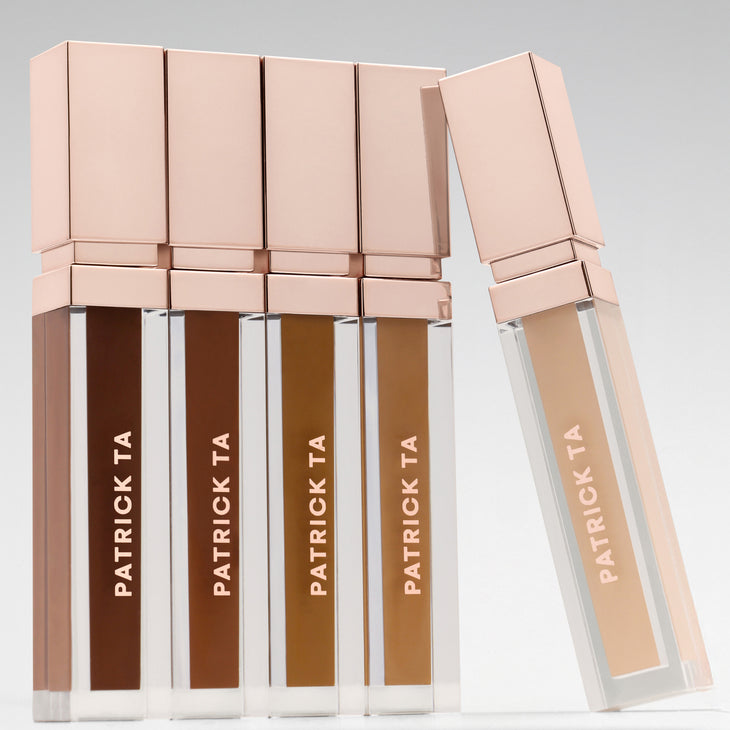
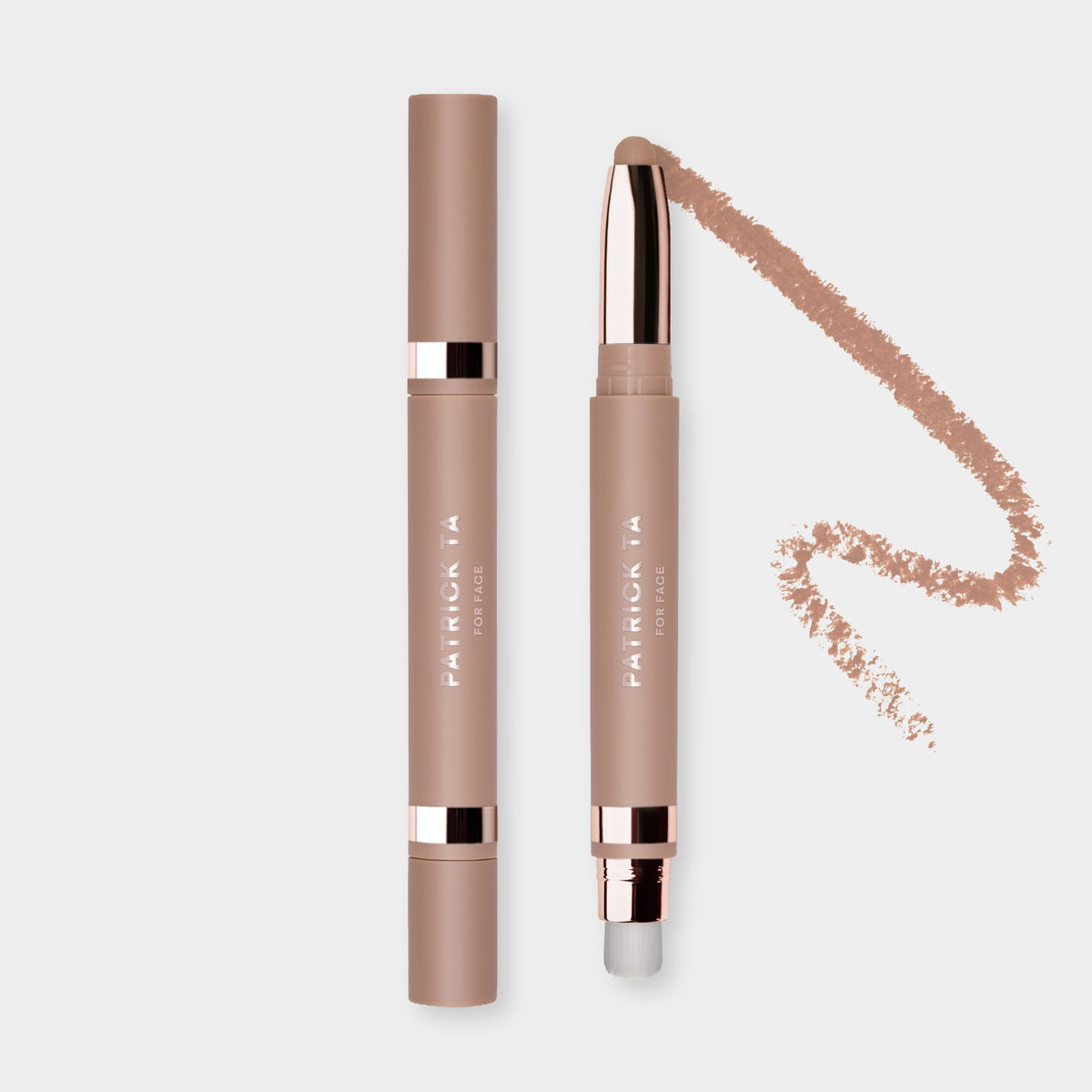
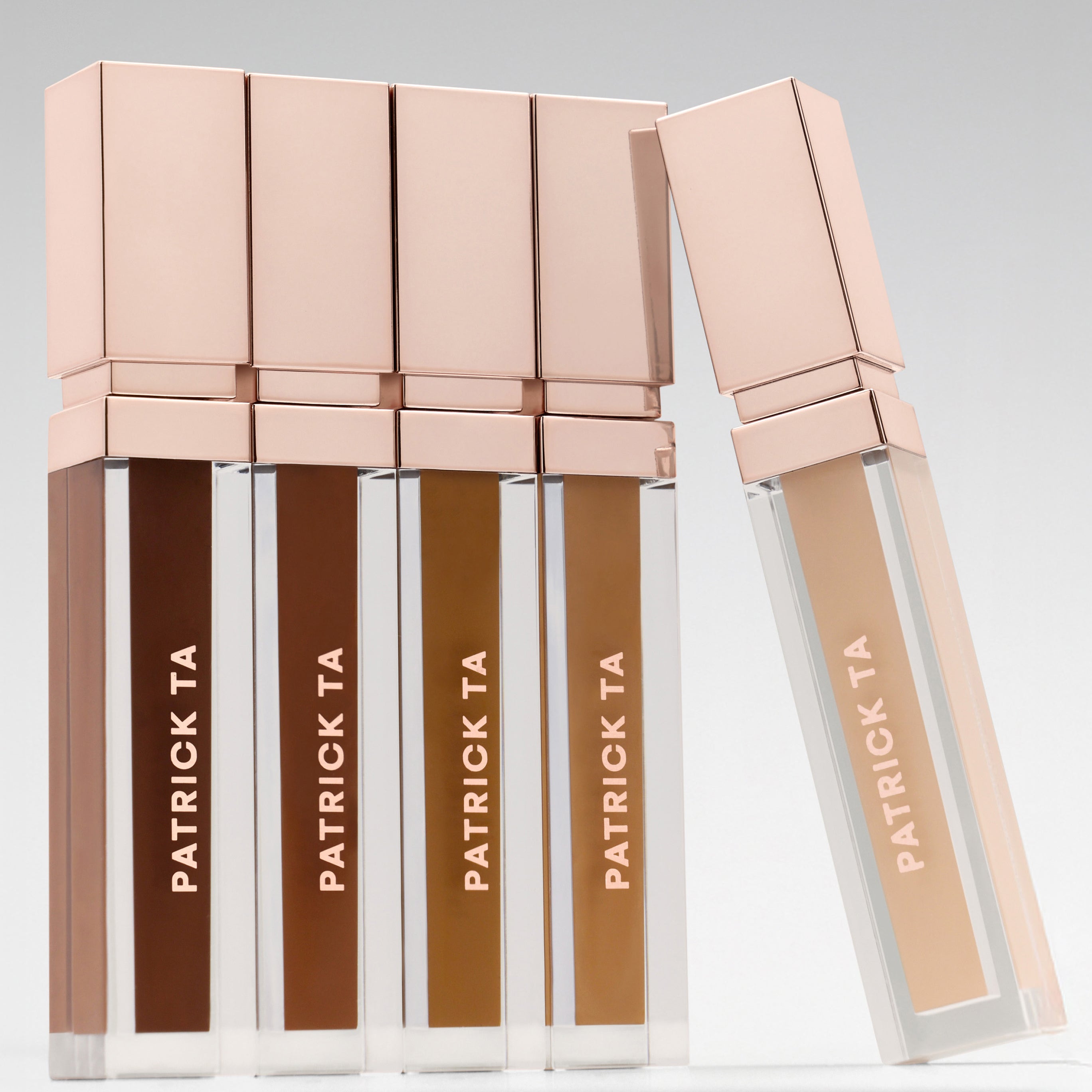
- The collection: Ten cream-to-powder Artistry Sticks, six defining shades for depth and four brightening shades for light, each with a built-in blending brush on the opposite end.
- How to choose shades: Go one to two levels deeper than your skin tone for defining, one to two levels lighter for brightening. Taupe reads as cooler shadow, brown reads warmer and more sun-kissed.
- How to apply: Draw in short strokes, blend immediately with the built-in brush, then build in thin layers rather than pressing hard on the first pass.
- Where to use it: Cheeks, jawline, hairline, and nose, plus the eye crease, inner corner, brow bone, under the lower lip, and the cupid’s bow.
- Layering with a compact: Broad shaping first with cream and powder contour, precise definition second with the stick.
- Bonus use: Every shade doubles as a matte cream eyeshadow, which is one of Patrick’s own favorite ways to use them.
A contour stick is a slim, twist-up cream product that lets you place definition directly on the skin, then blend it out with a brush. Because the product goes exactly where you draw it, a stick gives you far more control than a compact on small areas like the nose, the eyelids, and the curve of the cupid’s bow.
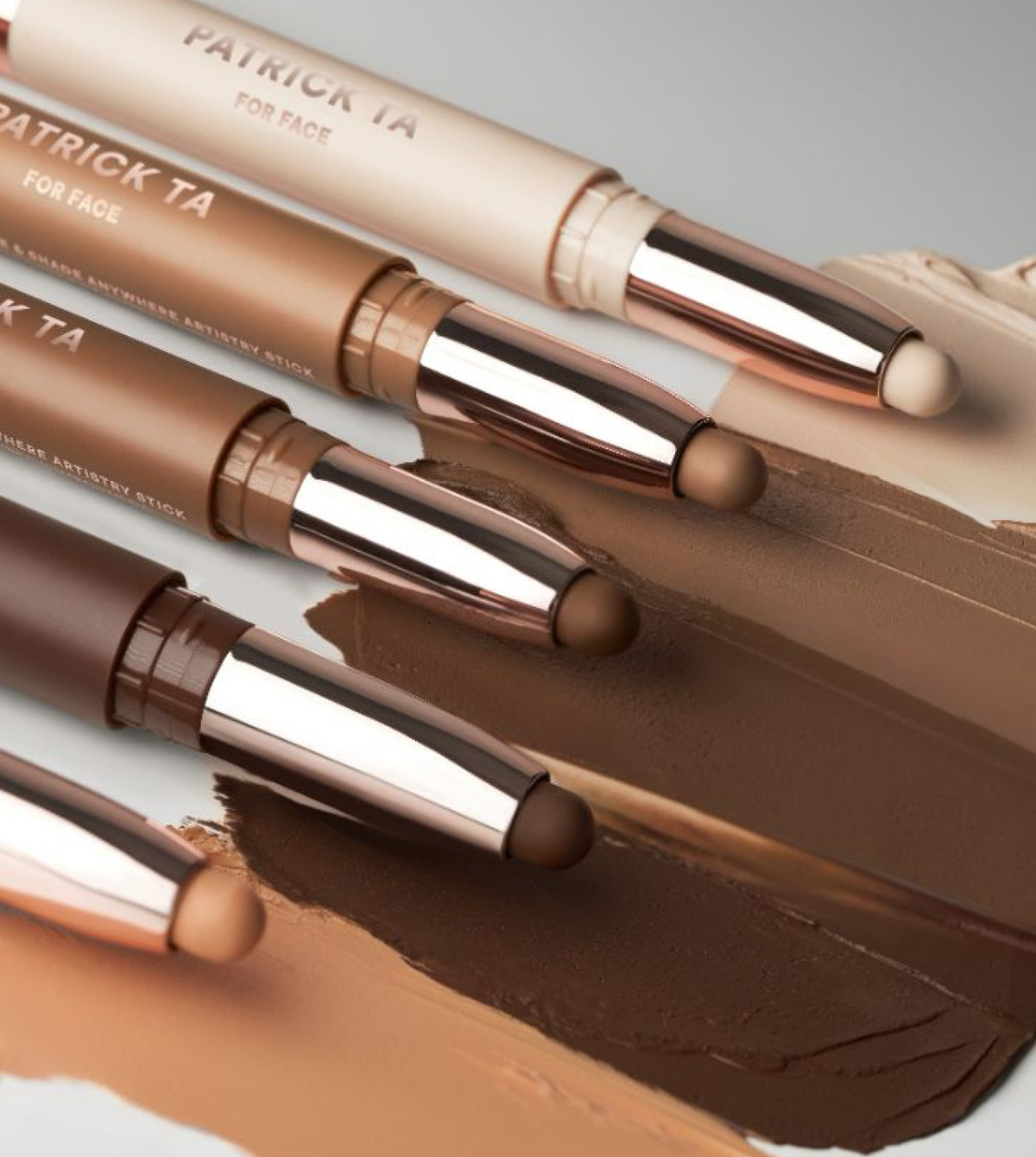
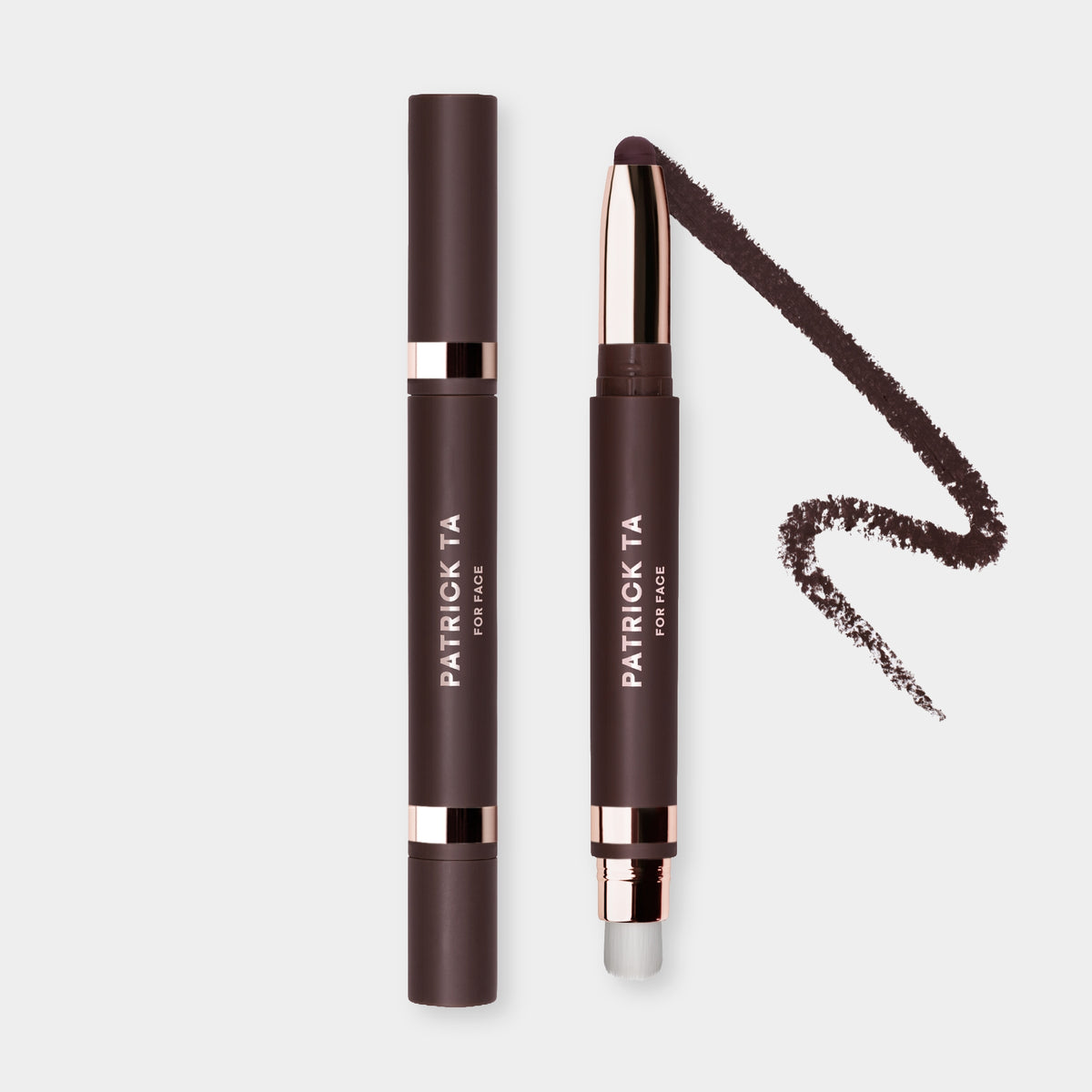
That precision is the idea behind the new Major Sculpt Shape & Shade Anywhere Artistry Sticks, a collection of ten cream-to-powder sculpting and brightening sticks with a built-in blending brush on the opposite end. Below is how the format works, where each shade belongs, and how to build dimension that still reads like skin.
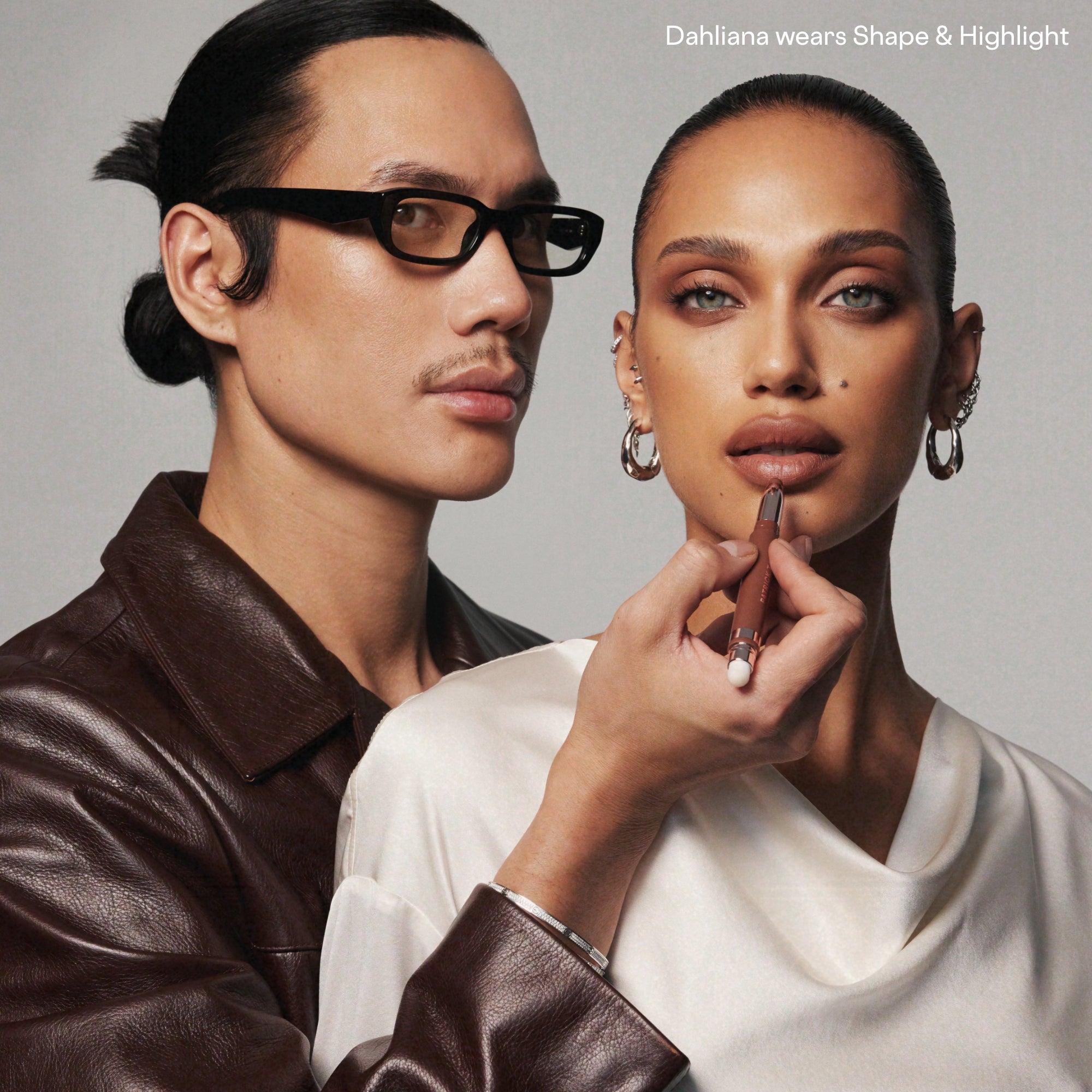
What Is a Contour Stick?
A contour stick is a cream contour product housed in a stick or pencil format rather than a pan or compact. You apply it straight to the skin in short strokes, then diffuse the edges with a brush, sponge, or fingertips. Most contour sticks are formulated to set to a soft matte finish so the shadow looks like a natural shade rather than a stripe of makeup.
The format matters more than it sounds. Traditional contouring asks you to load a brush, judge how much product is on it, and then find your placement. A stick removes two of those steps. You are drawing, not guessing, which is why sticks have become the format of choice for anyone who has ever put contour in the wrong place and had to start the whole base over. For the classic compact approach, Patrick’s signature cream and powder contour technique is still the reference point.

How a Contour Stick Differs From a Contour Compact
A stick is built for targeted definition on small areas and on the go. A compact is built for broad, diffused shaping across the cheeks and jawline, usually with a brush. Most people end up using both, because they solve different problems.
- Placement: A slim stick with a domed tip reaches the nose, inner eye, brow bone, and lip line. A compact and brush cover the hollows of the cheeks and the perimeter of the face.
- Control: With a stick, the amount of product is set by how much pressure you use, so light-handed layering is easy.
- Portability: A stick with a built-in brush is a one-piece tool, which makes it the realistic option for a bag or a desk drawer.
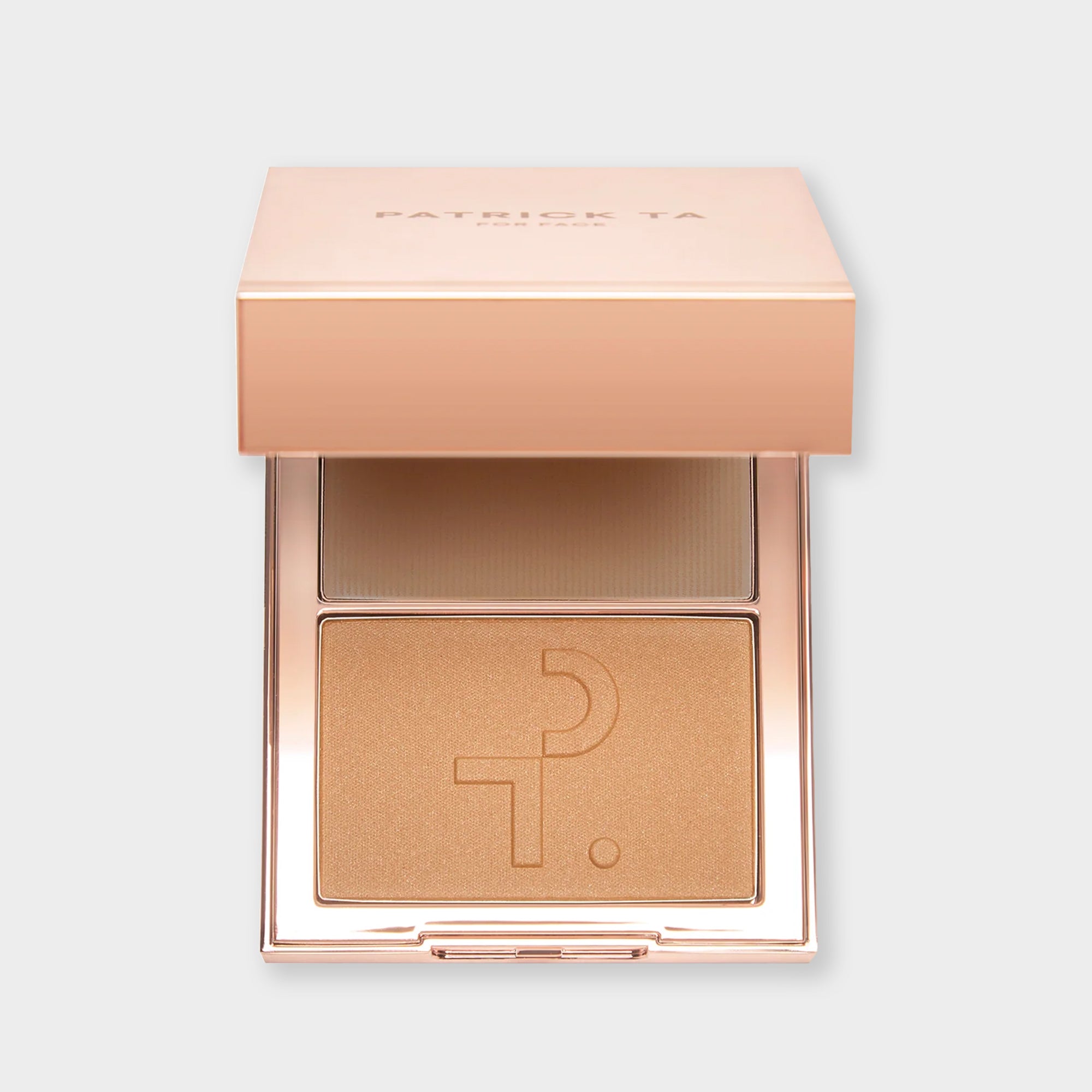
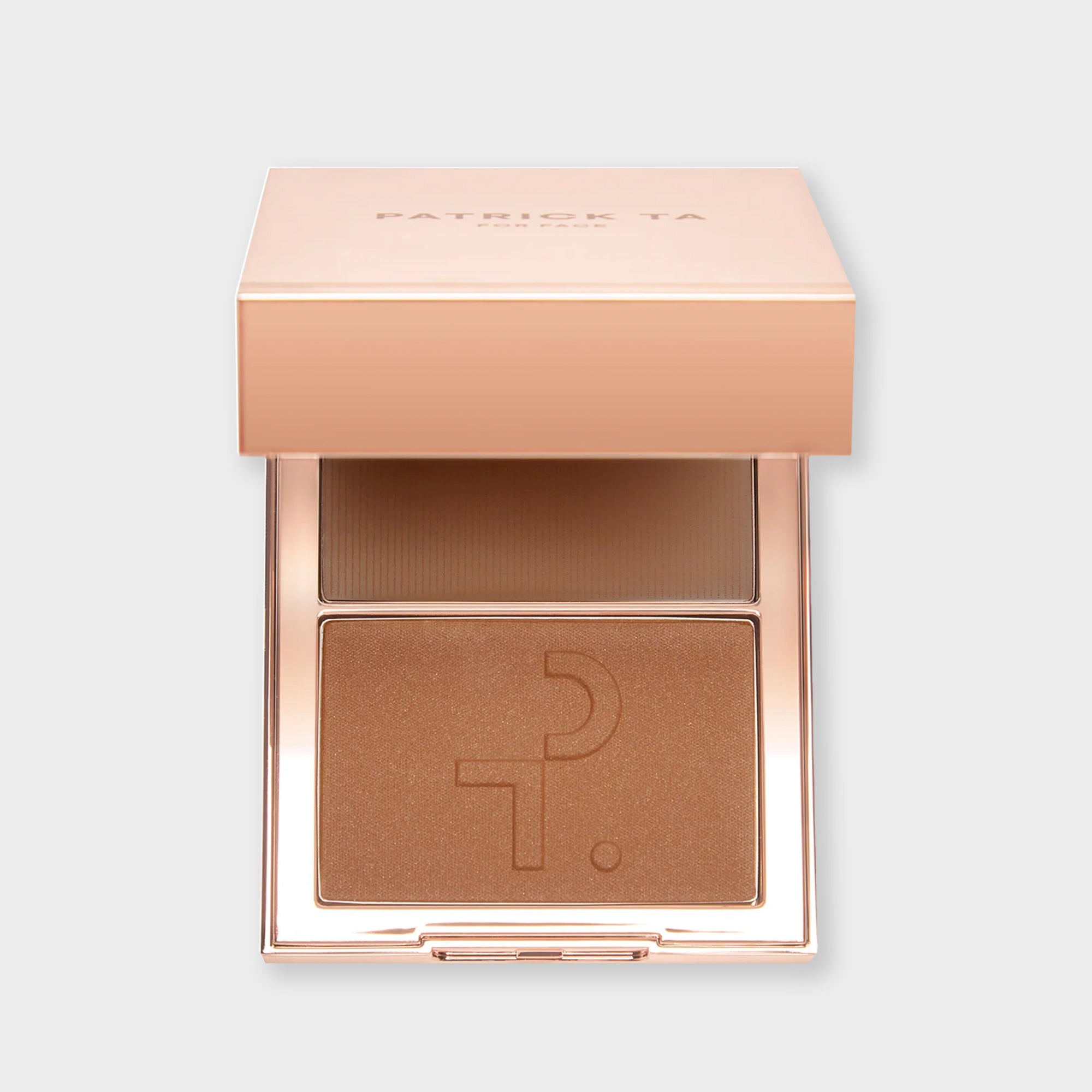
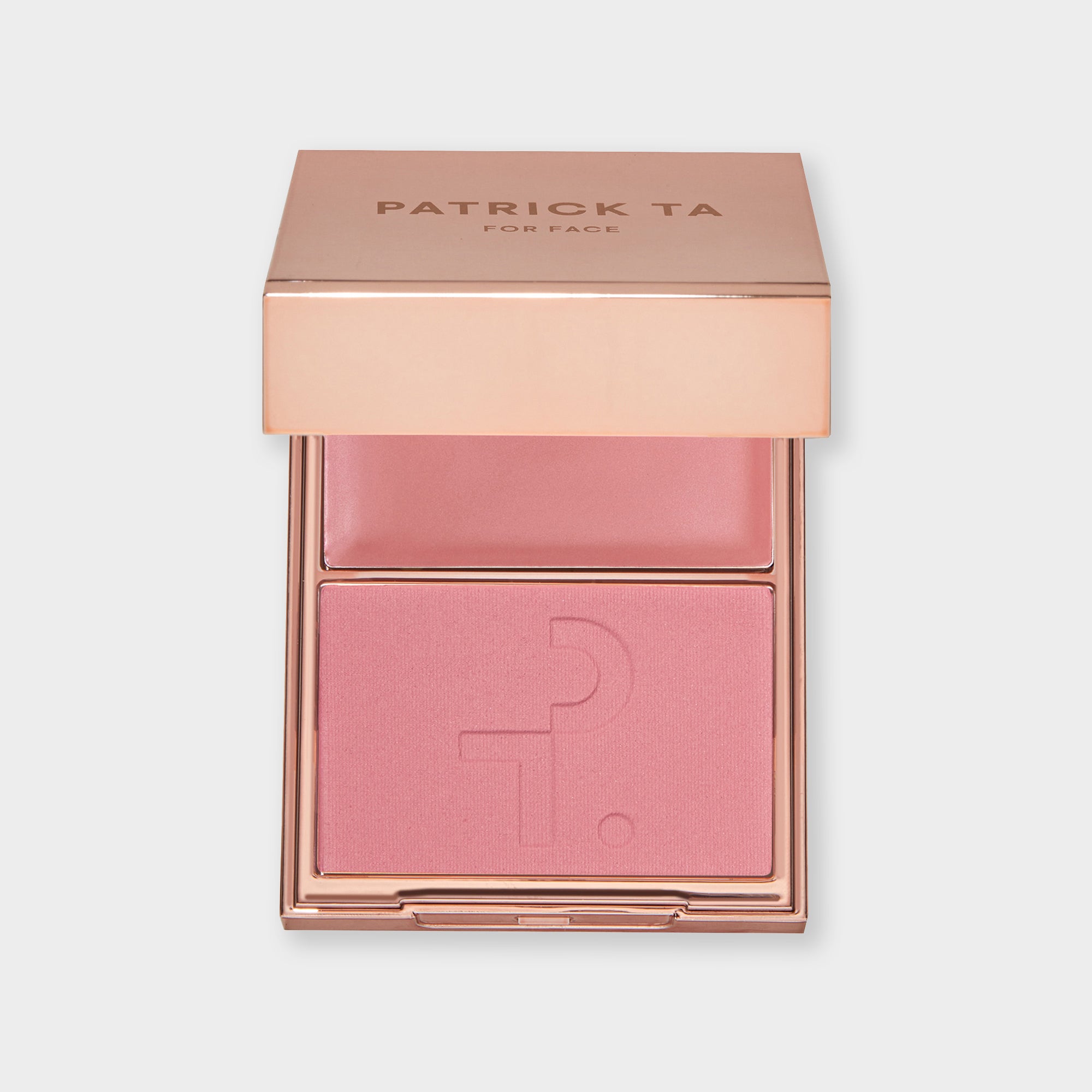
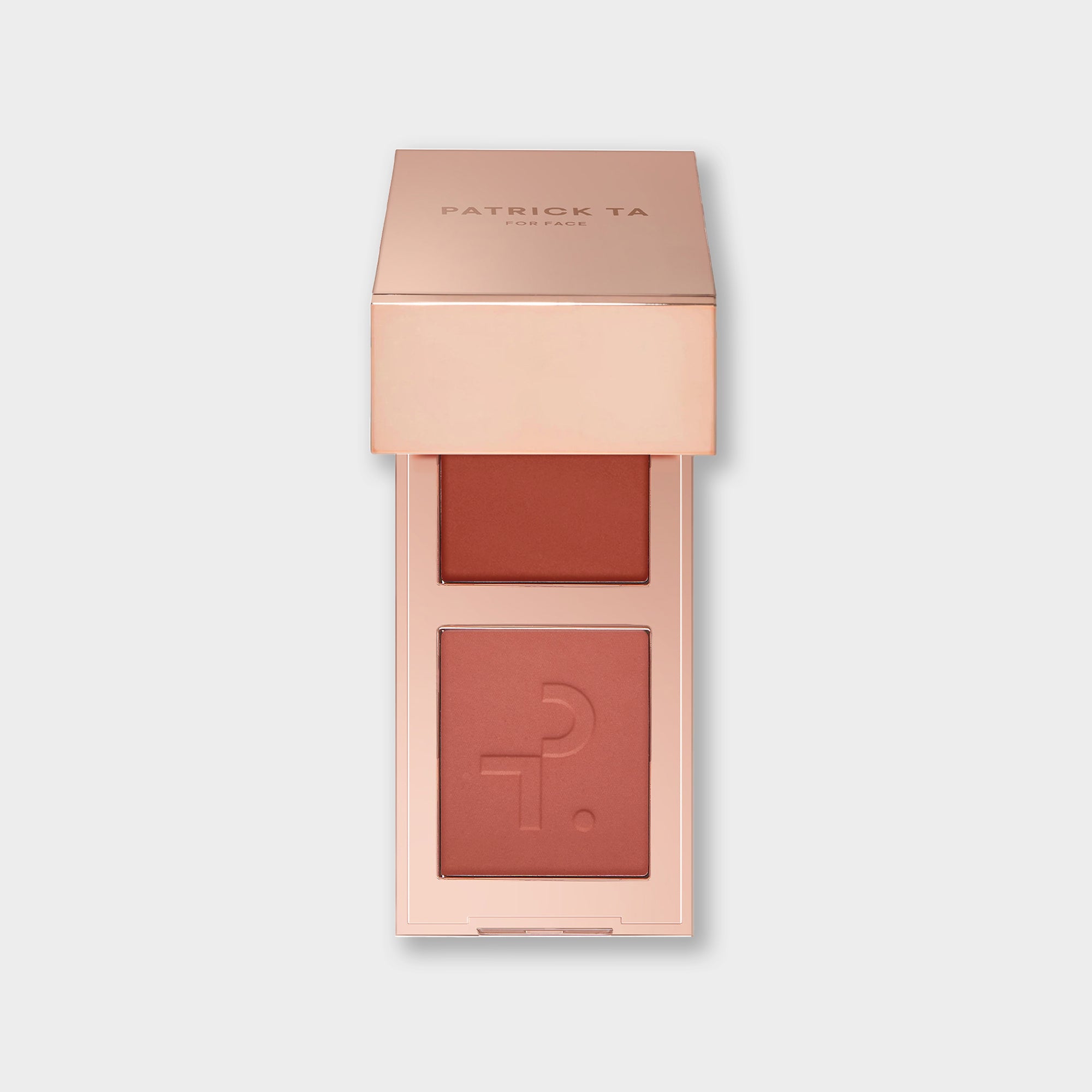
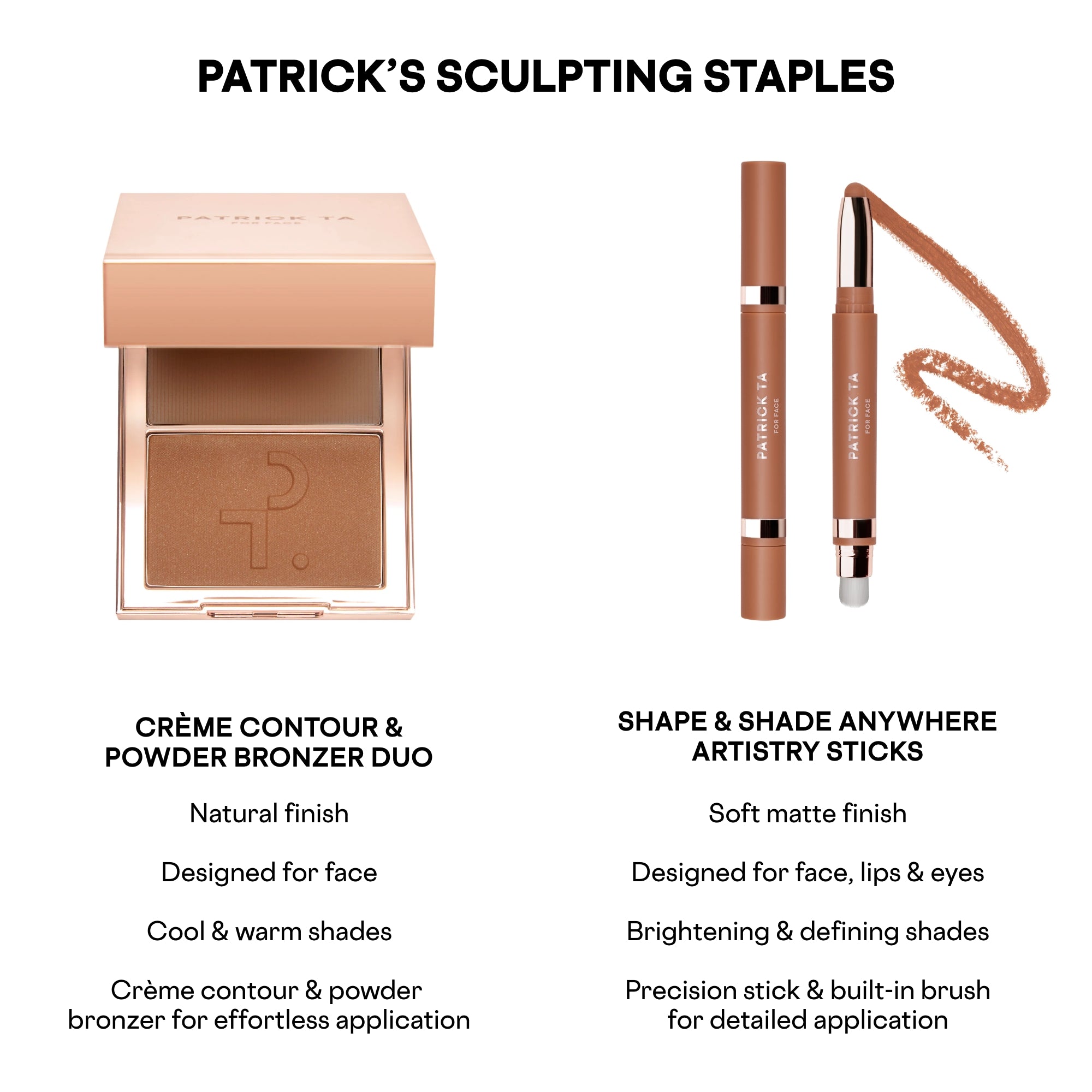
- Finish: Cream-to-powder sticks set softly and stay put. A cream plus powder pairing, like the Major Sculpt Crème Contour & Powder Bronzer Duo, adds warmth on top of the shadow.

Meet the Major Sculpt Shape and Shade Anywhere Artistry Sticks
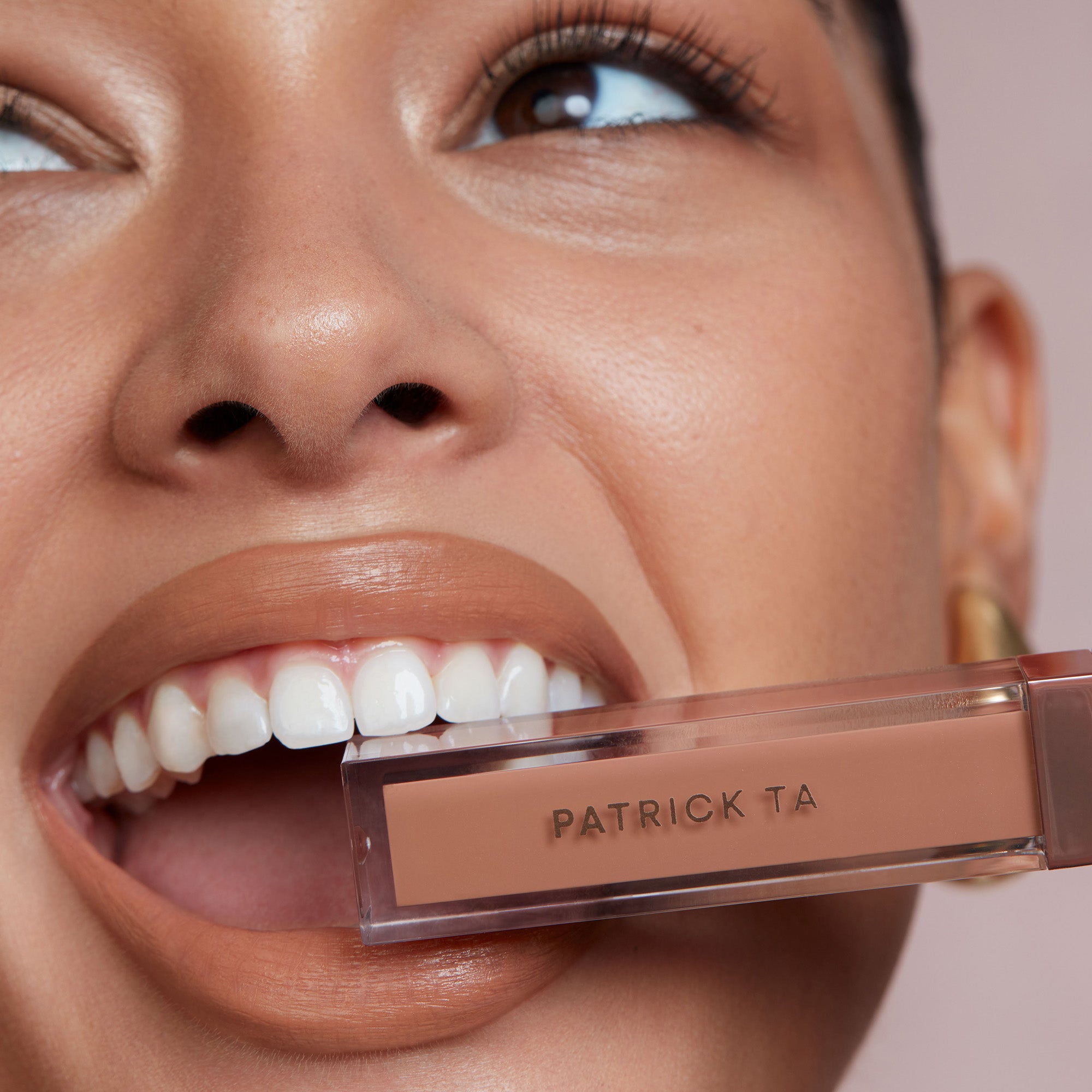
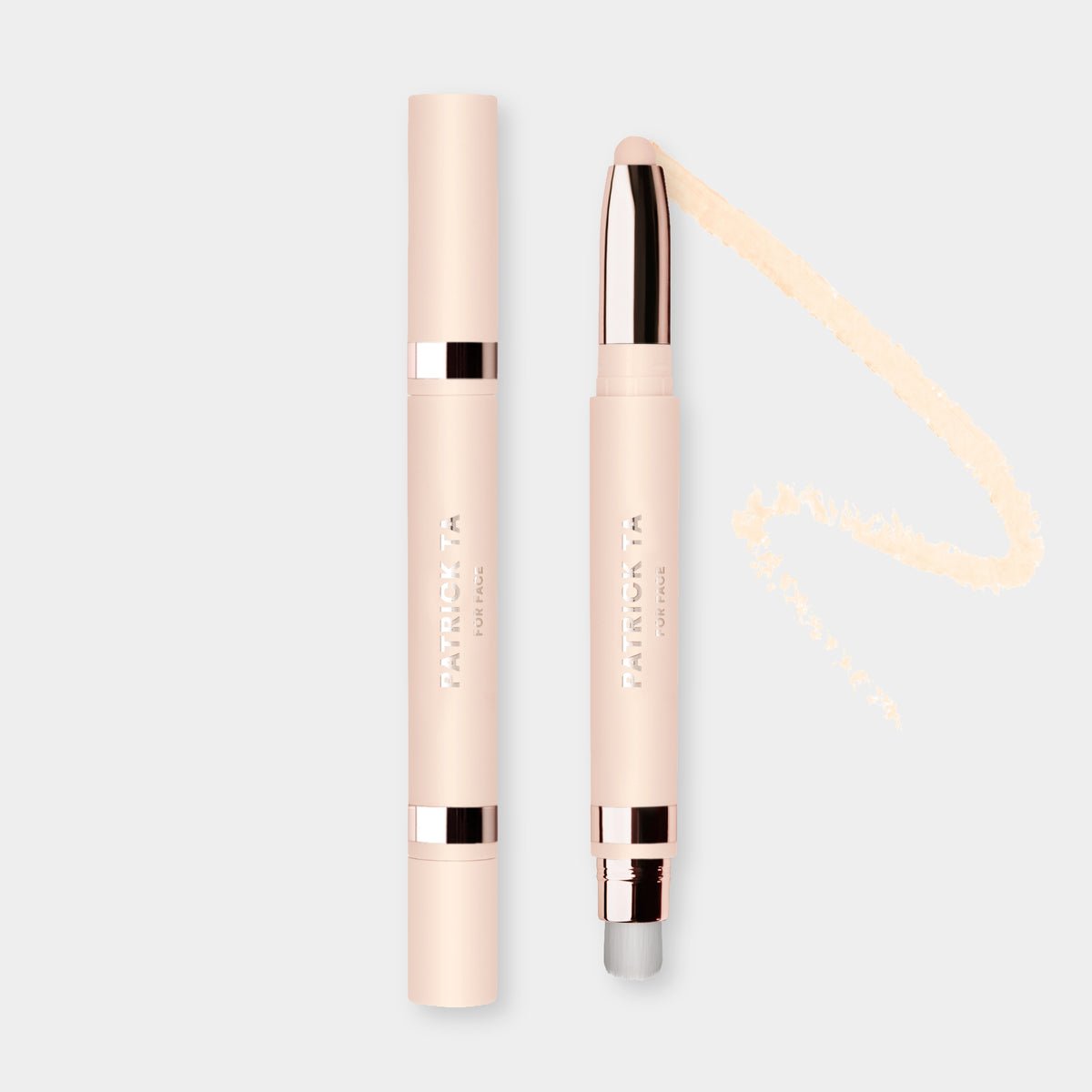
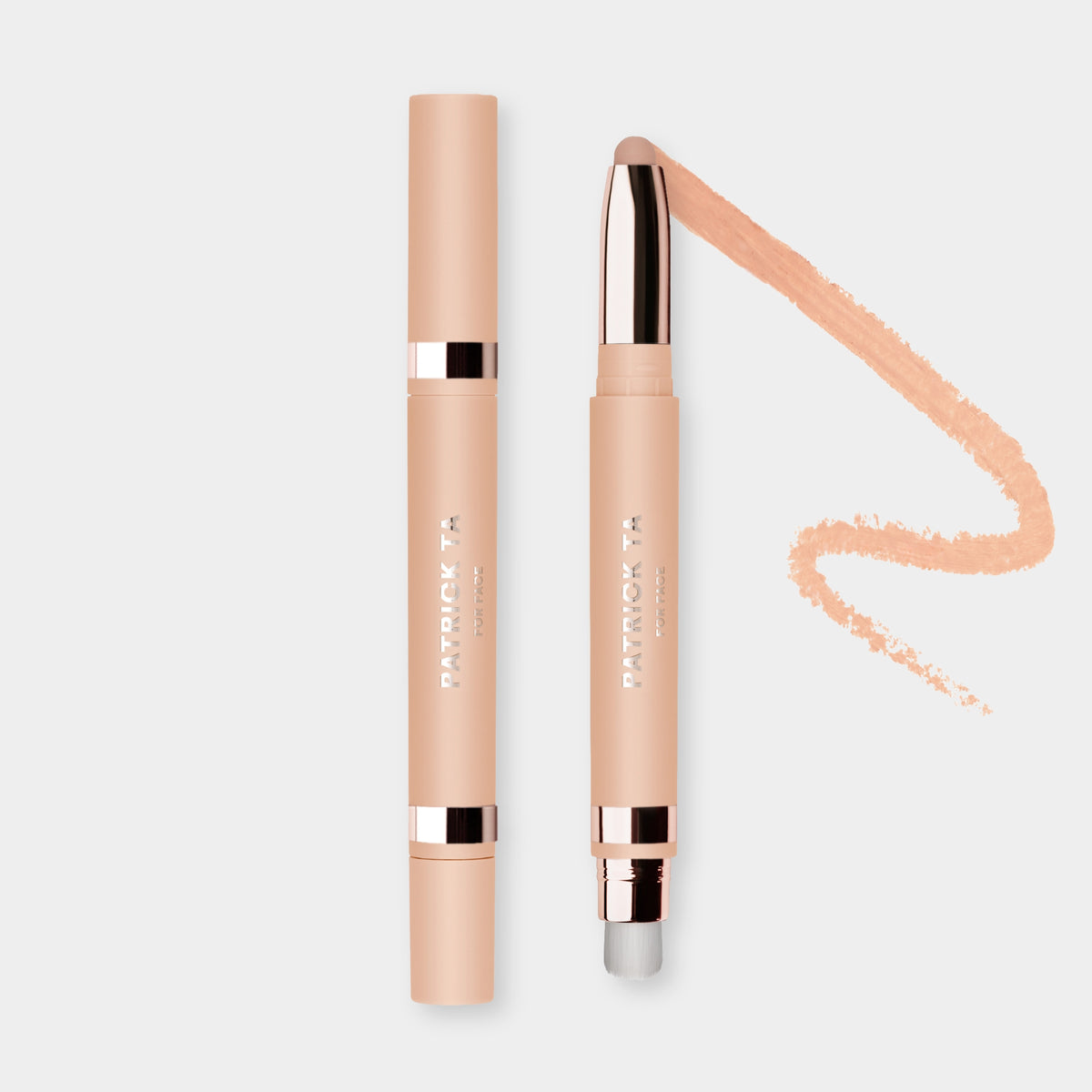
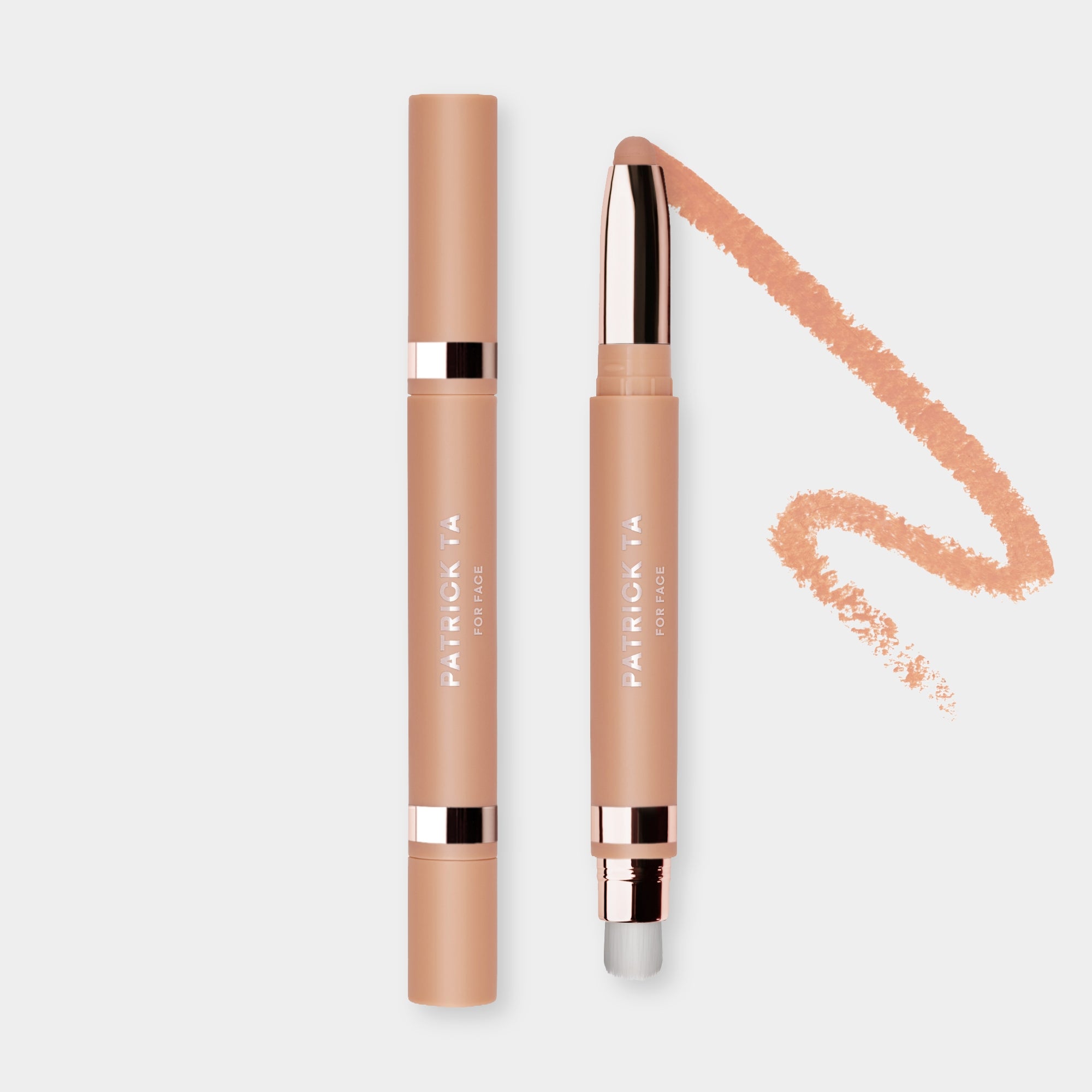
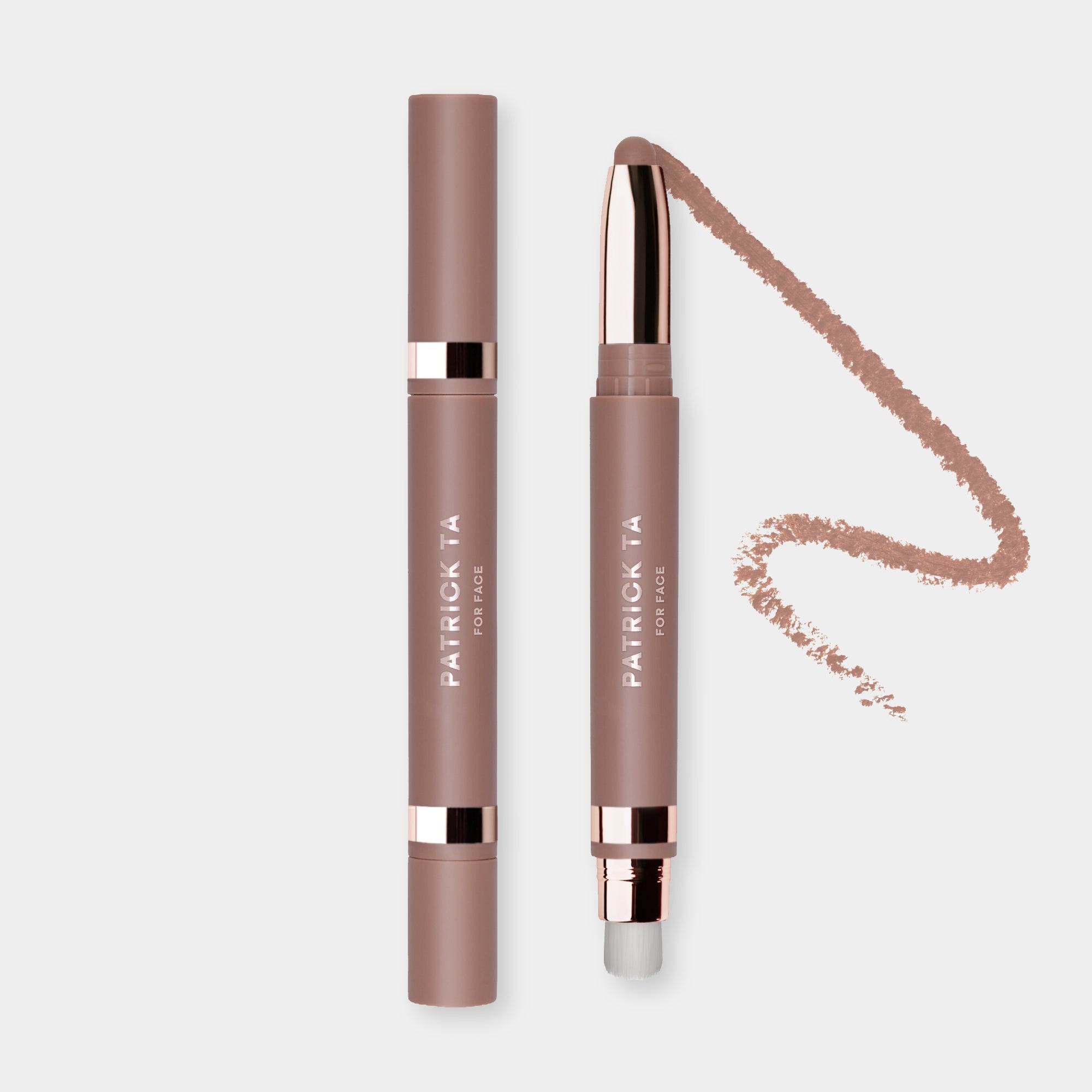
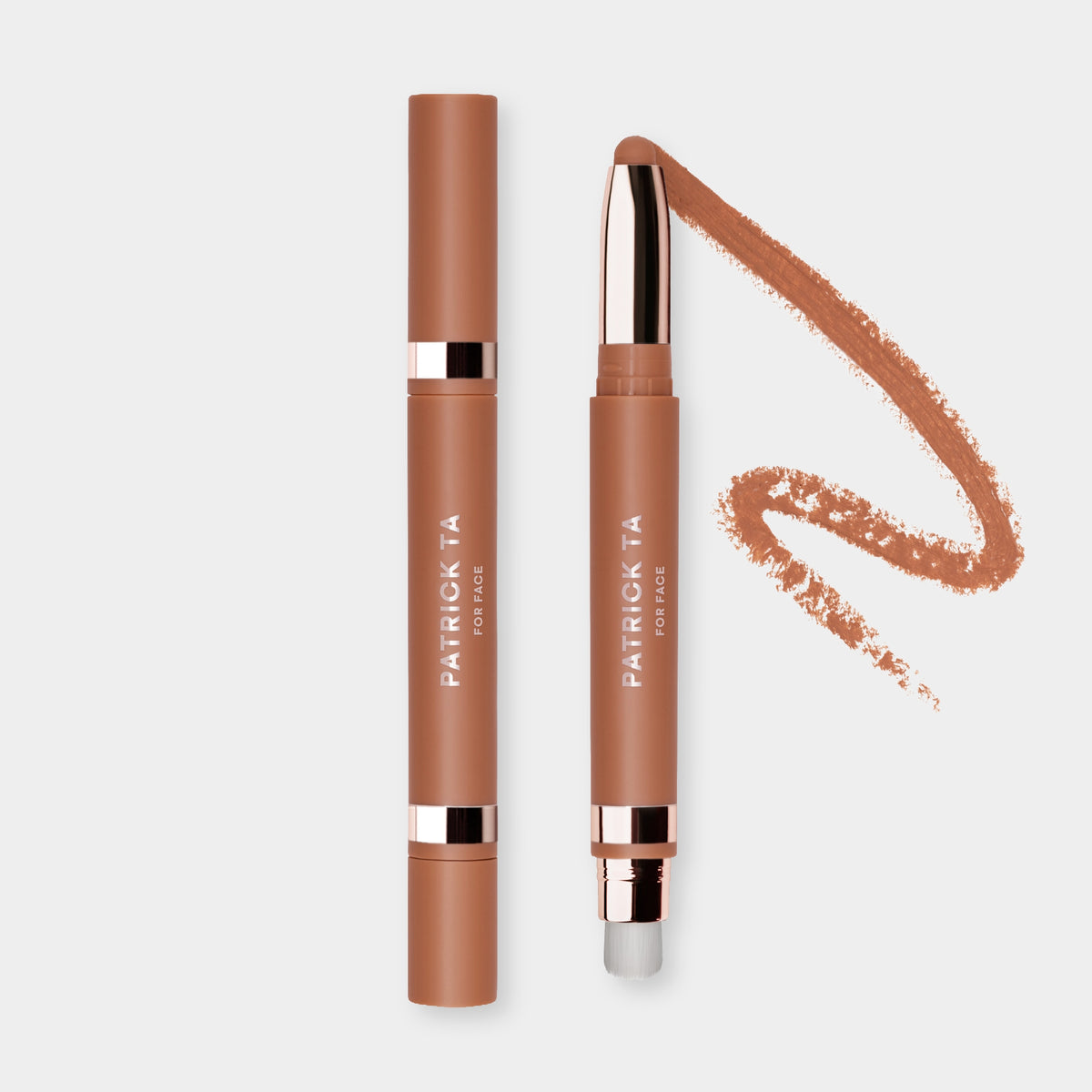
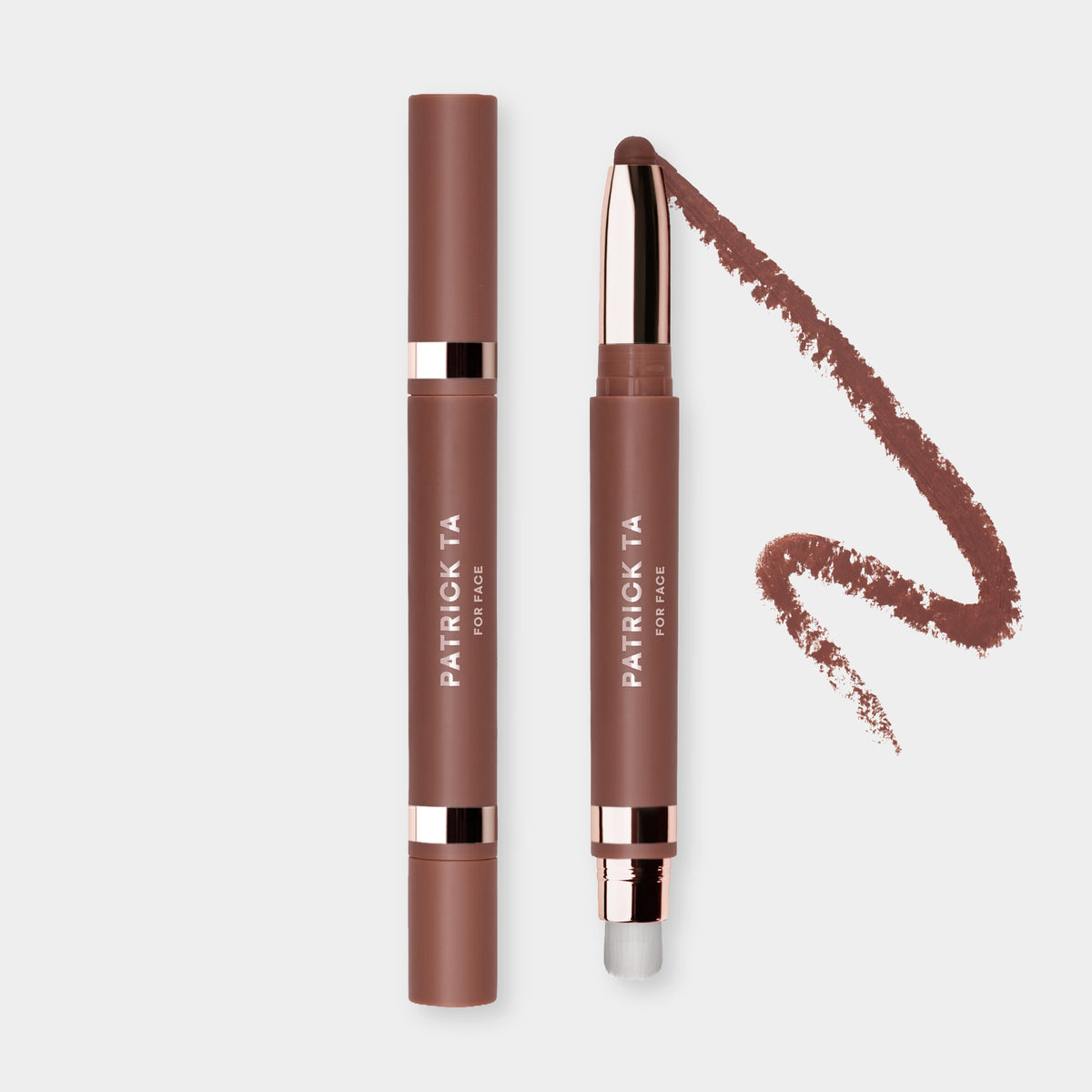
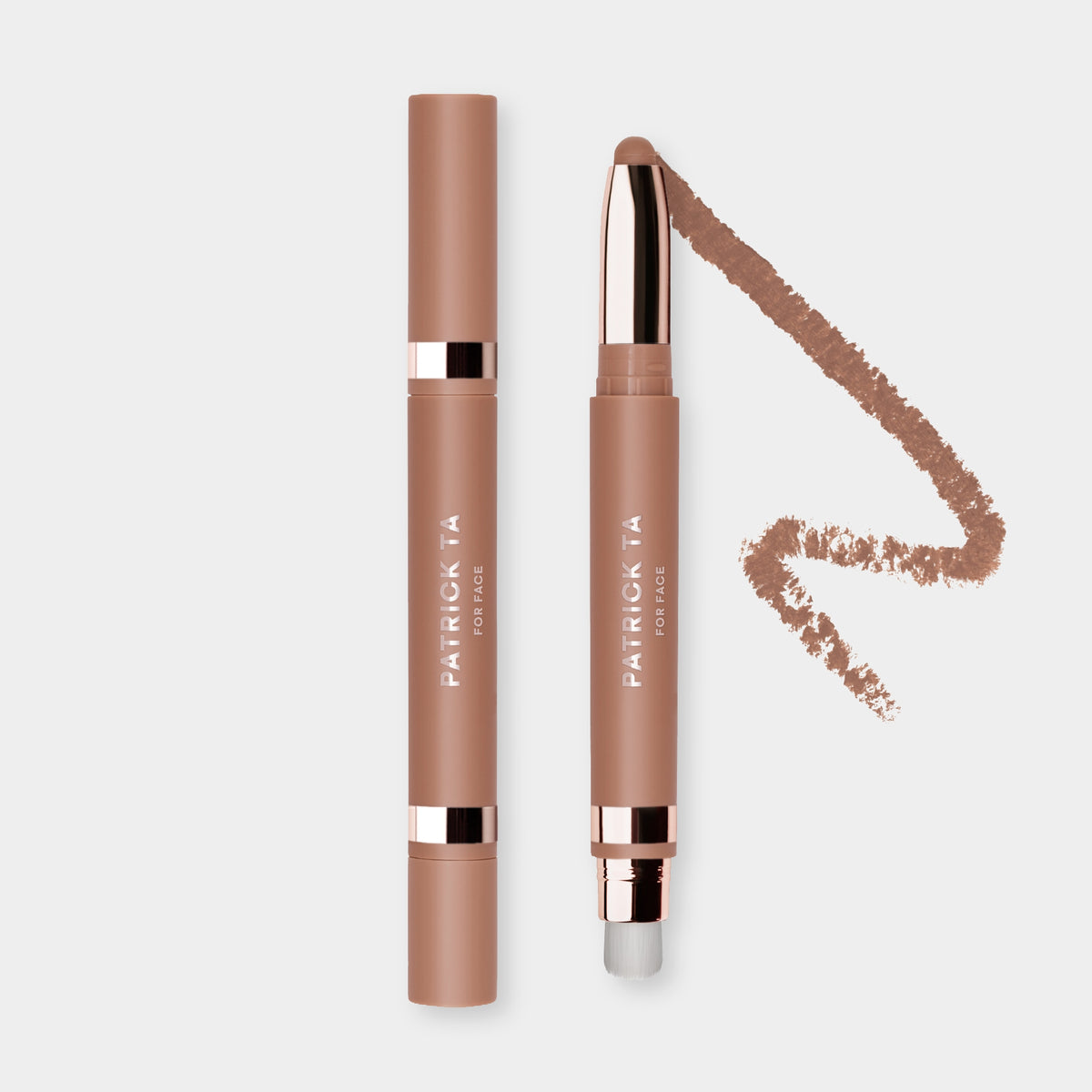
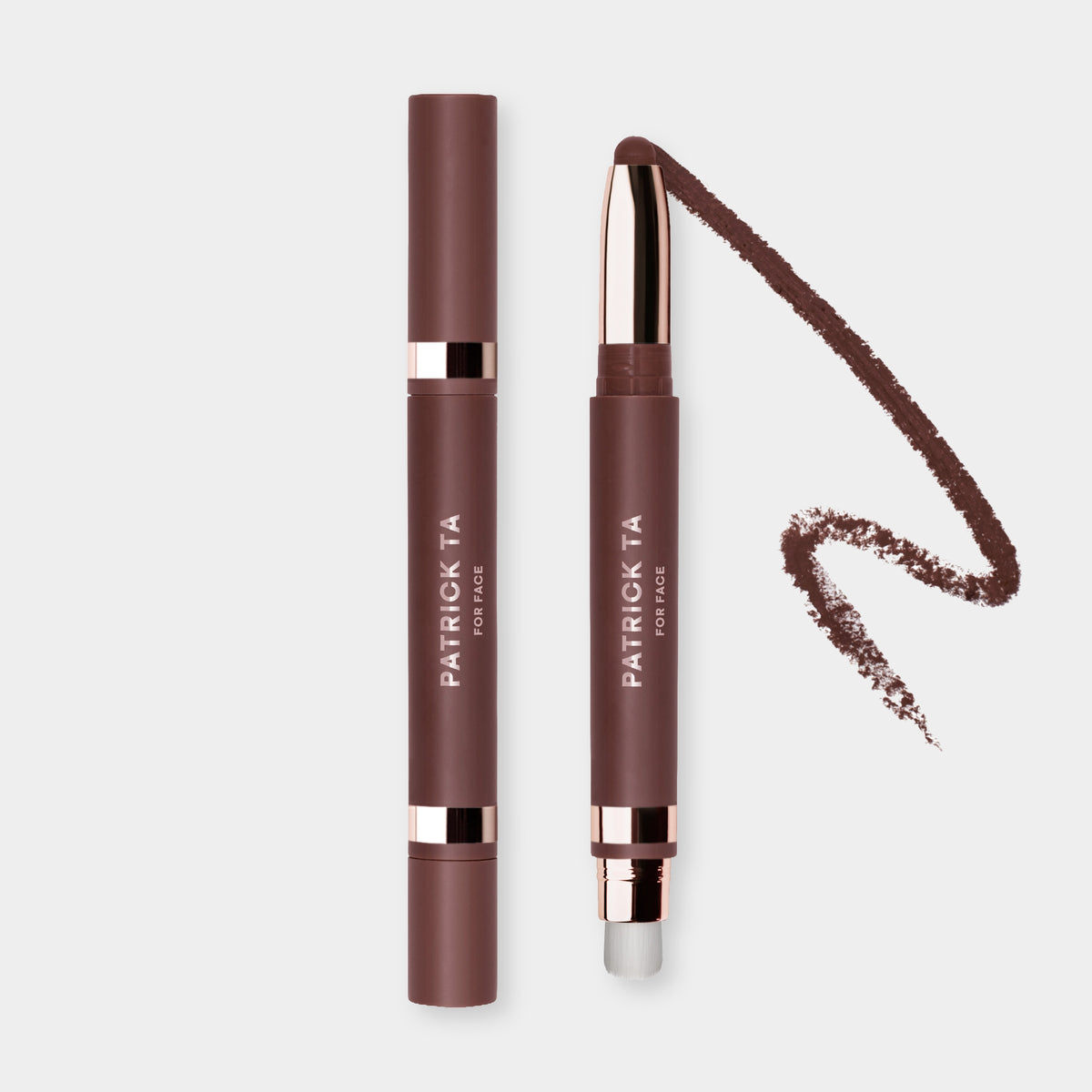
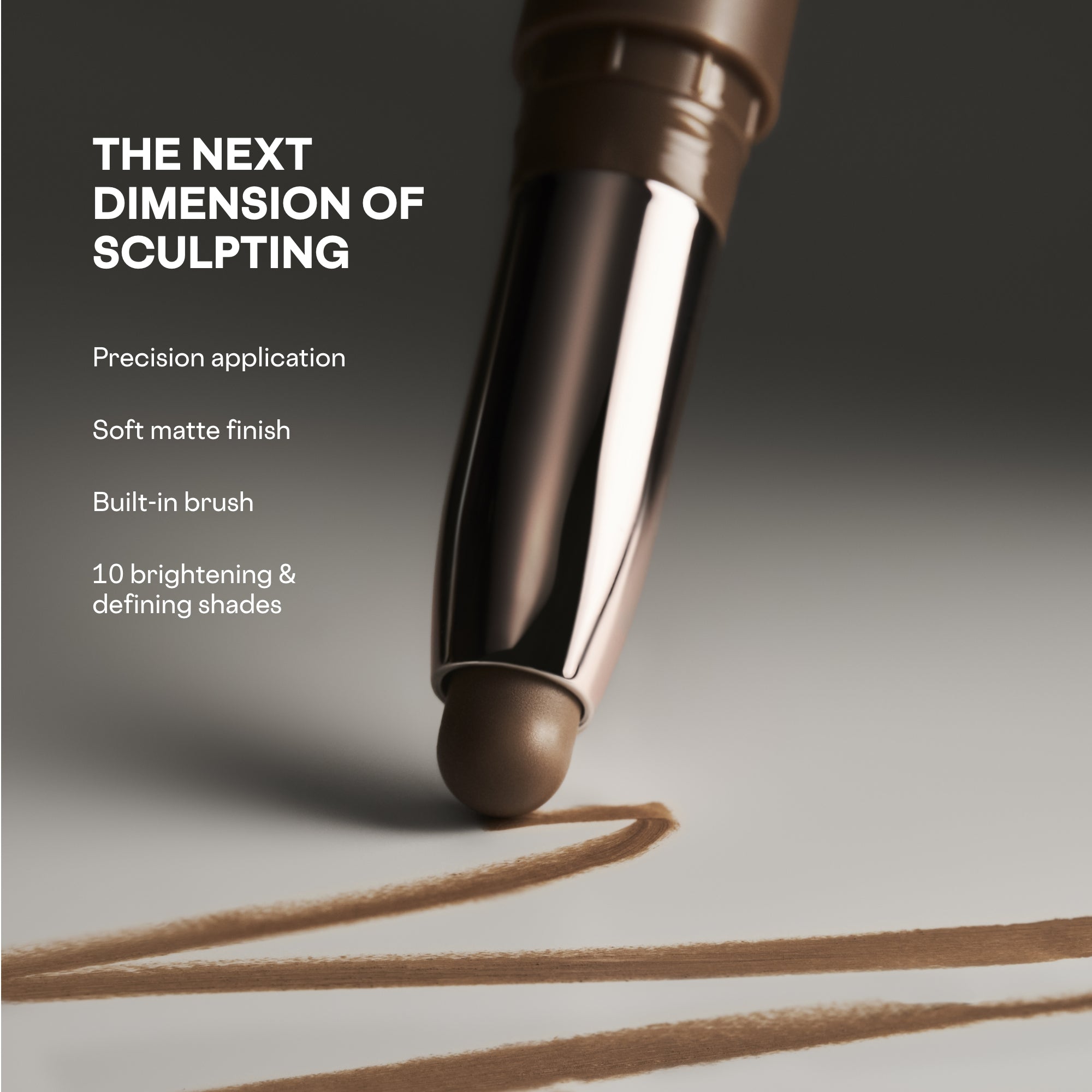
The Artistry Sticks are precision sculpting sticks made to enhance your favorite features. The slim silhouette reaches the smaller areas of the face, the creamy formula glides on wherever you want extra definition, and the built-in brush on the opposite end blends it out for natural-looking dimension. Ten shades cover both sculpting and brightening.
Three details do the heavy lifting:
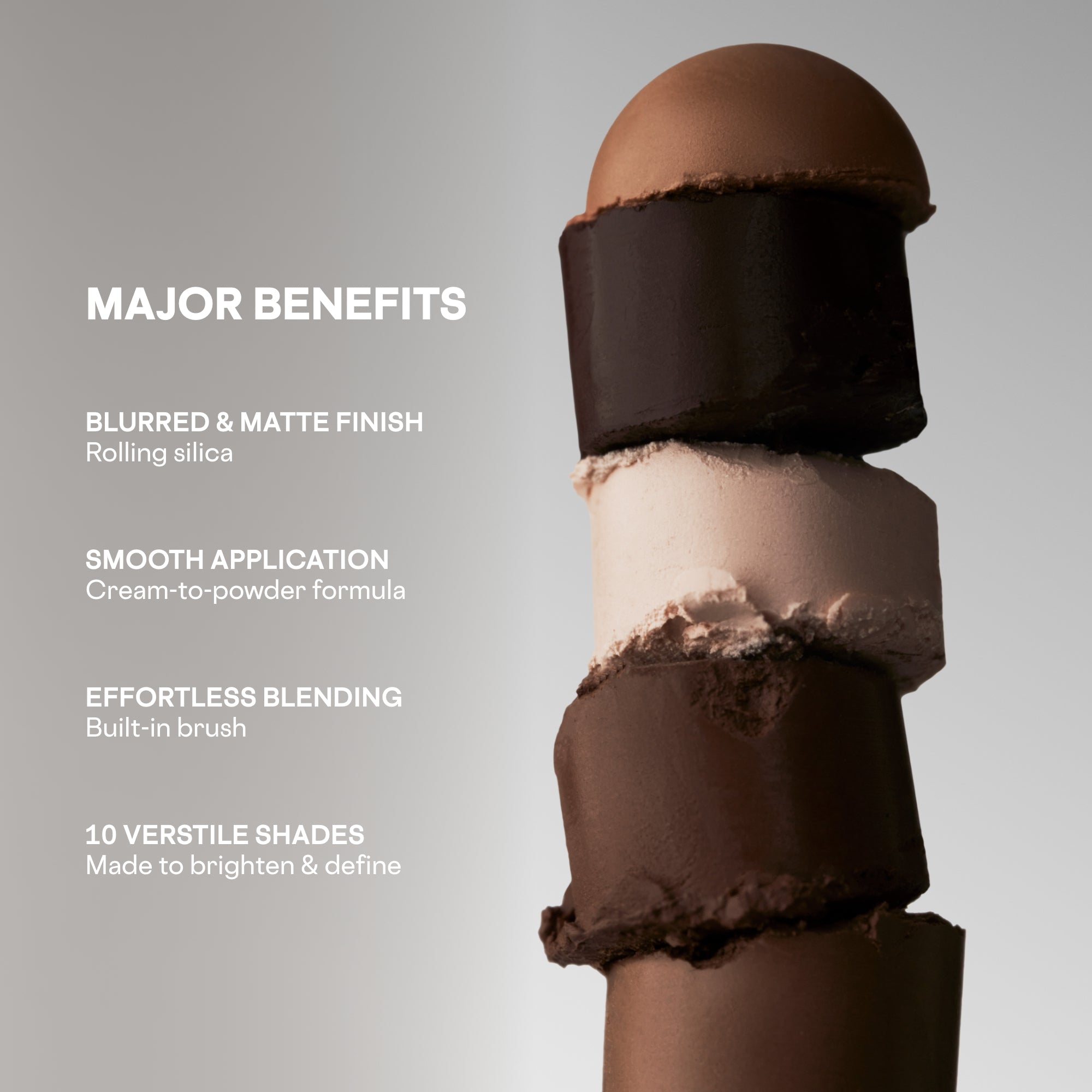
- A glide-enhancing formula. A balanced blend of high and low melting point waxes means the stick moves easily across skin and gives you real blending time before it softly sets.
- A soft-blur matte finish. Rolling silica diffuses the edges of the color, so the finish reads skin-like and matte rather than flat or chalky.
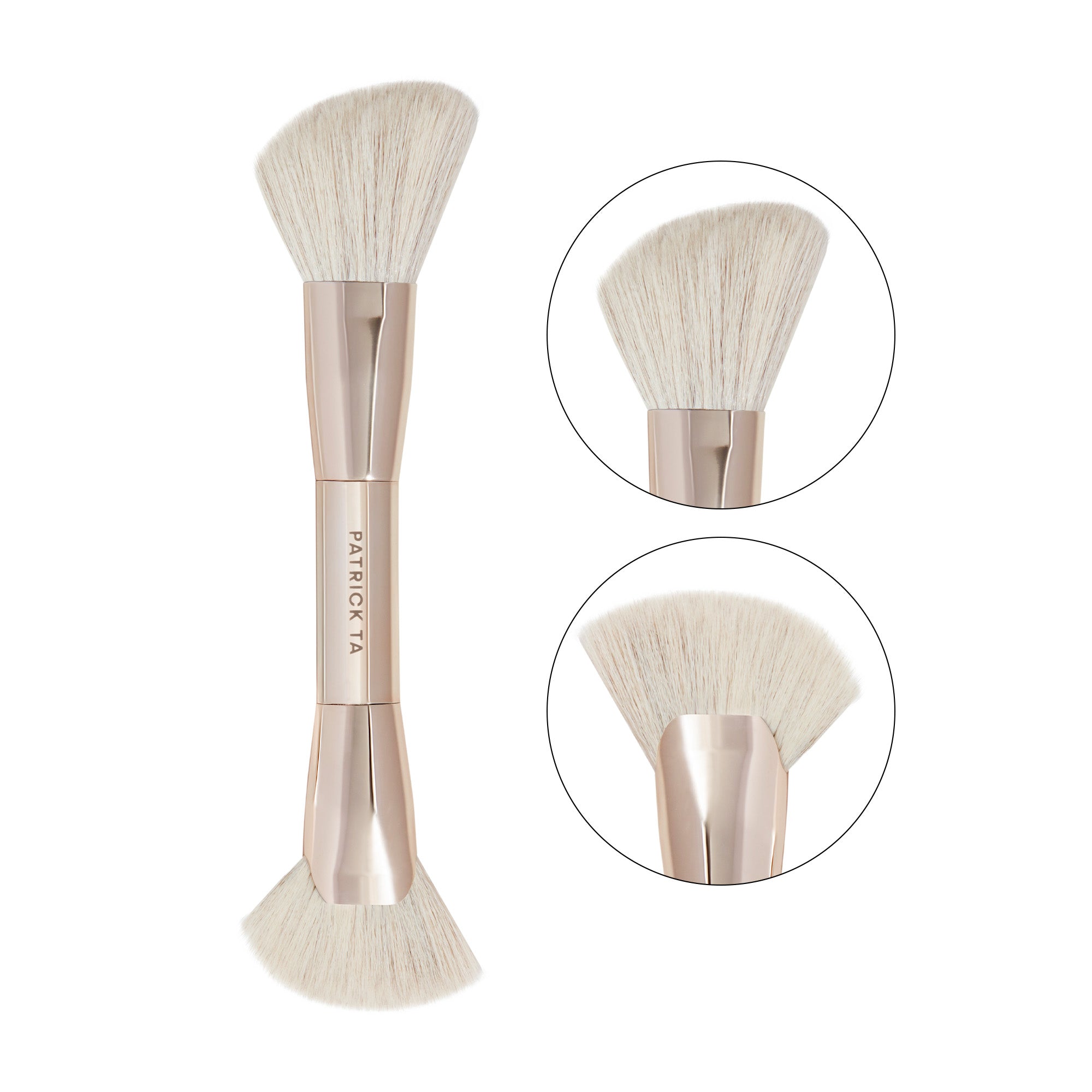
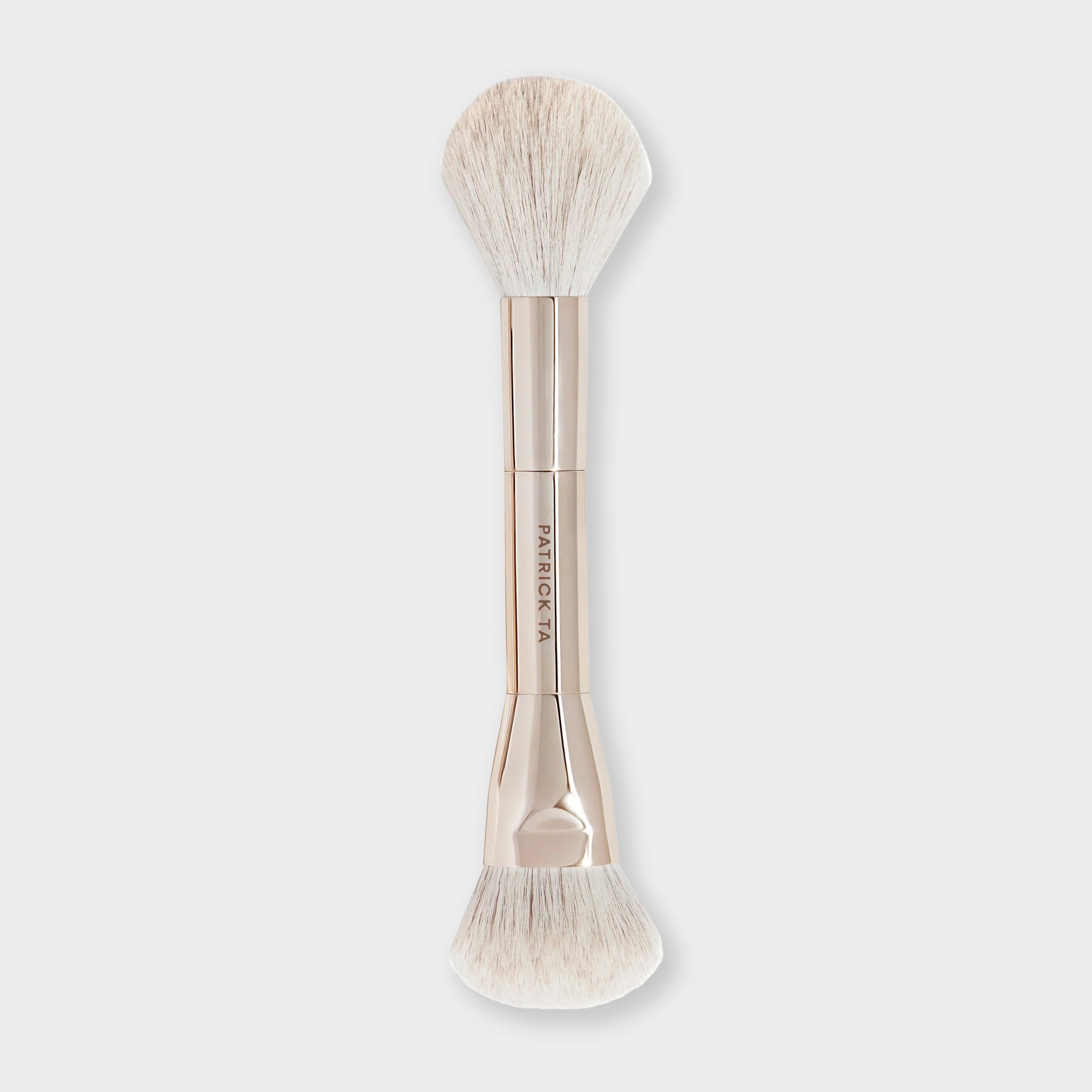
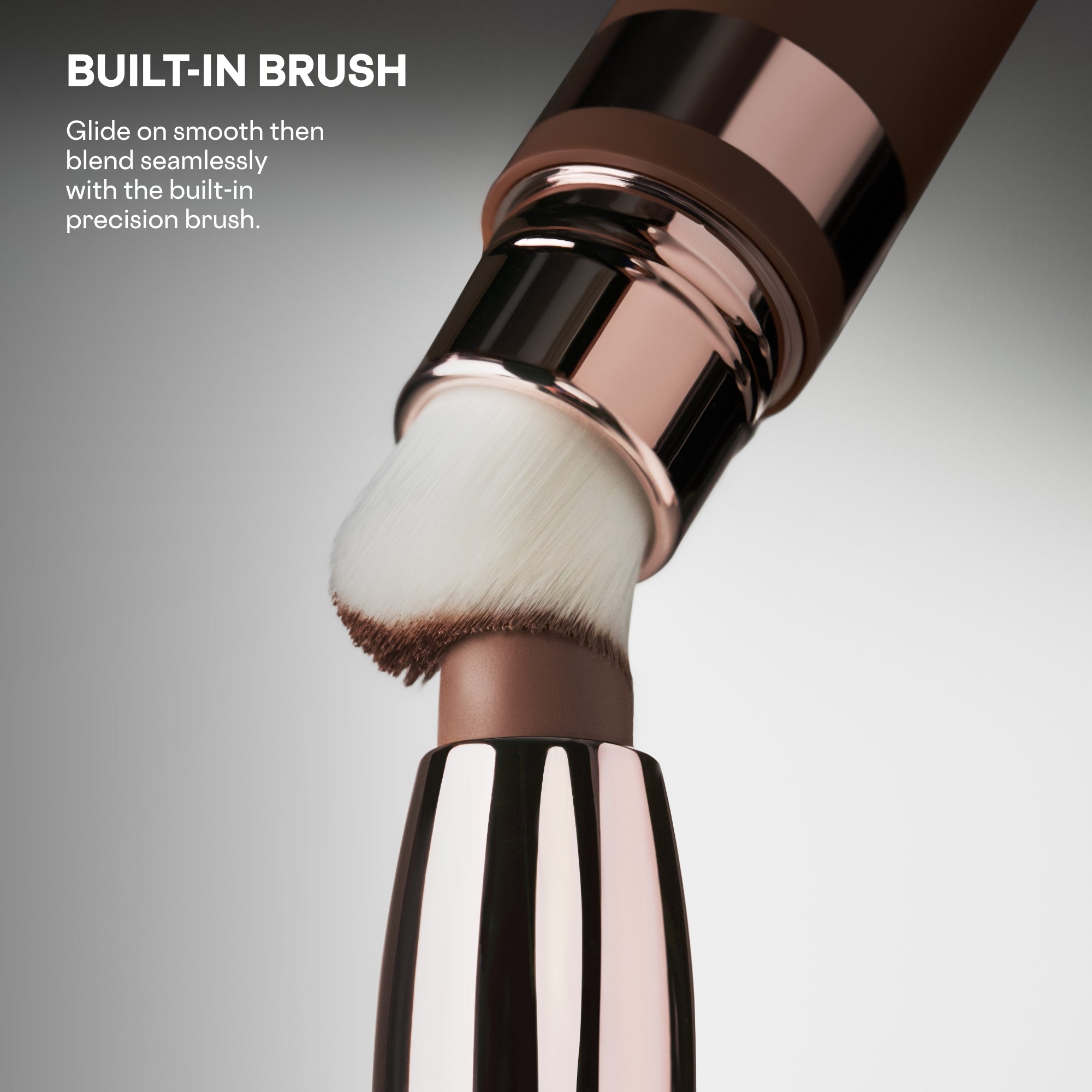
- A built-in brush. The dual-ended packaging puts the blending tool where you need it, which is why the sticks work as well in transit as they do at a vanity. For fuller diffusing across the cheeks, reach for a dedicated brush from the Patrick Ta tools collection.
The formula is talc-free, paraben-free, phthalate-free, gluten-free, and cruelty-free.

Defining Shades Versus Brightening Shades
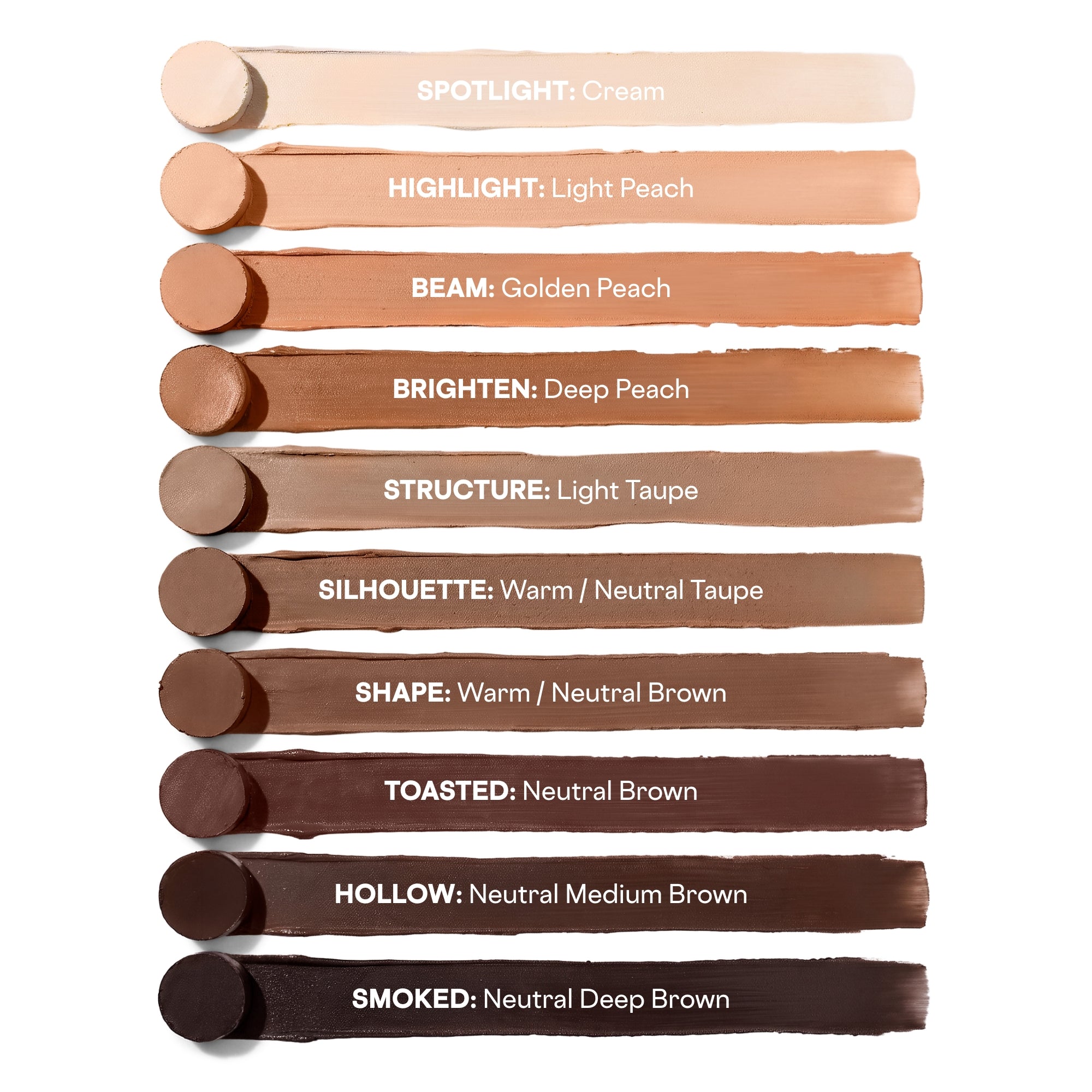
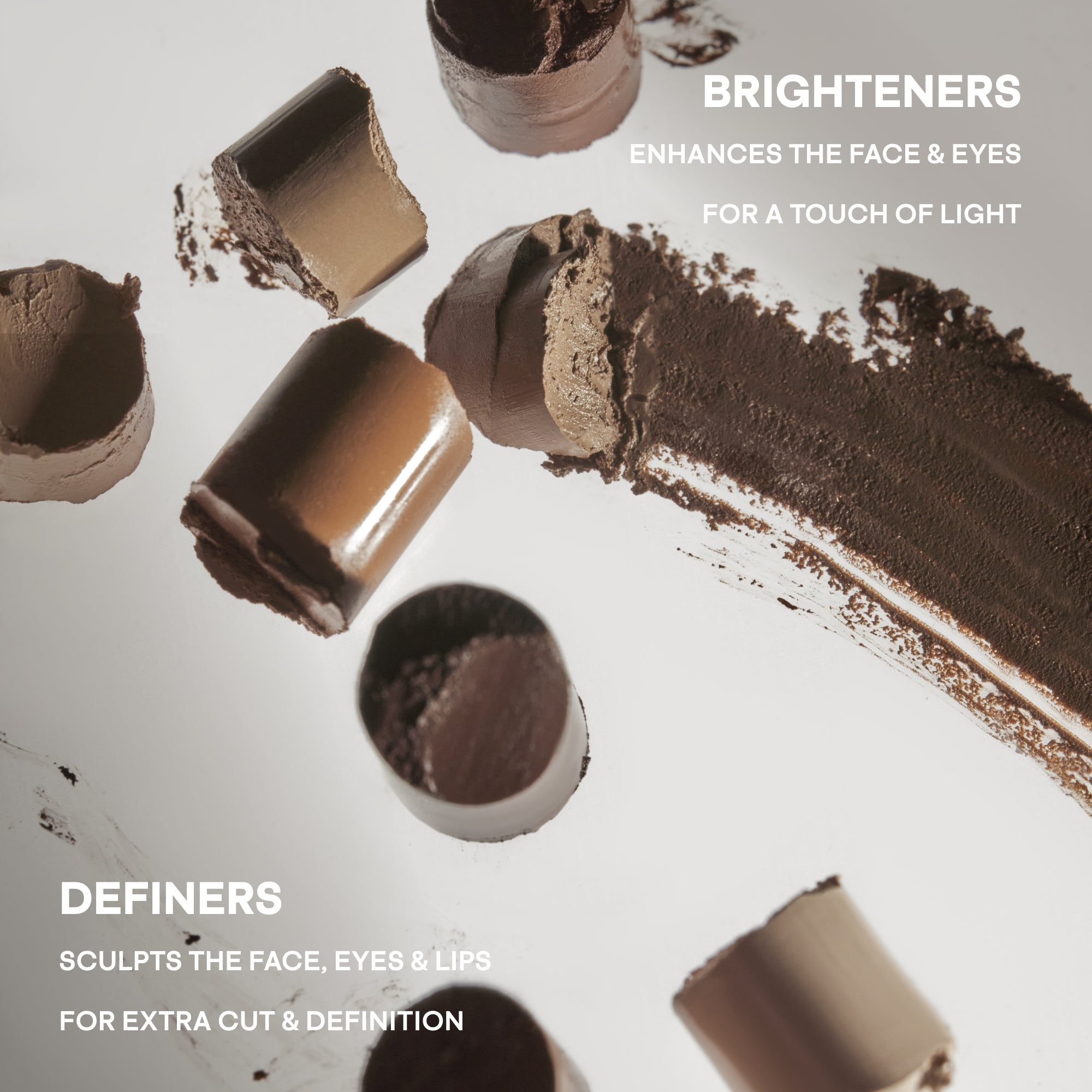
The collection splits into two jobs. Defining shades create depth and shadow. Brightening shades lift and catch light. Using both is what creates dimension, since a shadow only reads as a shadow when there is light next to it.
|
Shade Name |
Shade Description |
Type |
|---|---|---|
|
Spotlight |
Cream |
Brightening |
|
Highlight |
Light Peach |
Brightening |
|
Beam |
Golden Peach |
Brightening |
|
Brighten |
Deep Peach |
Brightening |
|
Structure |
Light Taupe |
Defining |
|
Silhouette |
Warm / Neutral Taupe |
Defining |
|
Shape |
Warm / Neutral Brown |
Defining |
|
Toasted |
Warm Brown |
Defining |
|
Hollow |
Neutral / Medium Brown |
Defining |
|
Smoked |
Neutral Deep Brown |
Defining |
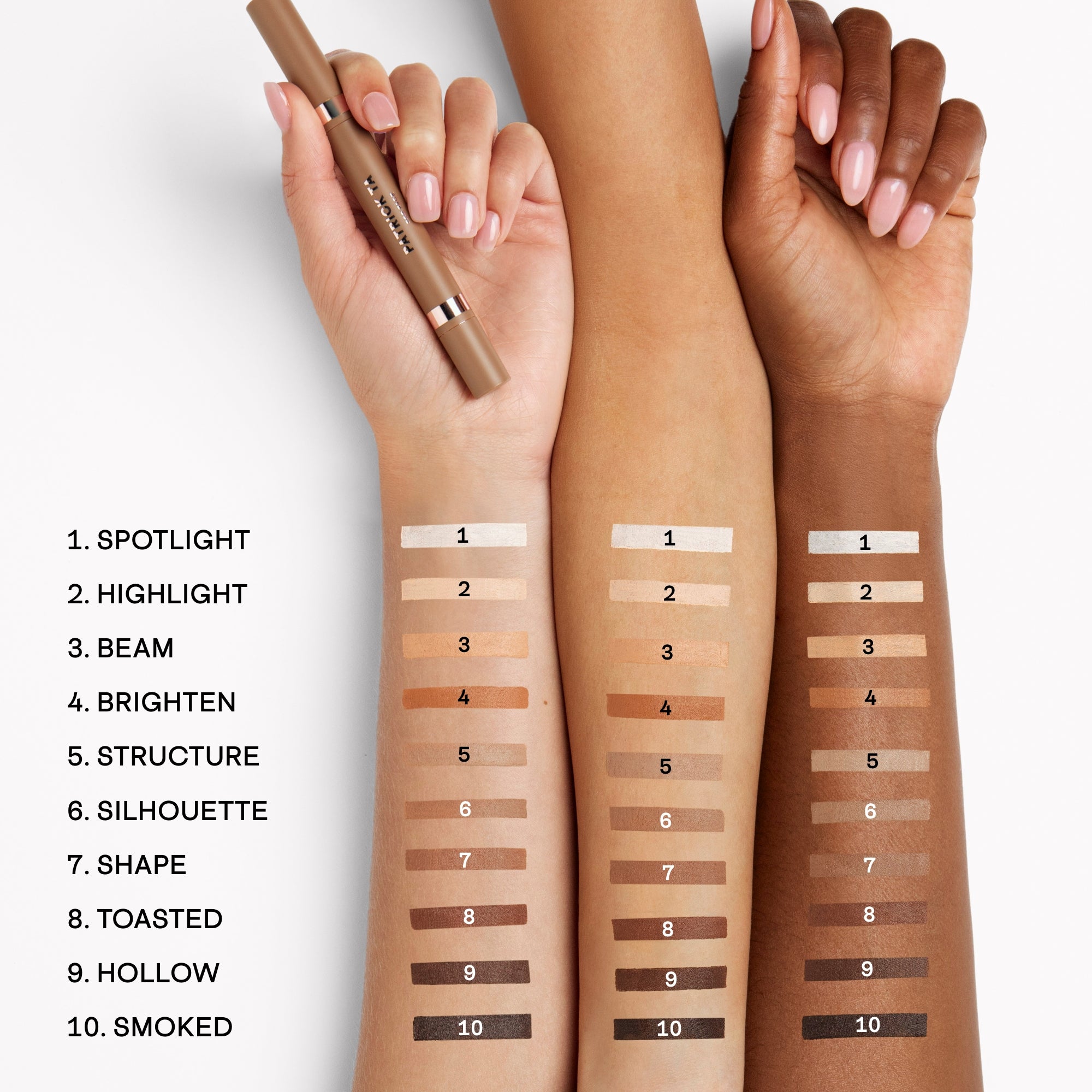
Four brightening shades run from cream through deep peach, and six defining shades run from light taupe through deep brown. Browse the full Major Sculpt collection to see how the sticks sit alongside the rest of the sculpting range.

How to Choose Your Artistry Stick Shades
Choose a defining shade one to two levels deeper than your skin tone, matched to your undertone, and a brightening shade one to two levels lighter. Taupe shades read as cooler, more natural shadow. Brown shades read warmer and more sun-kissed.
For Your Defining Shade
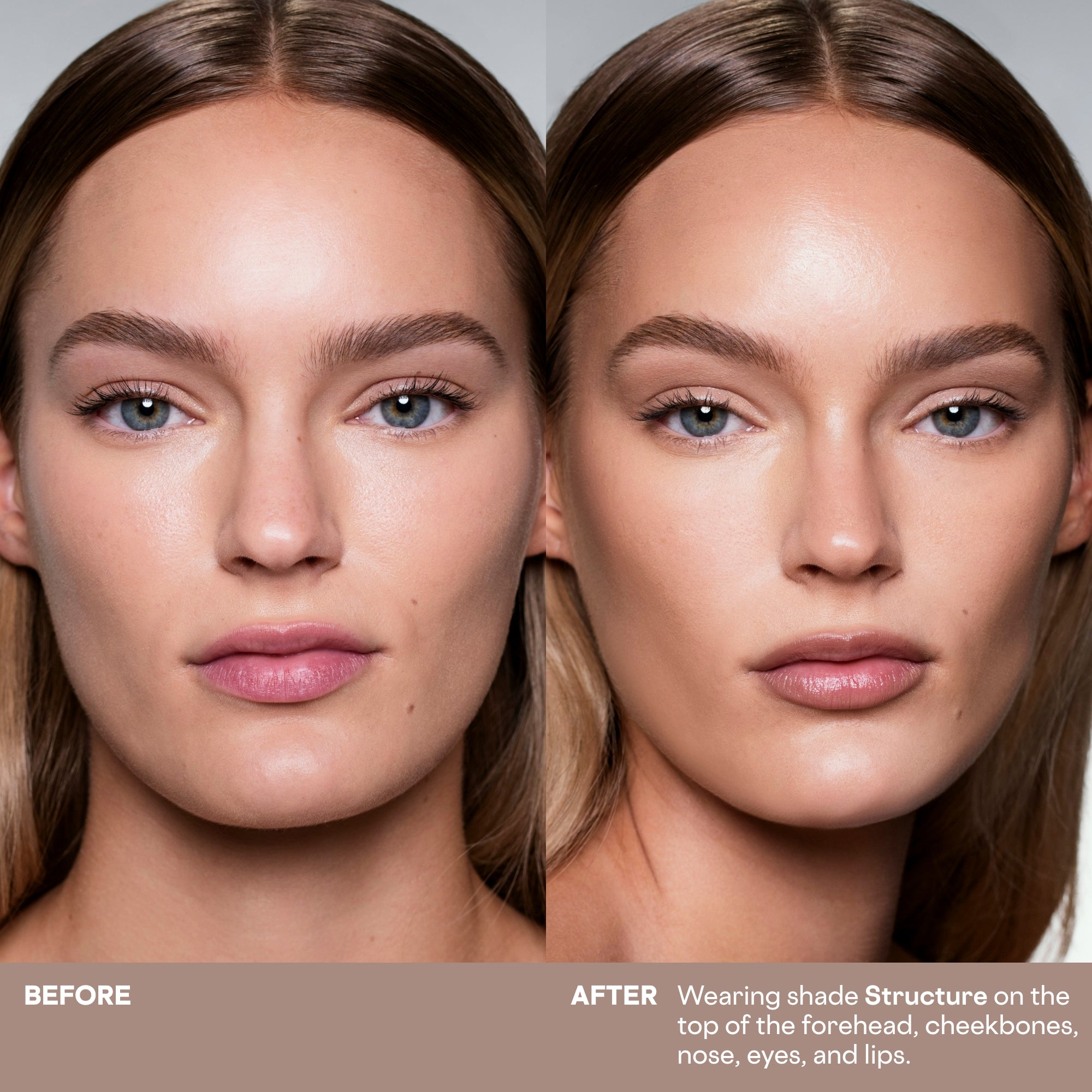
- Fair to light skin: Structure, a light taupe, gives a believable shadow without turning orange.
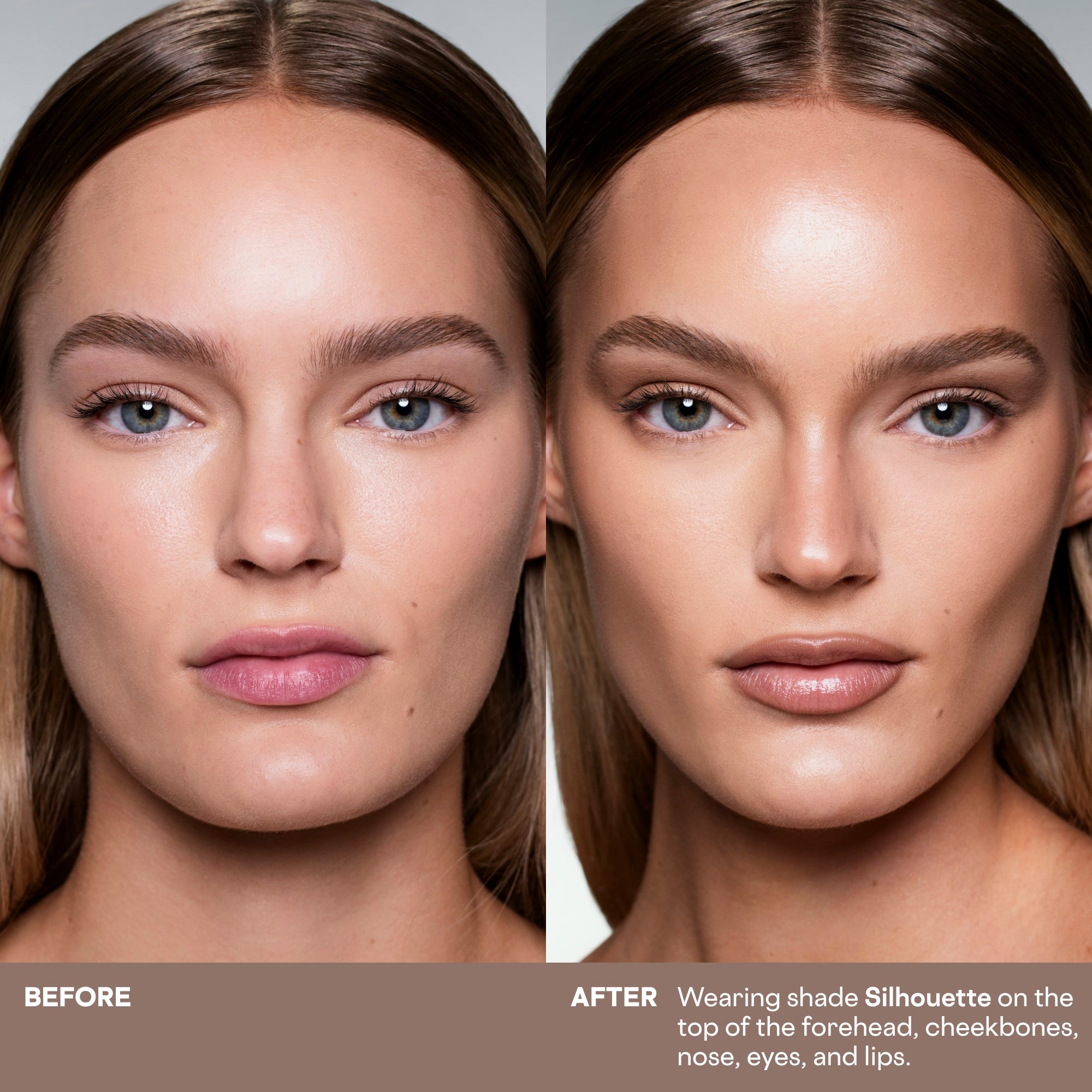
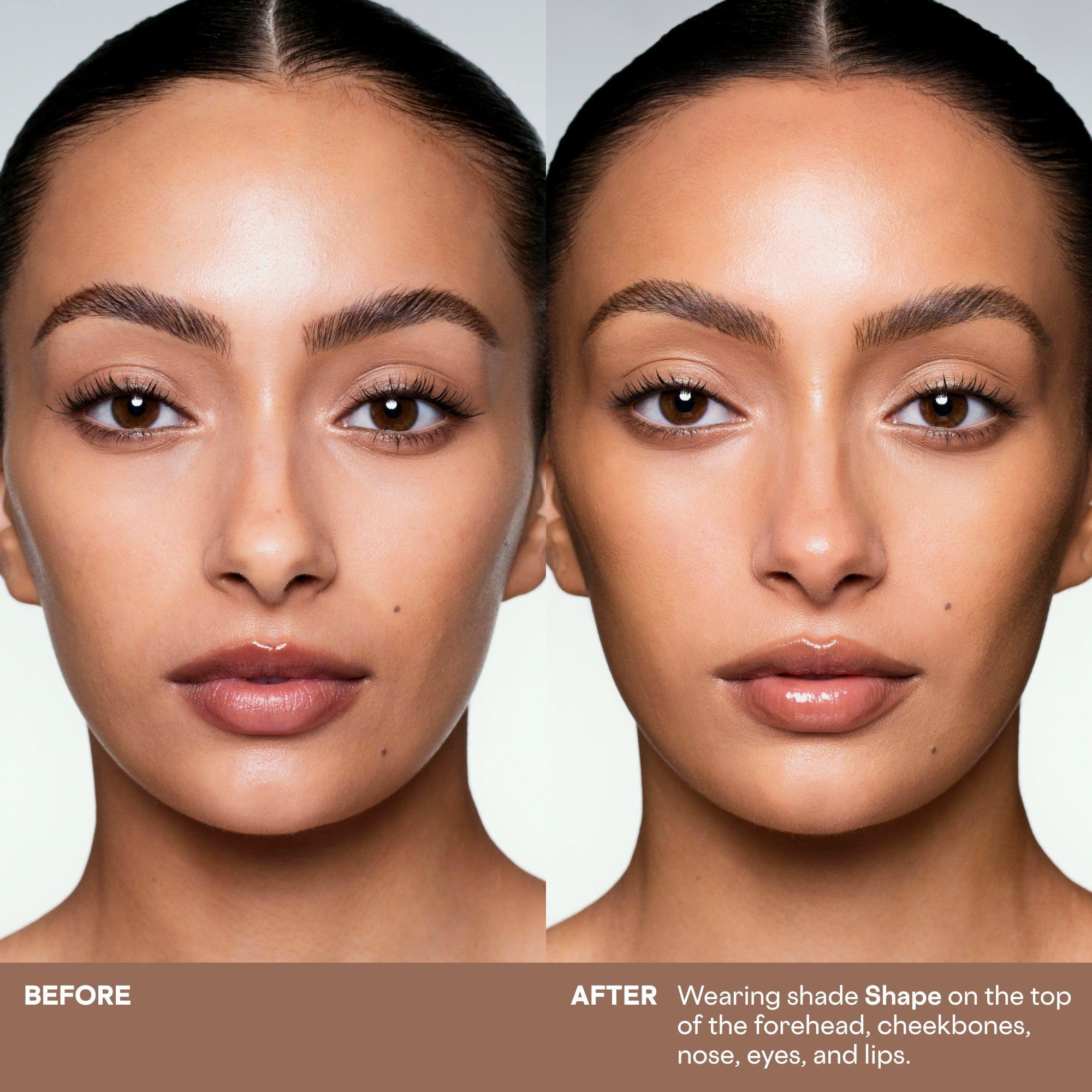
- Light to medium skin: Silhouette or Shape, depending on whether you want a cooler shadow or a warmer one.
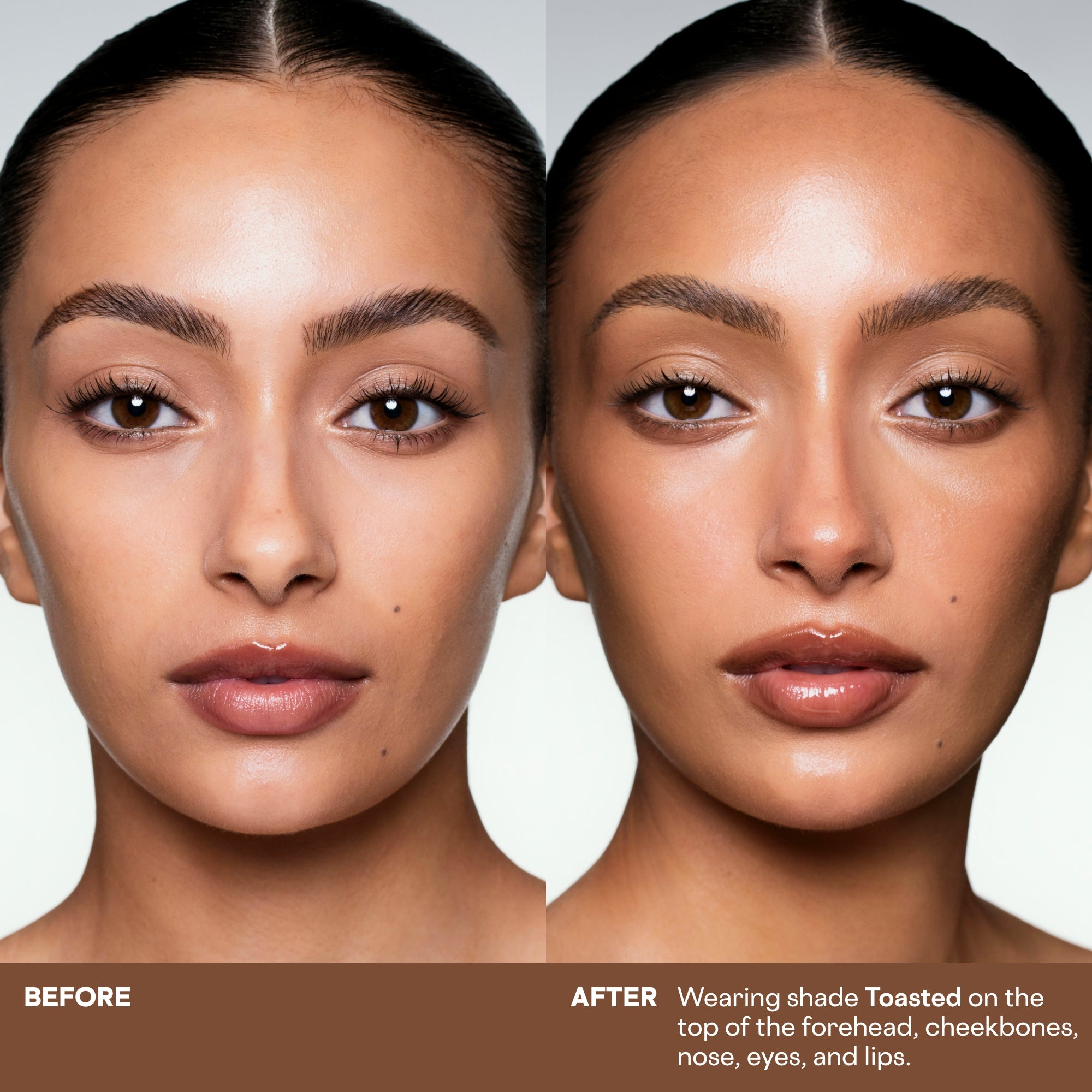
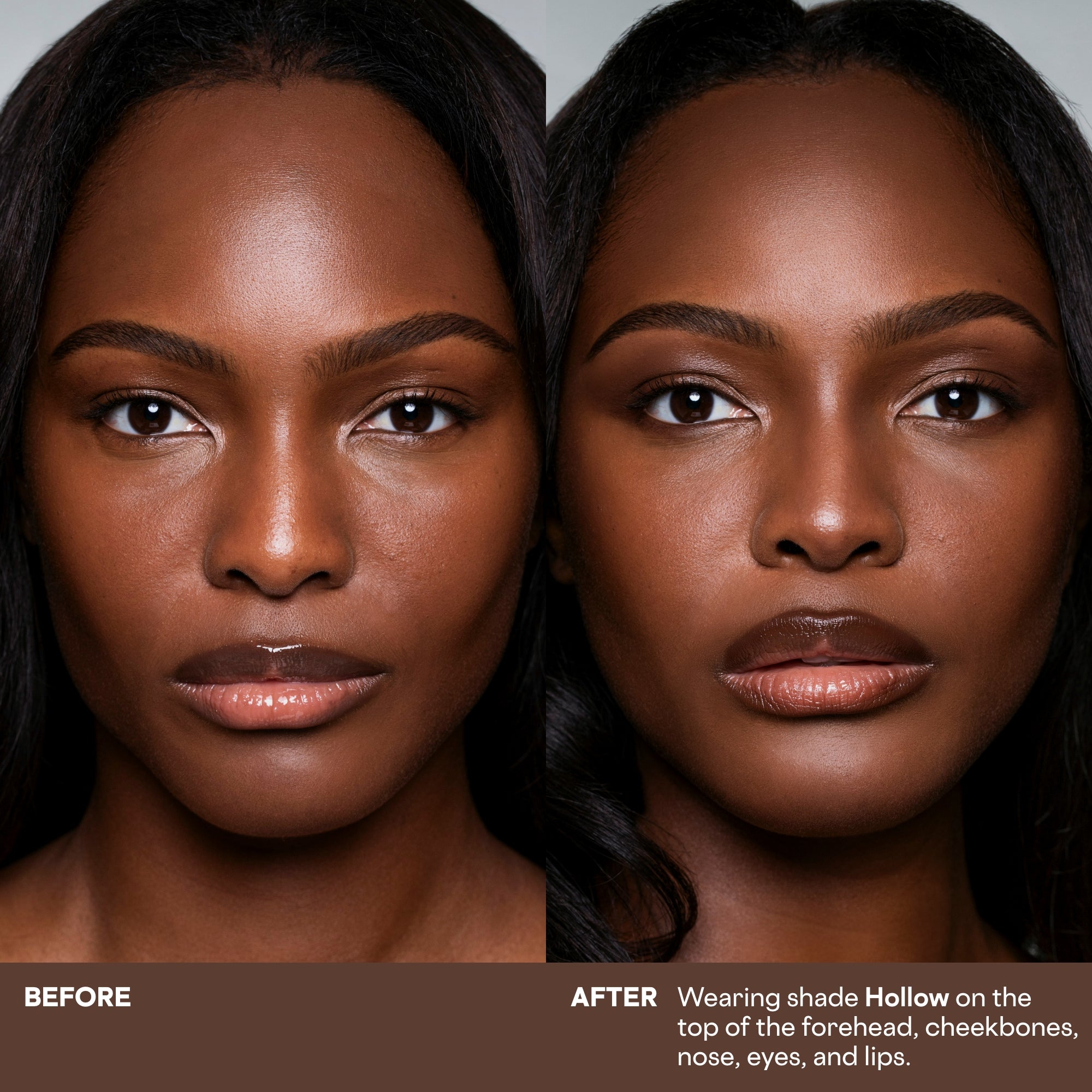
- Medium to tan skin: Toasted or Hollow, for depth that still blends soft at the edges.
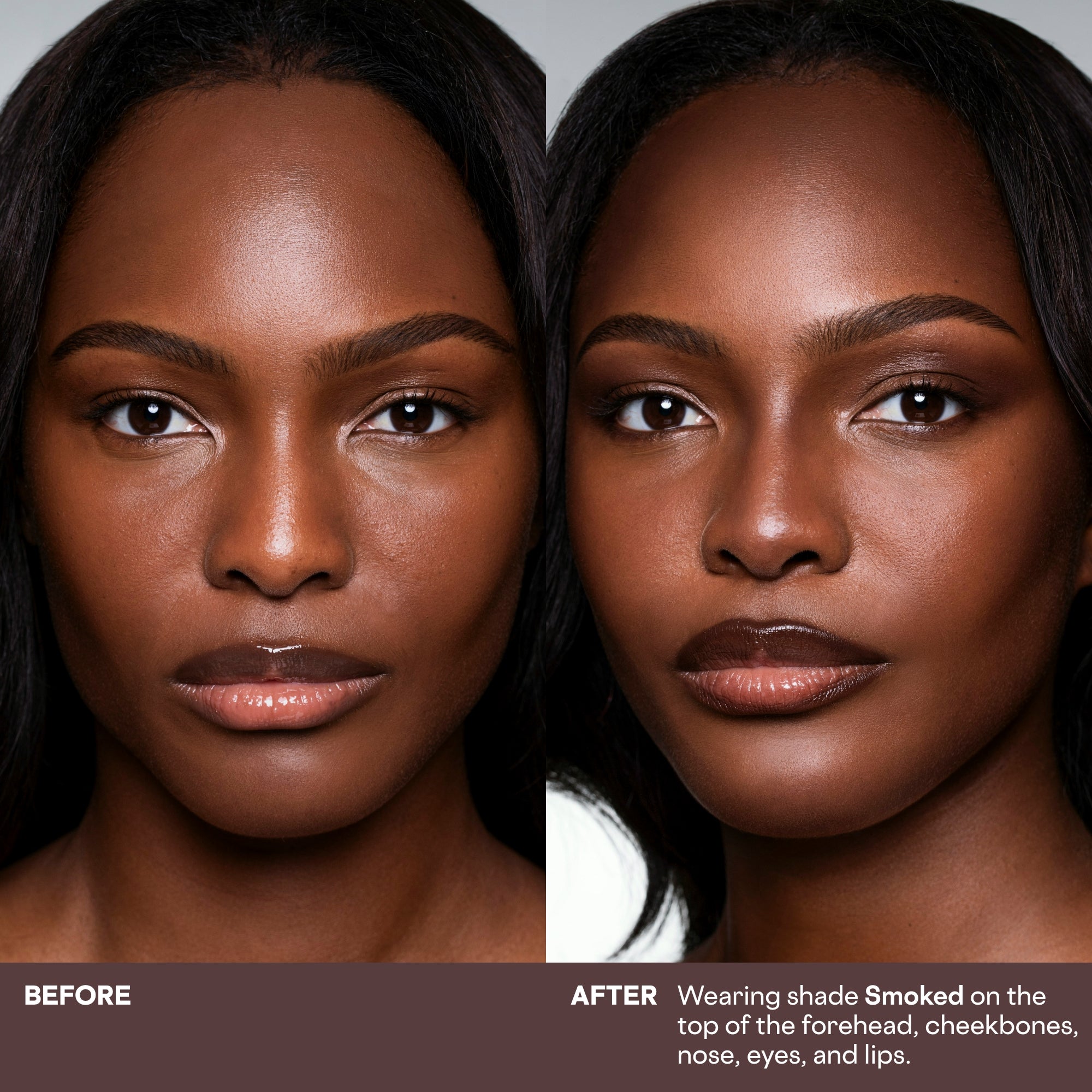
- Deep skin: Smoked, a neutral deep brown, for definition that is visible rather than muddy.
For Your Brightening Shade
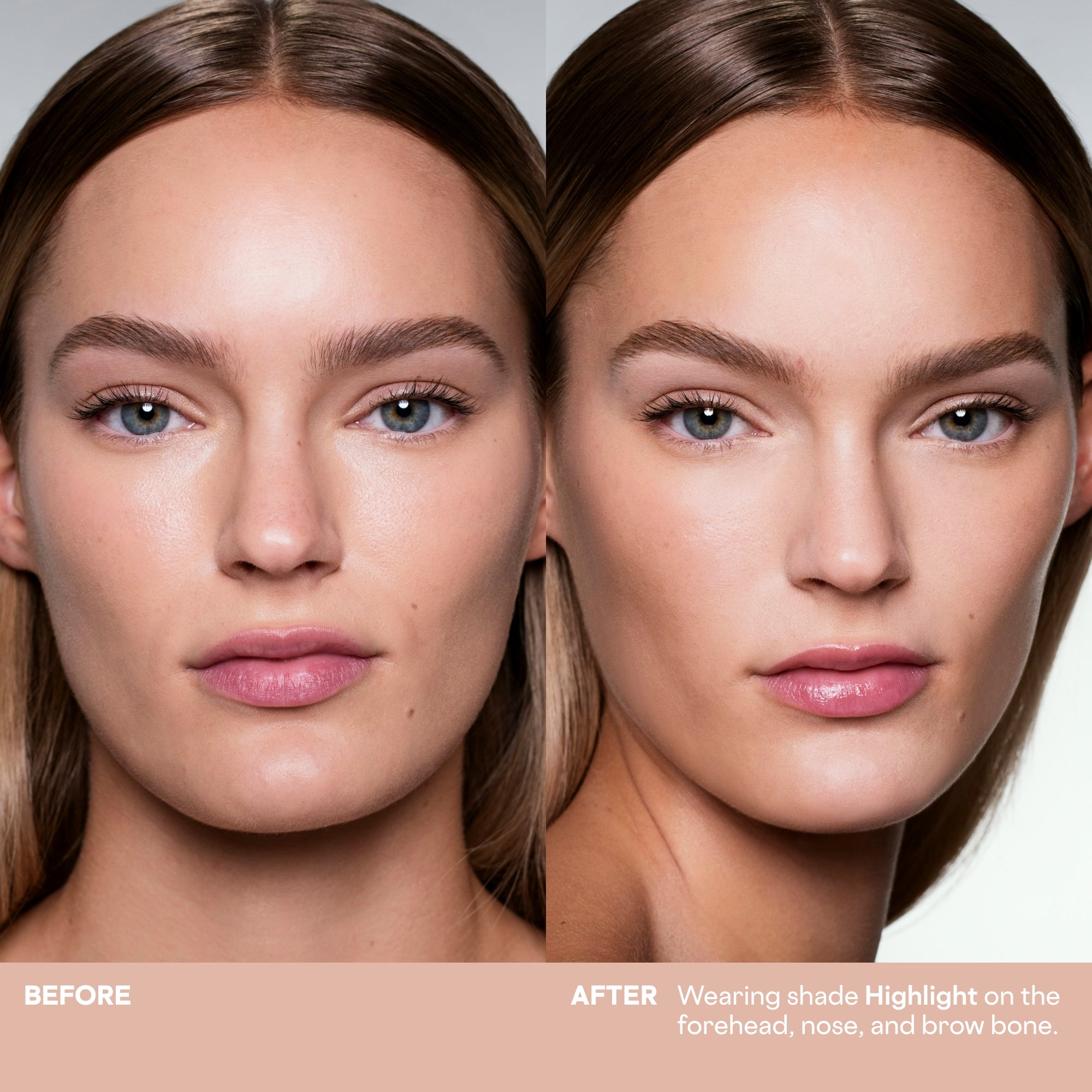
- Fair to light skin: Spotlight or Highlight.
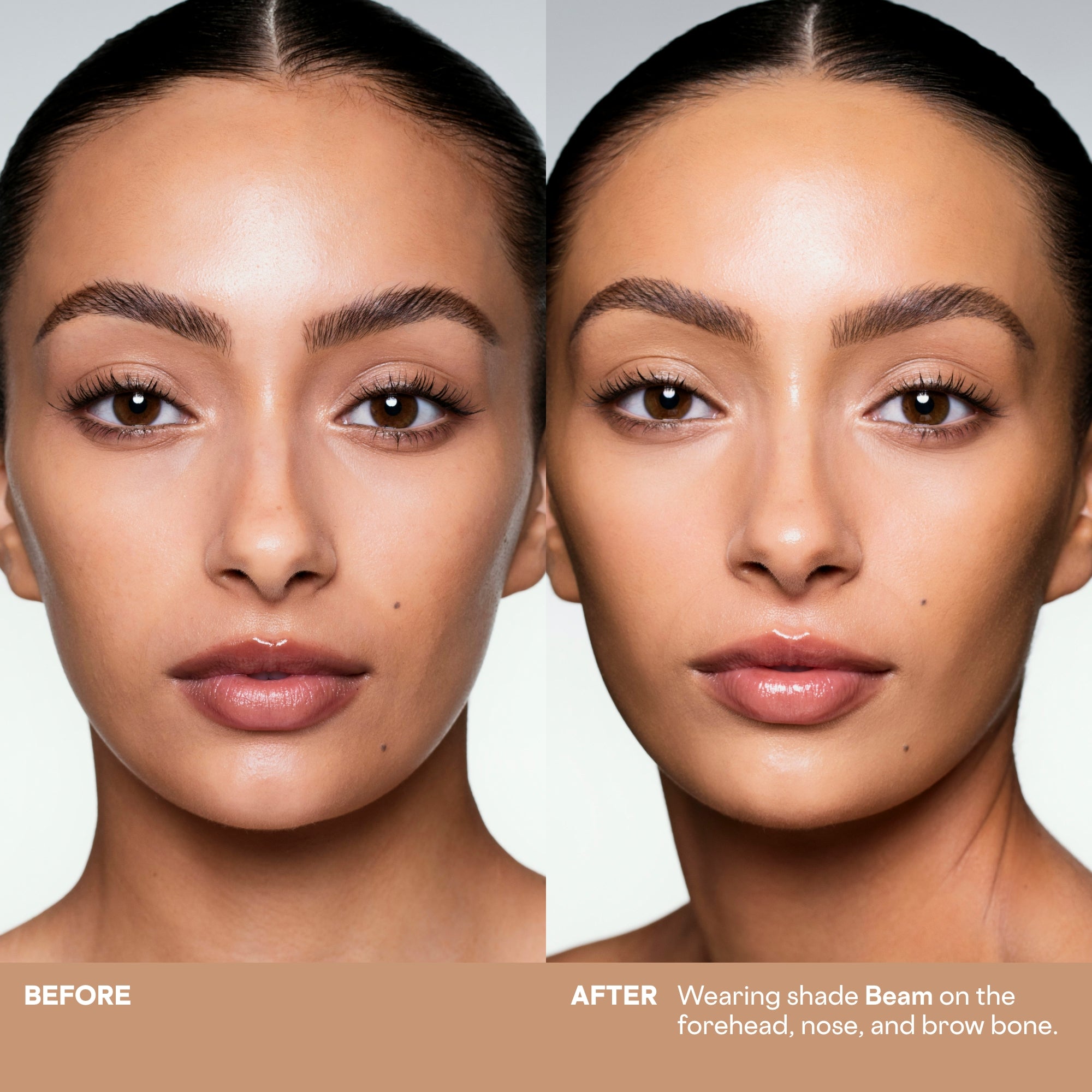
- Medium to tan skin: Beam, a golden peach that warms as it brightens.
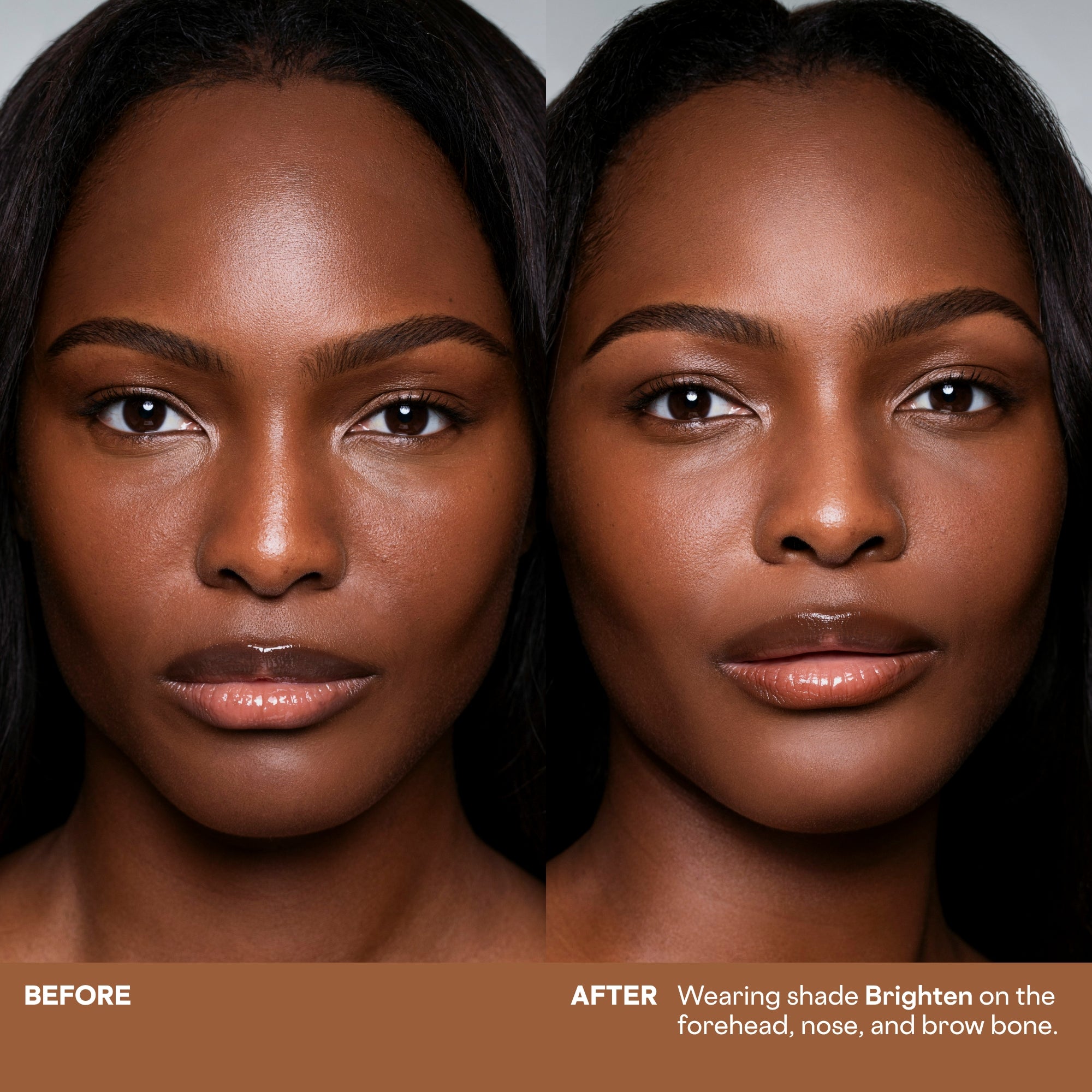
- Deep skin: Brighten, a deep peach that lifts without going ashy.
If you are unsure where you sit, the shade finder is a fast way to identify your depth and undertone before you pick a pair.

How to Use a Contour Stick Step by Step
Apply the stick directly to skin in short strokes, blend immediately with the built-in brush, then build in thin layers. The full sequence takes under two minutes.
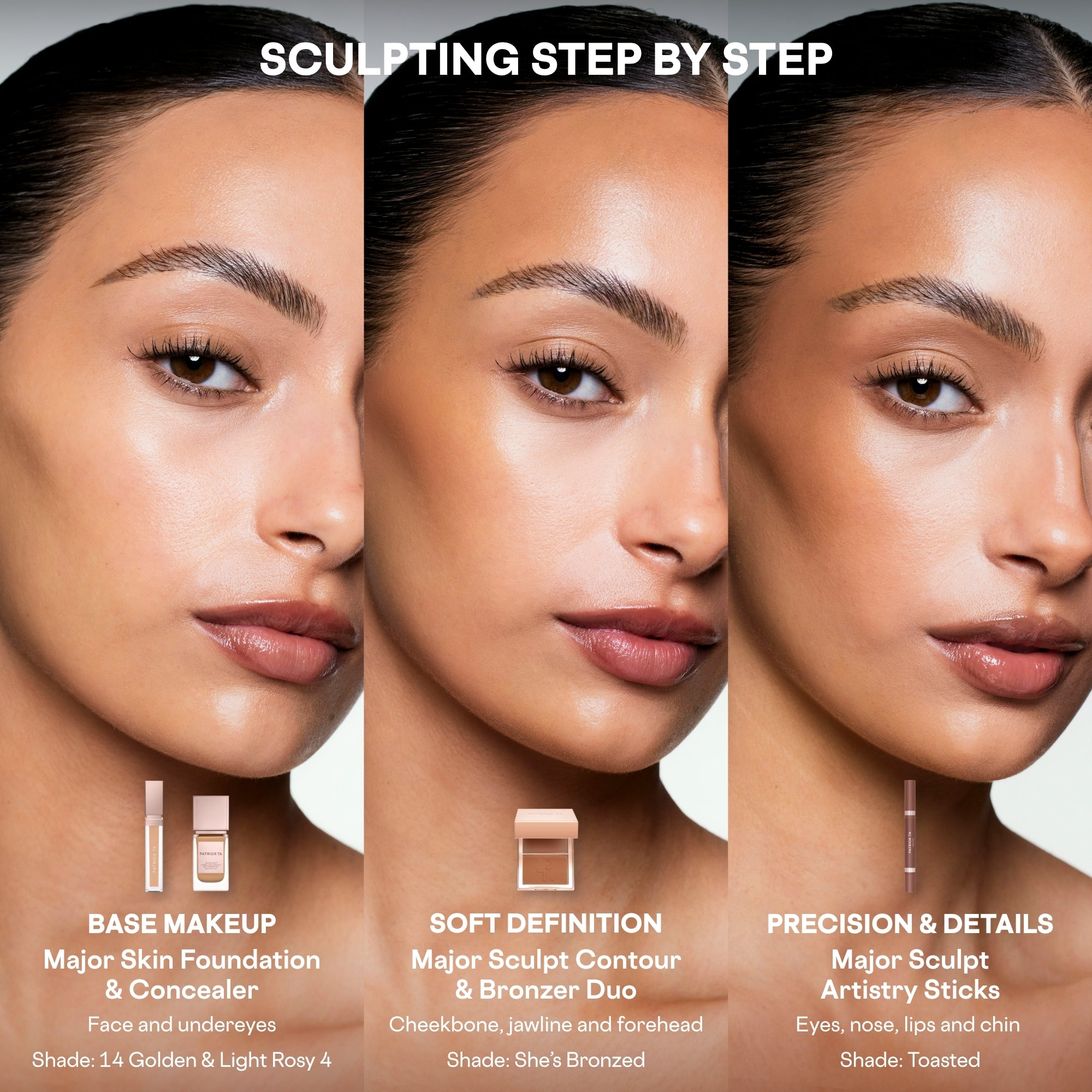
- Start with your base. Apply foundation and concealer first if you want a polished, even canvas. If you prefer Patrick’s underpainting approach, sculpt before foundation instead, as covered in his layering techniques.
- Draw, do not swipe. Use short, light strokes along the area you want to define. Let the domed tip do the work and resist pressing hard. You can always add more.
- Blend right away. Flip to the built-in brush and blend with small circular or tapping motions, working the edges outward. Cream-to-powder formulas give you playtime, but they do set, so blend each area before moving to the next.
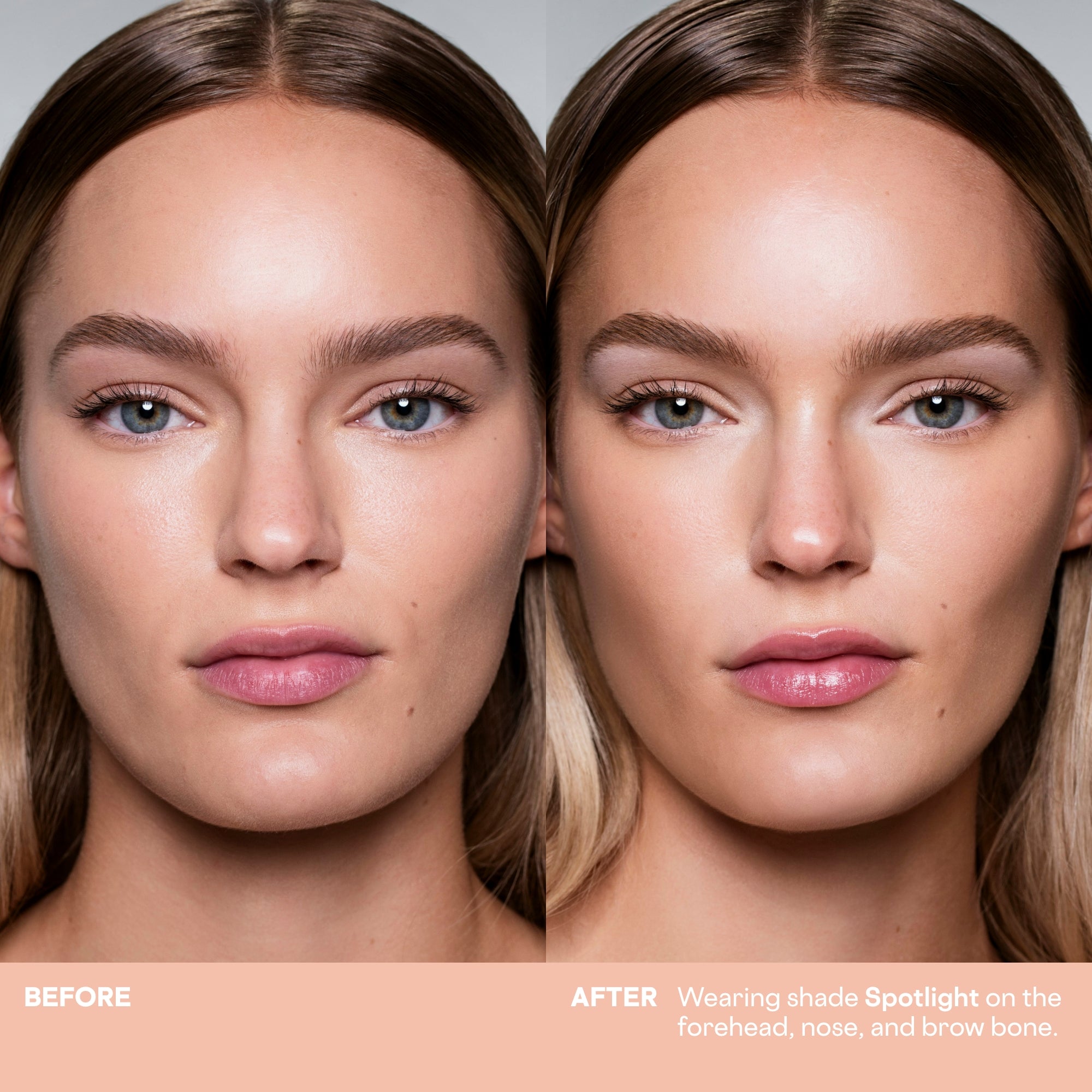
- Add your brightening shade. Place the lighter shade above and around the shadow, on the high points you want to bring forward. Blend where the two meet so there is no visible line between them.
- Build and finish. Layer a second pass only where you want more depth. Set with powder if your skin runs oily, or leave it as is for a softer, skin-like finish.
Where to Place Each Shade on the Face, Eyes, and Lips
Defining shades go anywhere you want a shadow. Brightening shades go anywhere you want light. That principle holds across all three zones, which is what makes a slim stick more useful than a cheek-only contour.
The Face
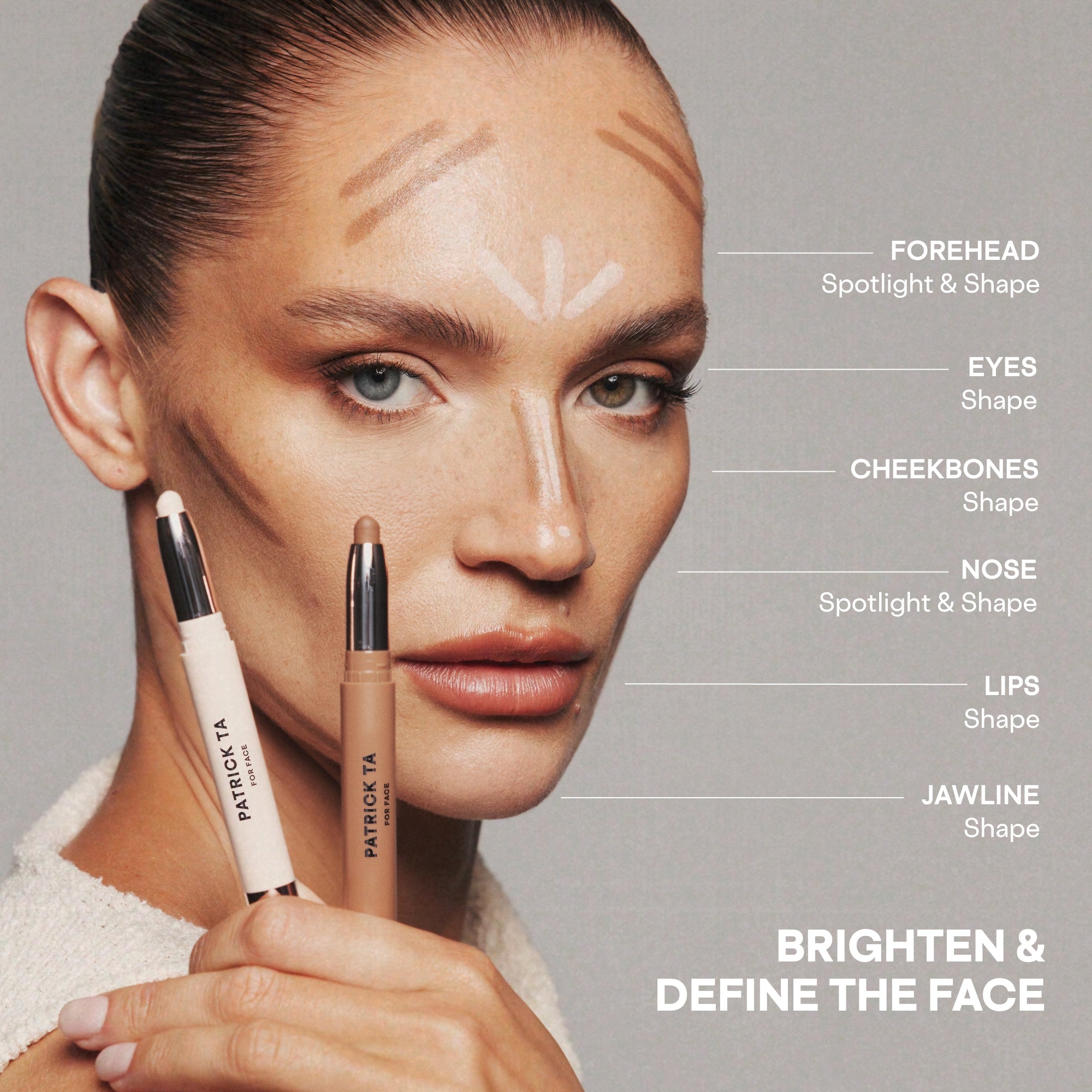
Press the defining shade into the hollows of the cheeks, angling from the top of the ear toward the corner of the mouth. Take it along the jawline and the perimeter of the hairline to balance proportions. Two short parallel lines down the sides of the nose, connected at the tip, create a natural nose shadow.
The Eyes
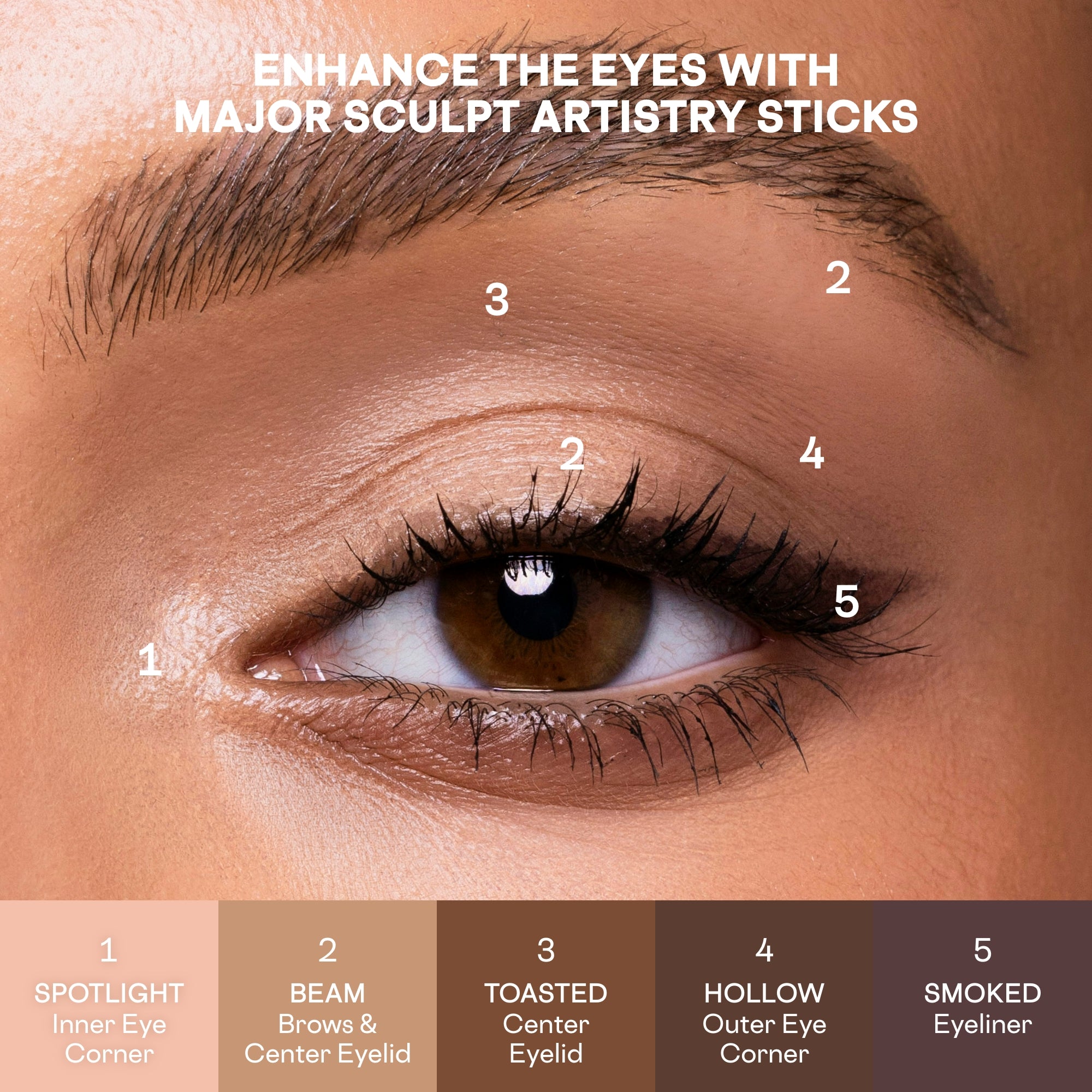
Use a defining shade in the crease and along the outer corner to add depth, then a brightening shade on the inner corner, the center of the lid, and just under the brow. This is where the slim tip earns its keep, since a compact simply cannot land color that precisely. Pair it with the rest of your eye makeup and you have a full look from one stick.
The Lips
A whisper of defining shade just under the lower lip creates the illusion of fullness. A touch of brightening shade on the cupid’s bow lifts the top lip. Blend both with the built-in brush until the edges disappear entirely.

How to Layer Artistry Sticks With Cream and Powder Contour
Use the compact for broad shaping and the stick for the details. Apply cream contour and powder bronzer across the cheeks, jaw, and hairline first, then come back with an Artistry Stick for the nose, eyes, lips, and anywhere you want an extra cut of definition.
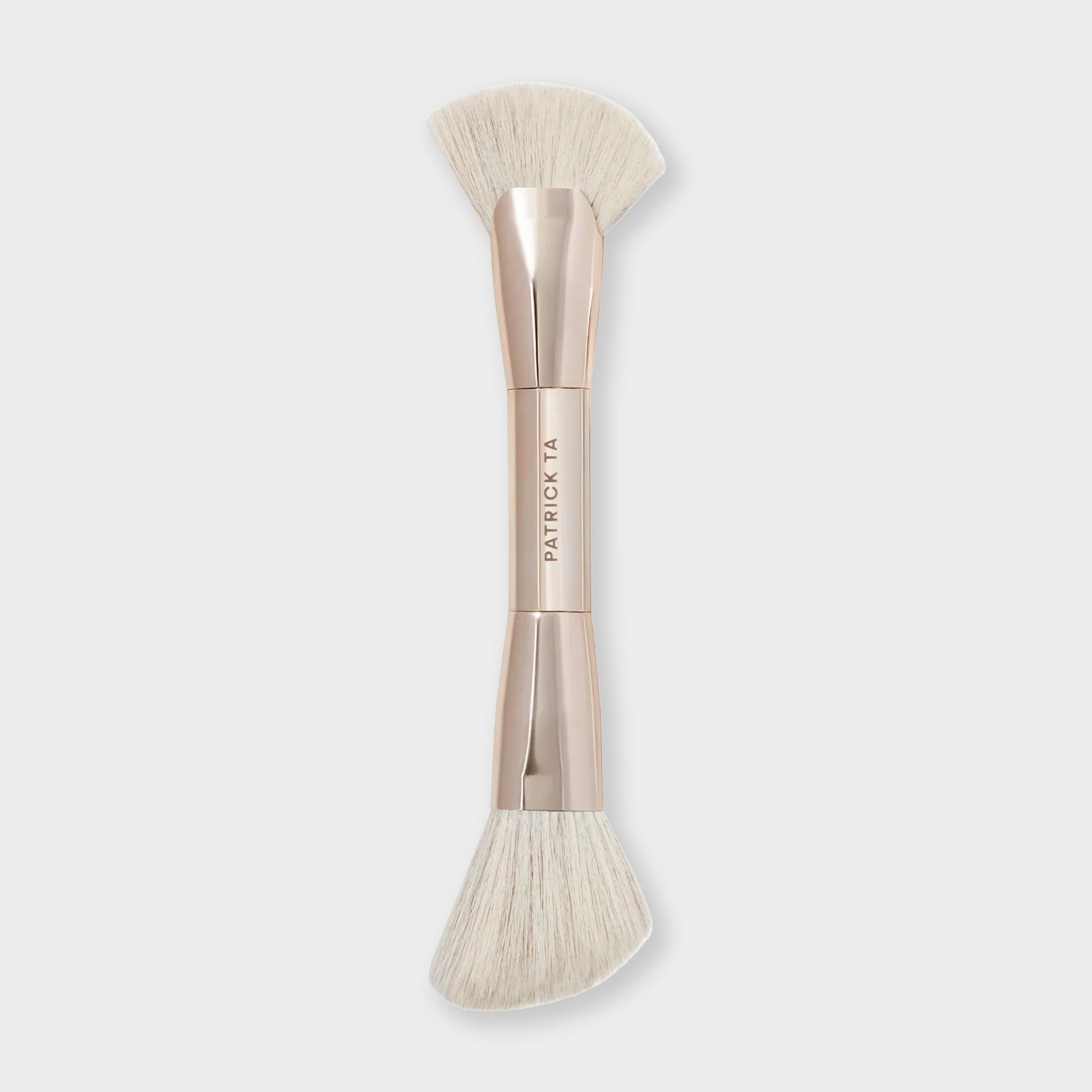
This is the layering order most people land on: broad first, precise second. If you want the full kit, the Major Sculpt Contour Duo and Dual-Ended Brush Set covers the base sculpt, and the stick handles everything the brush cannot reach. For more on how warmth and shadow work together, the bronzer and contour collection breaks down the difference.
Can You Use a Contour Stick as Eyeshadow?
Yes. Any shade in the collection works as a matte cream eyeshadow, which is one of Patrick’s own favorite ways to use them. Apply the stick straight to the lid, blend with the built-in brush, and you have a matte eye that took one product and about thirty seconds.
The defining shades act as transition and crease colors. The brightening shades work as lid washes and inner-corner lifts. Because the formula sets to a soft matte, it holds without creasing the way a dewier cream might.

What to Pair With Your Artistry Sticks
Sculpting is one layer of a look. These are the steps that sit naturally on either side of it:
- Concealer, applied for a natural look, so brightness and shadow are working with each other rather than competing.
- Transition blush, which bridges the undereye and the cheek and softens the whole face.
- A layered blush placement, for the lift that Patrick builds with color rather than heavy contour.
- Highlighter, placed with intention, to finish the high points once your dimension is set.
The full range of face makeup and the latest new arrivals are worth a look if you are building a routine from scratch.
Frequently Asked Questions
What is a contour stick used for?
A contour stick is used to add shadow and definition to the face, and in the case of a collection with brightening shades, to add light as well. It shapes the cheekbones, jawline, and nose, and a slim stick can also define the eyes and lips.
How do you blend a contour stick without patchiness?
Blend one small section at a time, immediately after you apply it, using light tapping motions rather than dragging. Patchiness usually comes from applying too much product at once or from waiting until the cream has set. Build in thin layers instead.
Should you apply a contour stick before or after foundation?
Either works. Applying it after foundation gives you crisp, controlled placement. Applying it before, which is the underpainting method, gives a softer and more diffused result because the foundation blurs the edges for you.
Can you use a contour stick on the eyes and lips?
Yes, if the stick is slim enough to be precise. A domed tip lets you place color in the eye crease, on the inner corner, under the lower lip, and on the cupid’s bow. Blend the edges completely so nothing reads as a line.
Should you choose a taupe or a brown contour shade?
Taupe shades create a cooler, more shadow-like effect and tend to look most natural on fair to light skin. Brown shades read warmer and more sun-kissed, and generally suit medium to deep skin tones. Match to your undertone rather than to your foundation shade.
Do contour sticks work on dry or textured skin?
A creamy, glide-enhancing formula is usually the better choice for dry or textured skin than a powder, because it does not cling to flaky patches. Prep with moisturizer first, apply with a light hand, and blend with a brush rather than dragging the stick.
Can you use a contour stick and a cream contour compact together?
Yes, and it is the approach most makeup artists take. Use the compact for broad shaping across the cheeks and jaw, then use the stick for precise work on the nose, eyes, and lips.
How many shades do the Major Sculpt Artistry Sticks come in?
Ten shades, split into four brightening shades and six defining shades, currently priced at $34 each. Each stick includes a built-in blending brush.

RELATED POSTS
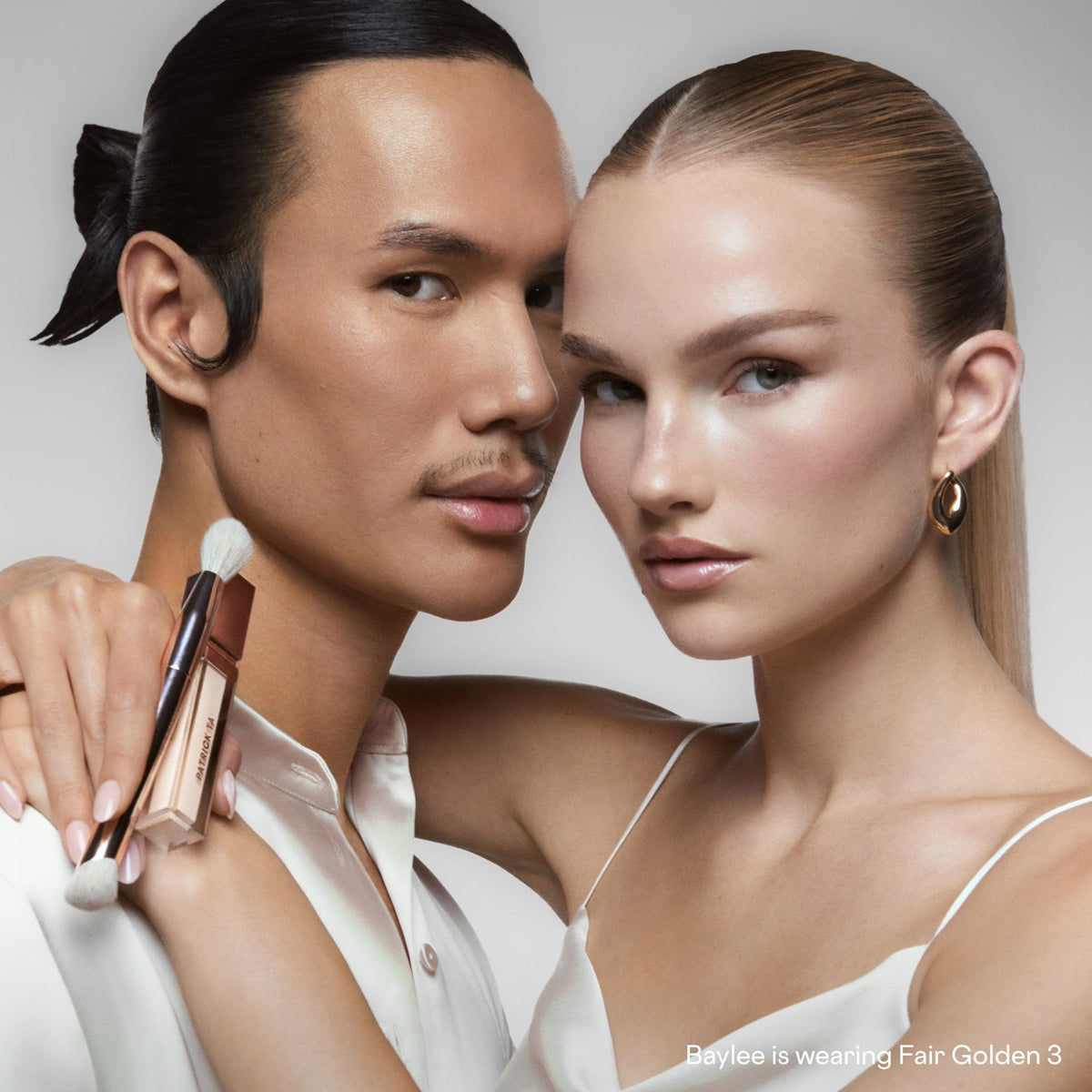
Here is what to look for in a formula, and Patrick's techniques for making concealer look smooth and fresh on dry skin all day.
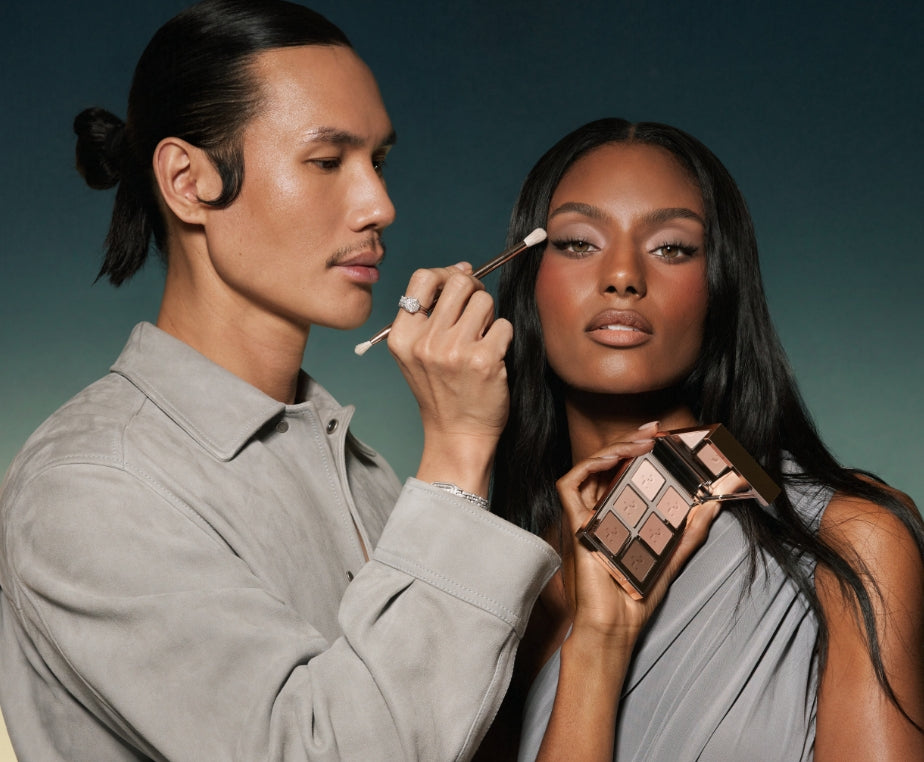
Mastering eyeshadow application is about more than just color—it's about technique, texture, and the right tools. Patrick Ta Beauty offers a range of products designed to help you achieve professio...

Every beauty enthusiast should learn how to do a smokey eye. This look is incredibly versatile and adaptable for just about any occasion. It’s also super flattering and can be adjusted to fit your ...
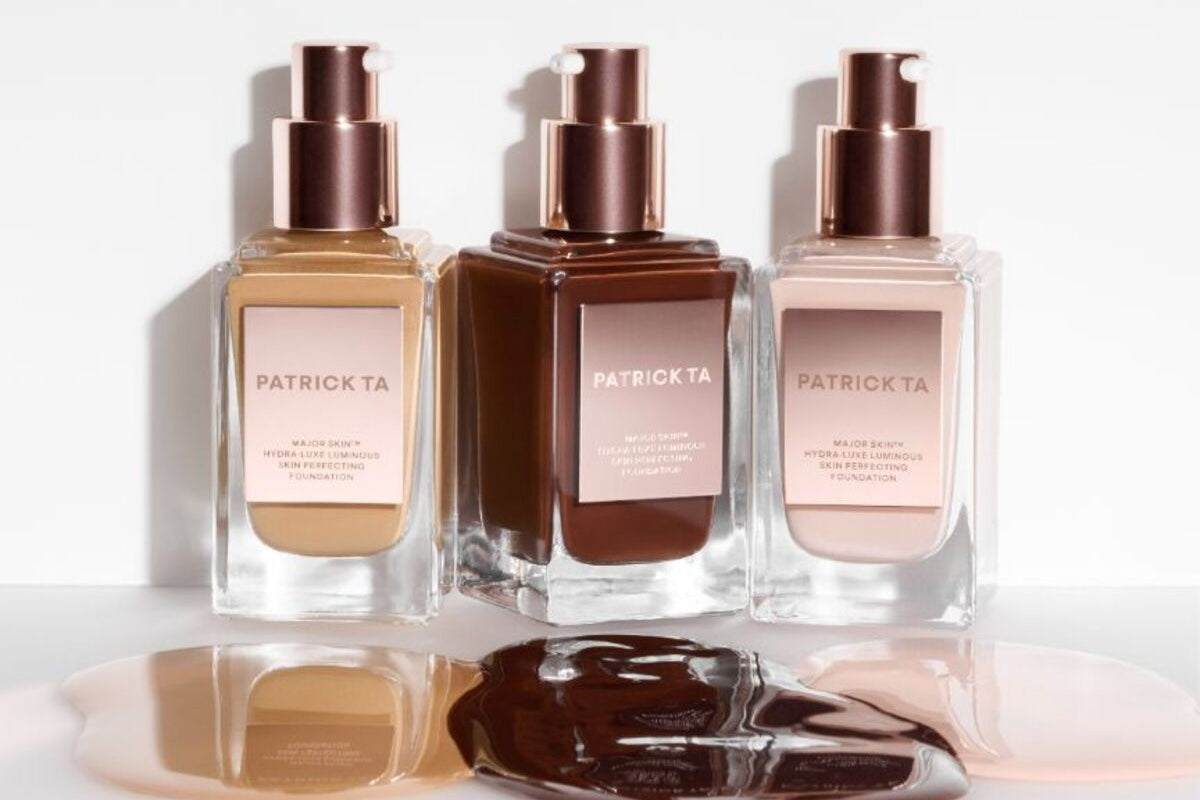
This breathable, non-comedogenic foundation becomes your daily go-to for keeping your complexion looking and feeling its best.

We believe blush is the unifying factor that ties any makeup look together, which means finding your ultimate blush match is a must. Here are our pro tips for picking out the best blush for medium ...
When it comes to skincare, few steps feel as indulgent or as essential as moisturizing. So, how do you choose between a body cream and a lotion? Let’s break down the differences and when to use eac...
Dark under-eye circles are notoriously difficult to cover up. The good news? Effectively camouflaging dark circles isn’t actually too complicated – you just need the right products and a few expert...
If something seems off about your makeup look, it might have to do with your skin’s natural tones. Knowing exactly what skin tone and undertone you are working with is essential for choosing makeup...