










Quick Summary
- Hydrate and lightly prime the under-eye first, because prepped skin holds pigment and stops concealer from creasing.
- Cancel blue, grey, and purple shadow with a warm corrector, choosing peach for fair skin, orange for medium, and red-orange for deep.
- Follow Patrick Ta's diffuse, set, and press sequence to build brightening coverage without a cakey finish.
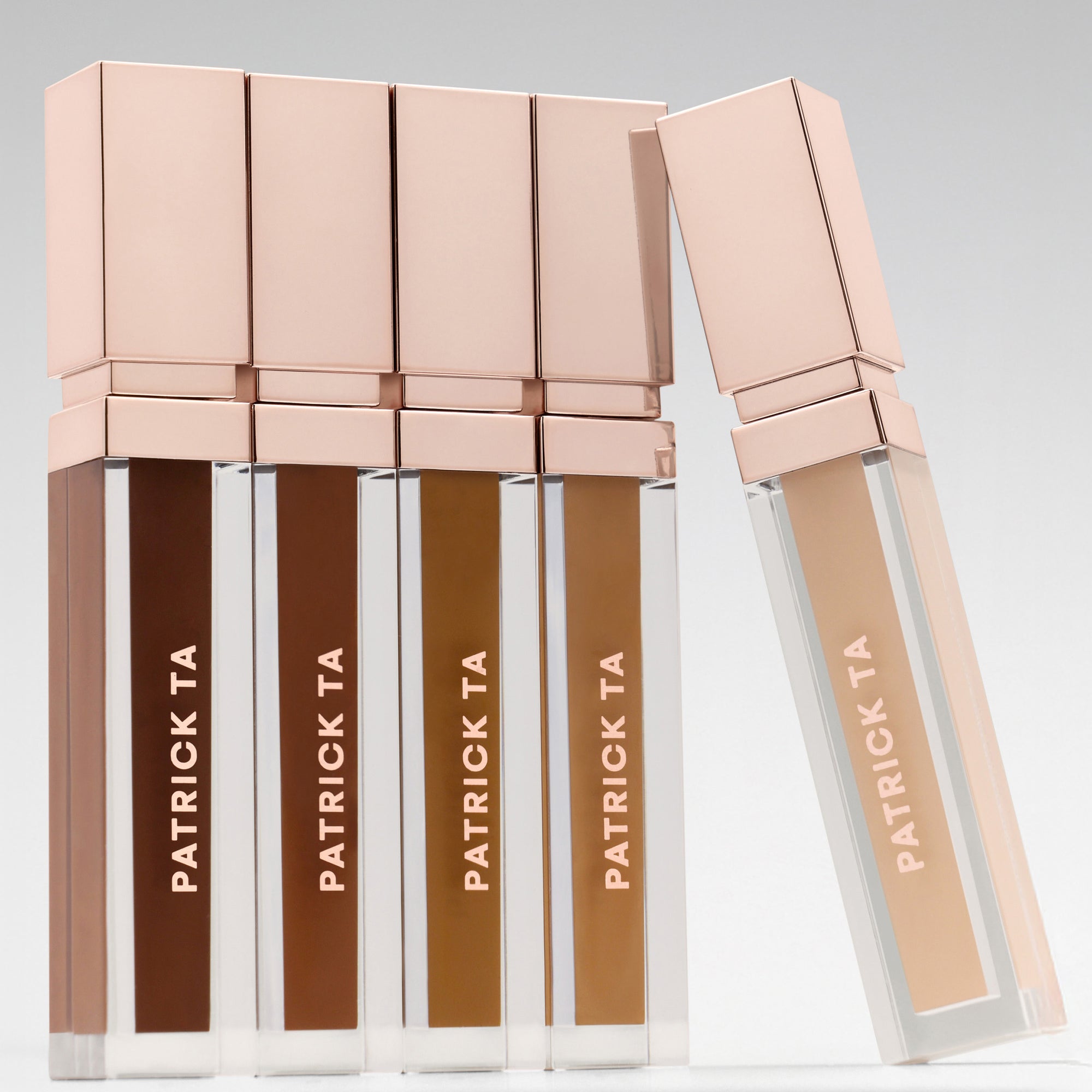
- Choose a concealer one to two shades lighter than your foundation, and place it only on the darkest areas in a soft "V".
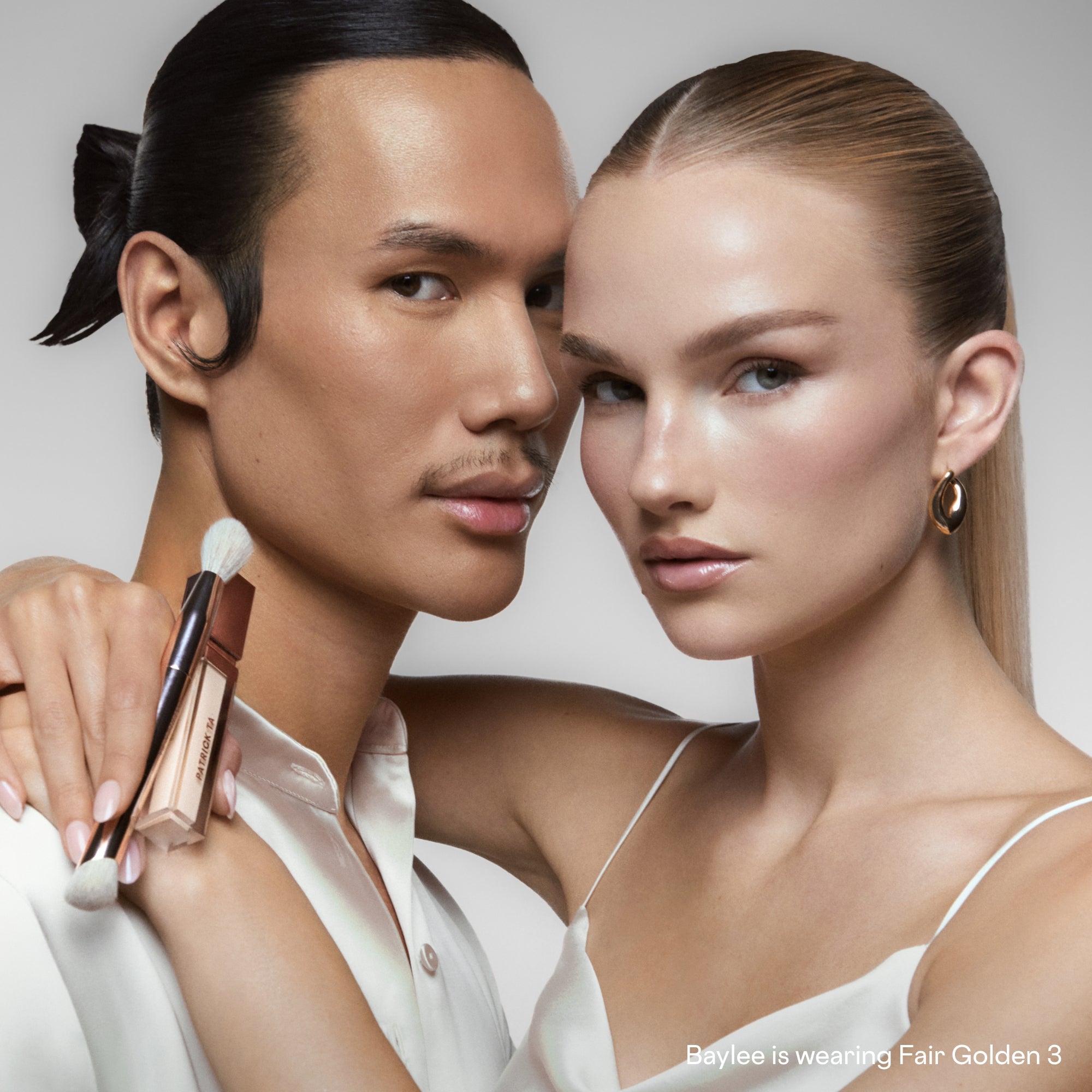
- Aim for Patrick Ta's your-skin-but-better finish, keeping the eye area luminous and natural rather than heavy or masked.
- Bake with translucent powder, then lock everything in with a setting mist in X and T formations.
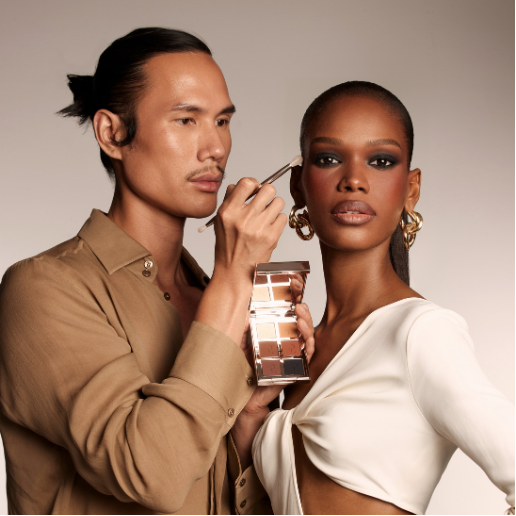
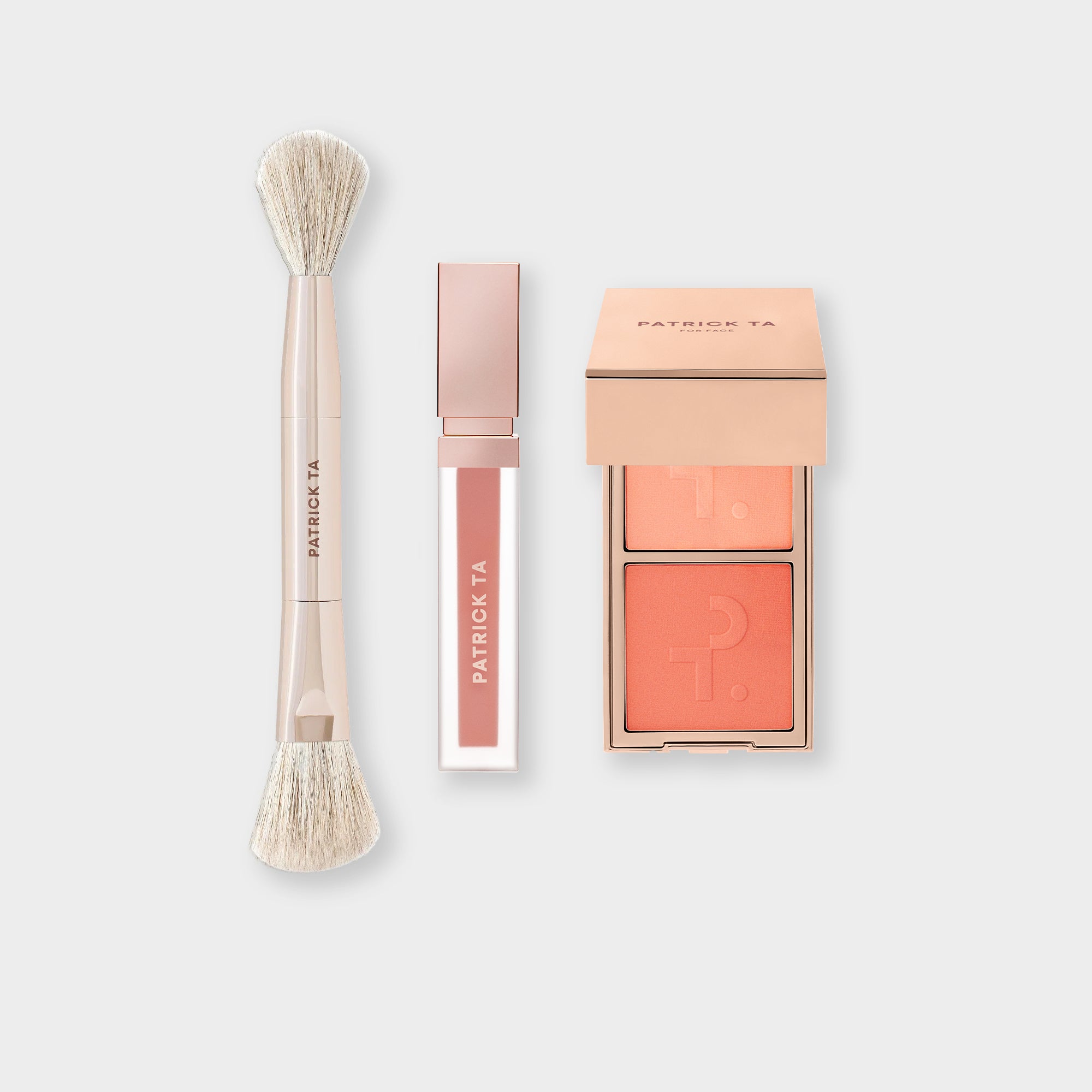
Dark under-eye circles can make you look tired even after a full night of sleep. Learning how to cover dark under-eye circles comes down to two things: the right complexion products and a few artist techniques you can repeat every morning. The Face collection holds the prep, correct, conceal, and set pieces this routine needs.
Ready to brighten the eye area and keep it looking fresh all day? Work through these five steps in order, and pay attention to placement at each stage.

How Do You Prep the Under-Eye Area Before Concealer?
Prep decides whether your concealer sits smoothly or slips into fine lines. The skin under your eyes is thin and moves constantly, so it needs hydration before any product goes on.
Start with a hydrating eye cream and press it in with your ring finger. Give it two to three minutes to absorb, then smooth a small amount of primer over the orbital area. Prepped, hydrated skin holds pigment in place and stops concealer from creasing as the hours pass.
One caution: too much product creates slip. If the area feels wet or greasy, blot the excess with a tissue before you move on. You want the skin conditioned, not slick.
What Color Corrector Cancels Out Dark Circles?
Dark circles usually read as blue, grey, or purple shadow, and color theory tells you how to cancel them. On the color wheel, warm tones sit opposite those cool shadows, so a peach, orange, or red-orange corrector neutralizes the darkness before you conceal.
Match the corrector to your depth. Reach for peach or pink on fair-to-light skin, true orange on medium skin, and red-orange on deep skin. The deeper the circle and the skin tone, the warmer the corrector needs to be.
Placement and restraint matter here. Stipple a small amount onto the inner corner and along the orbital shadow where darkness is strongest, then blend only the edges so the correction meshes with your skin. Use it sparingly: a thin veil cancels the blue without turning the area muddy.

How Do You Cover Dark Under-Eye Circles With Concealer?
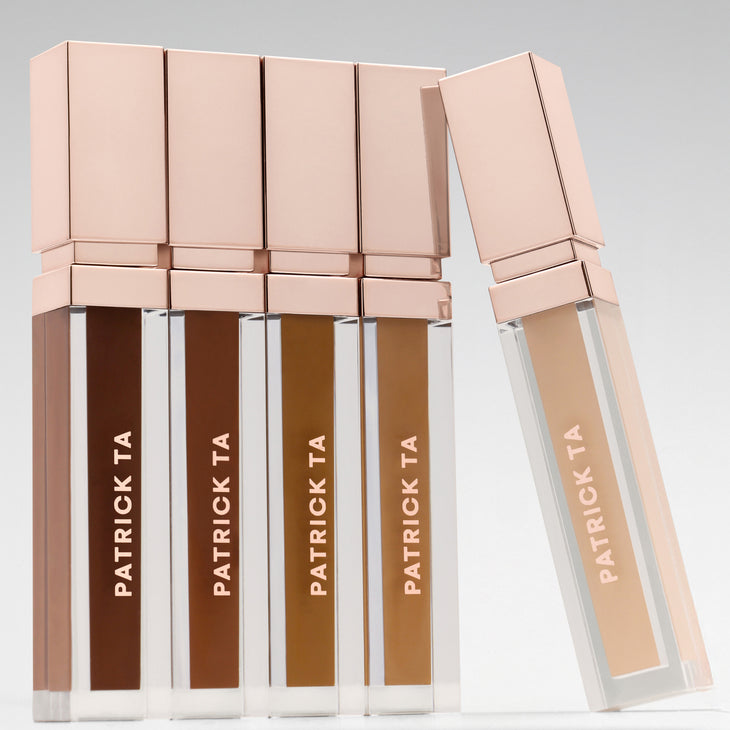
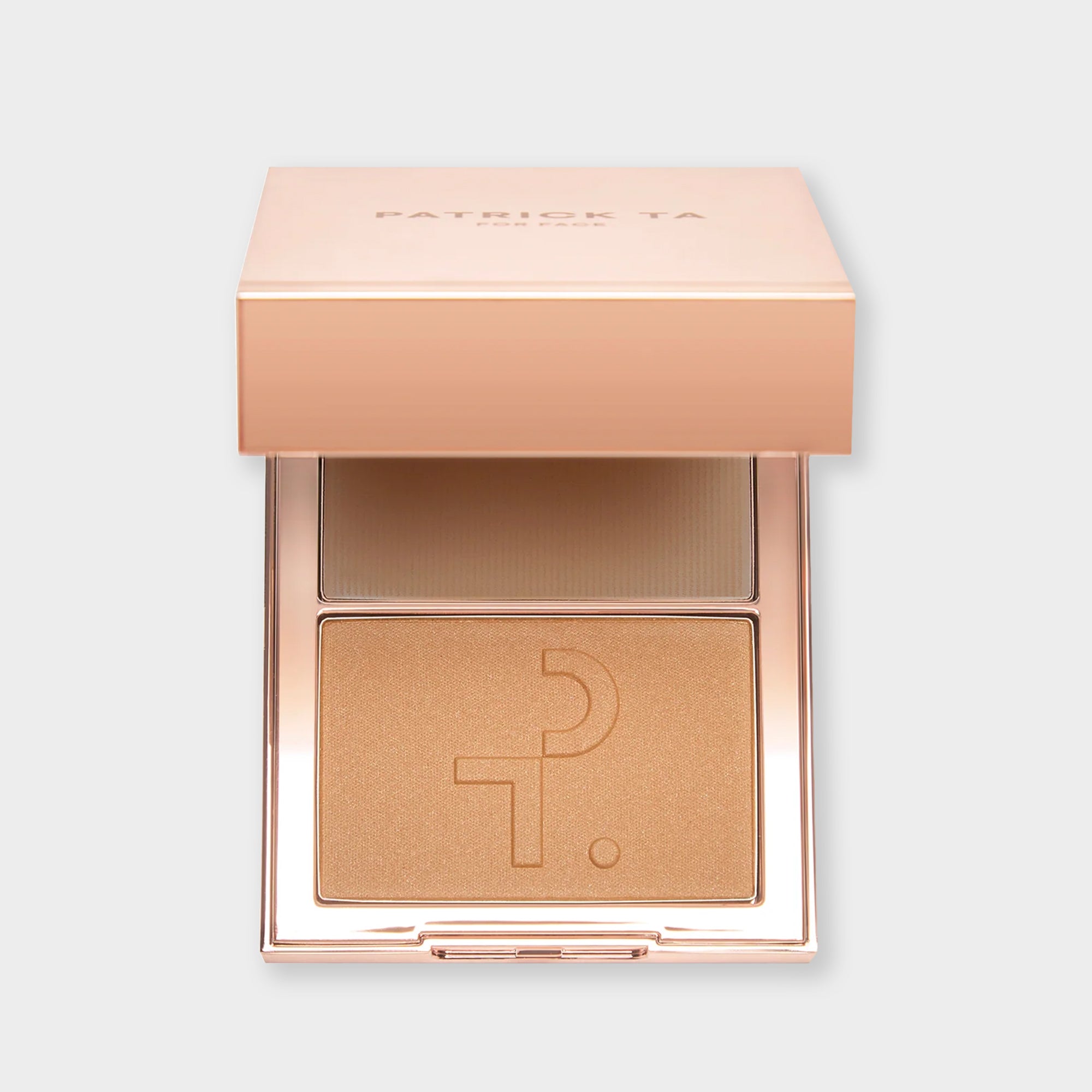
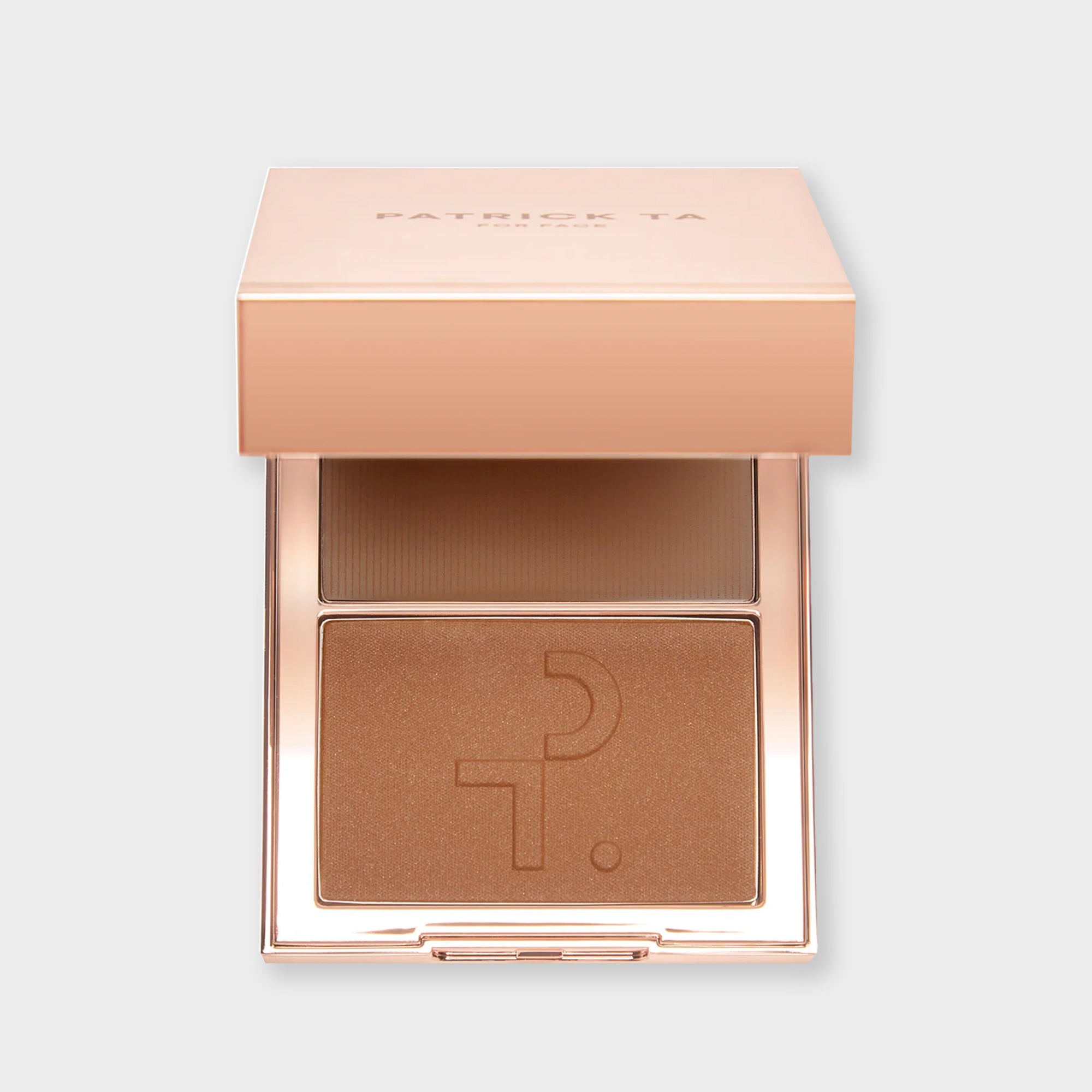
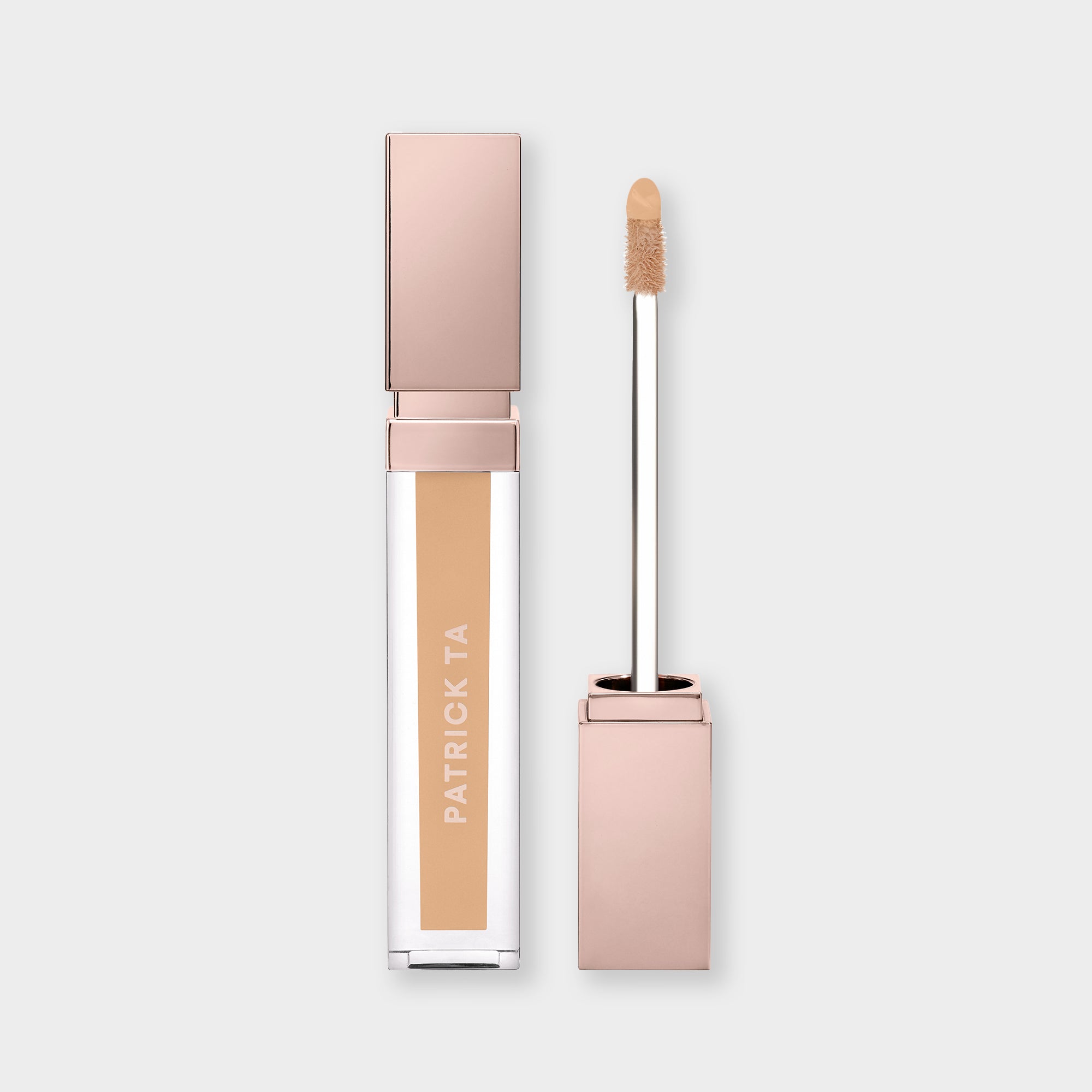
Concealer does the brightening work over your corrector. Choose a formula one to two shades lighter than your foundation, which lifts the eye area while still blending naturally into the rest of your base. The Major Skin Soft Blur Brightening Concealer brightens and blurs without weighing the skin down.
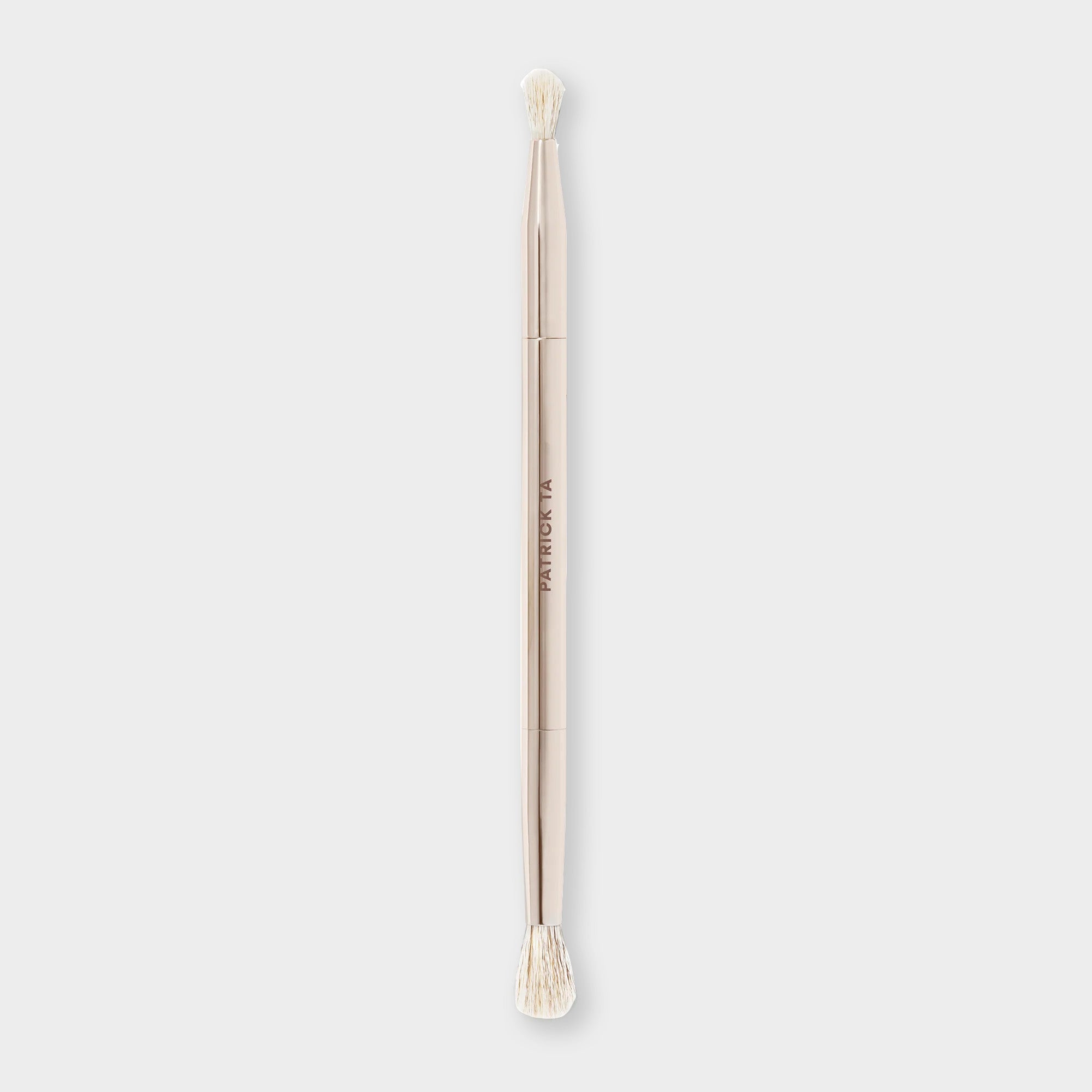
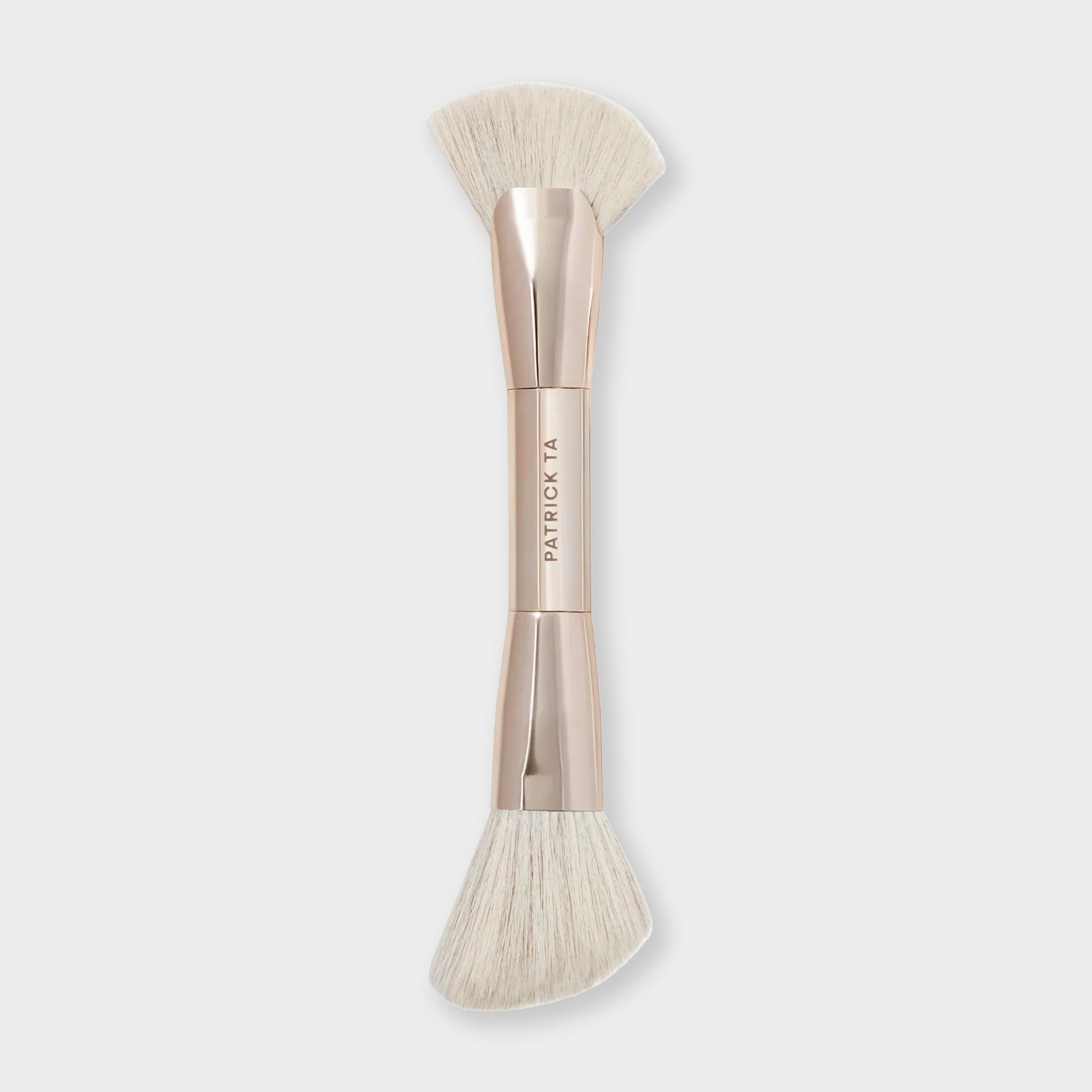
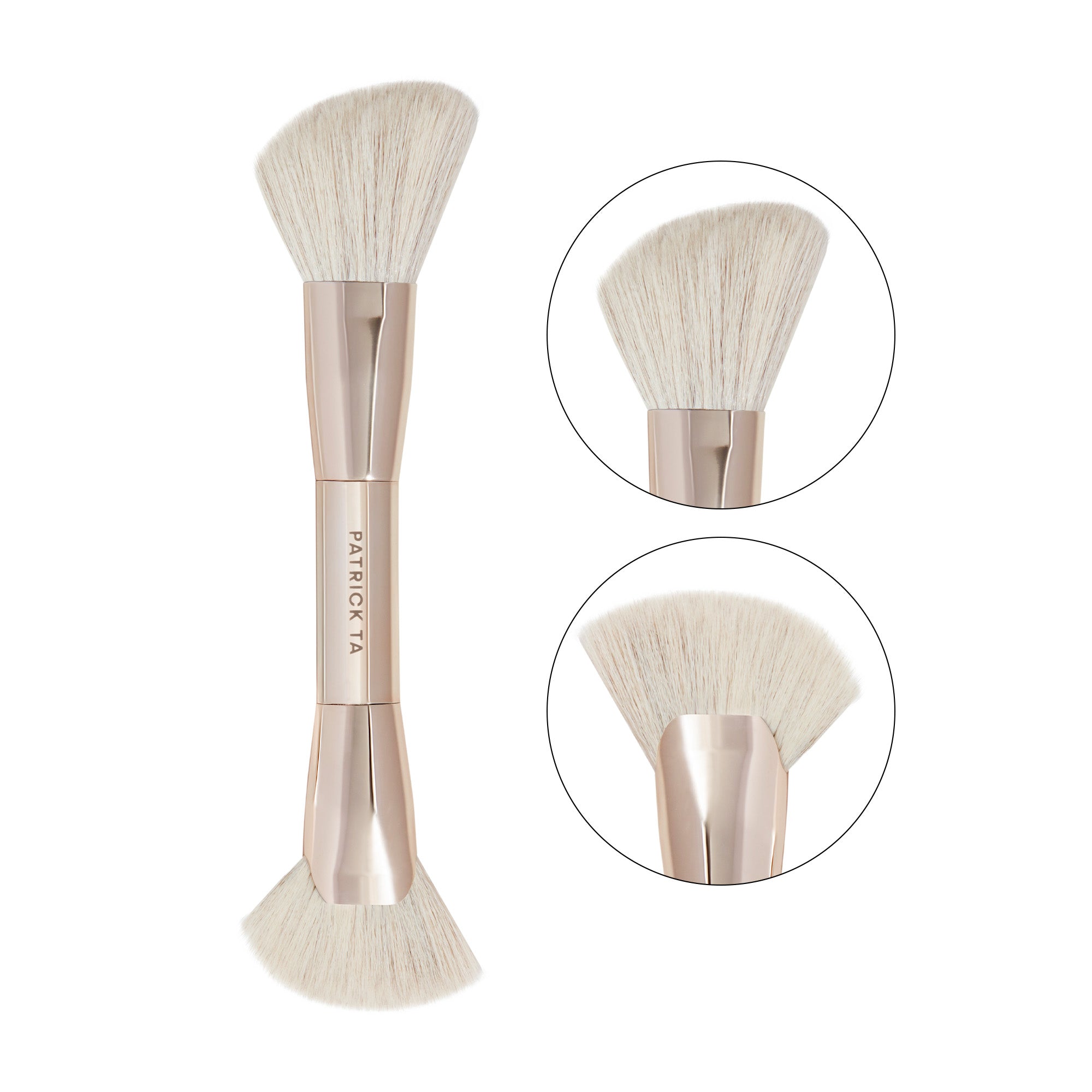
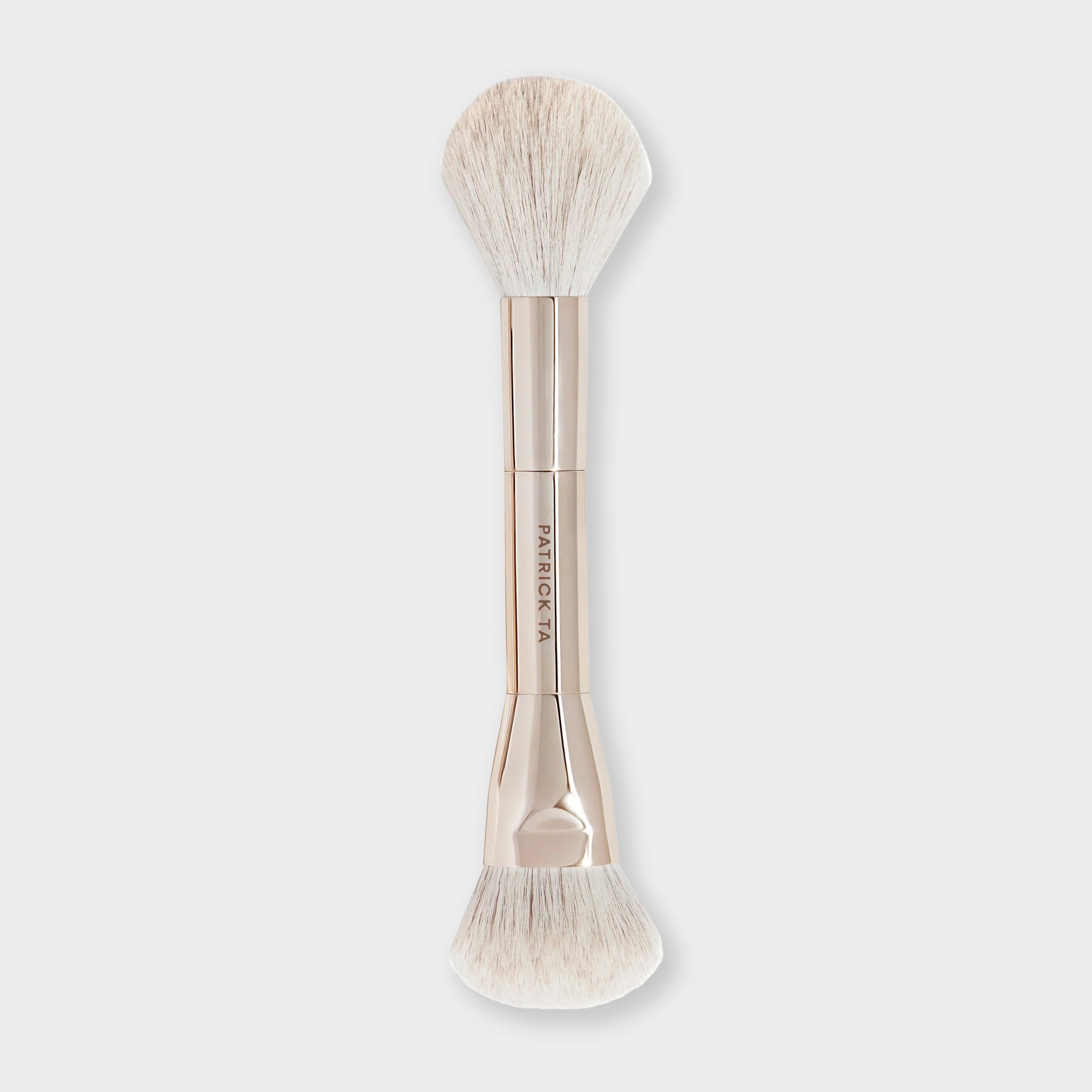
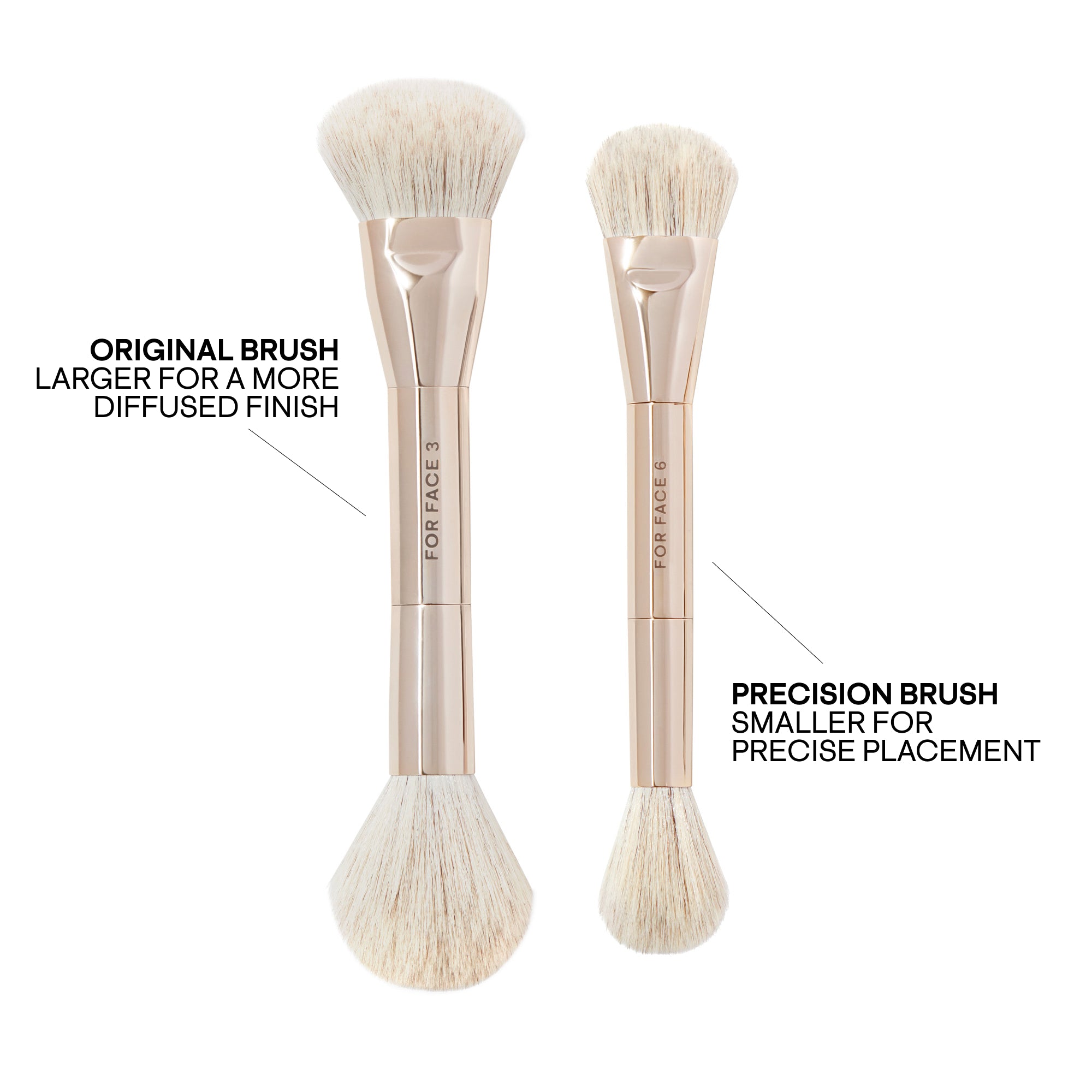
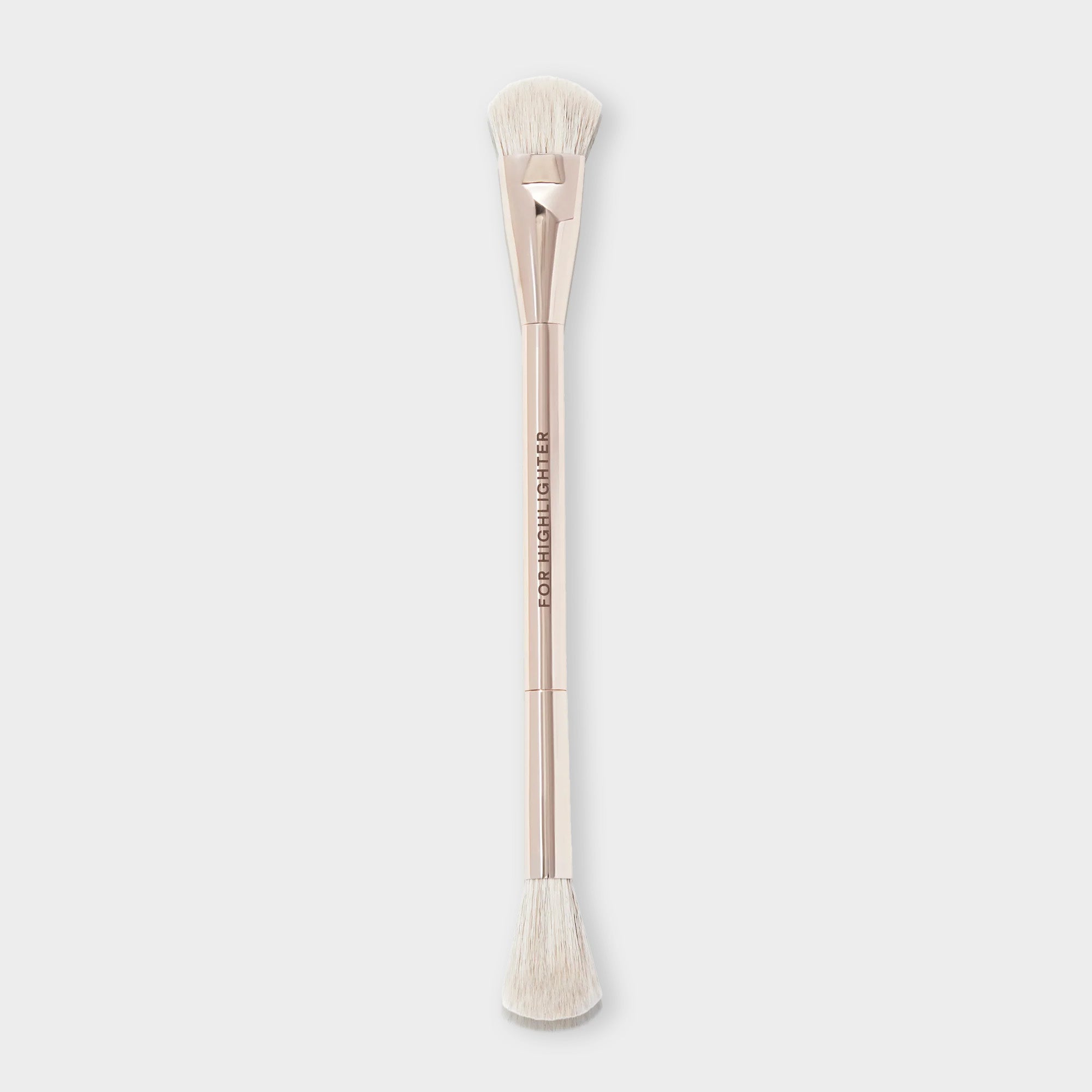
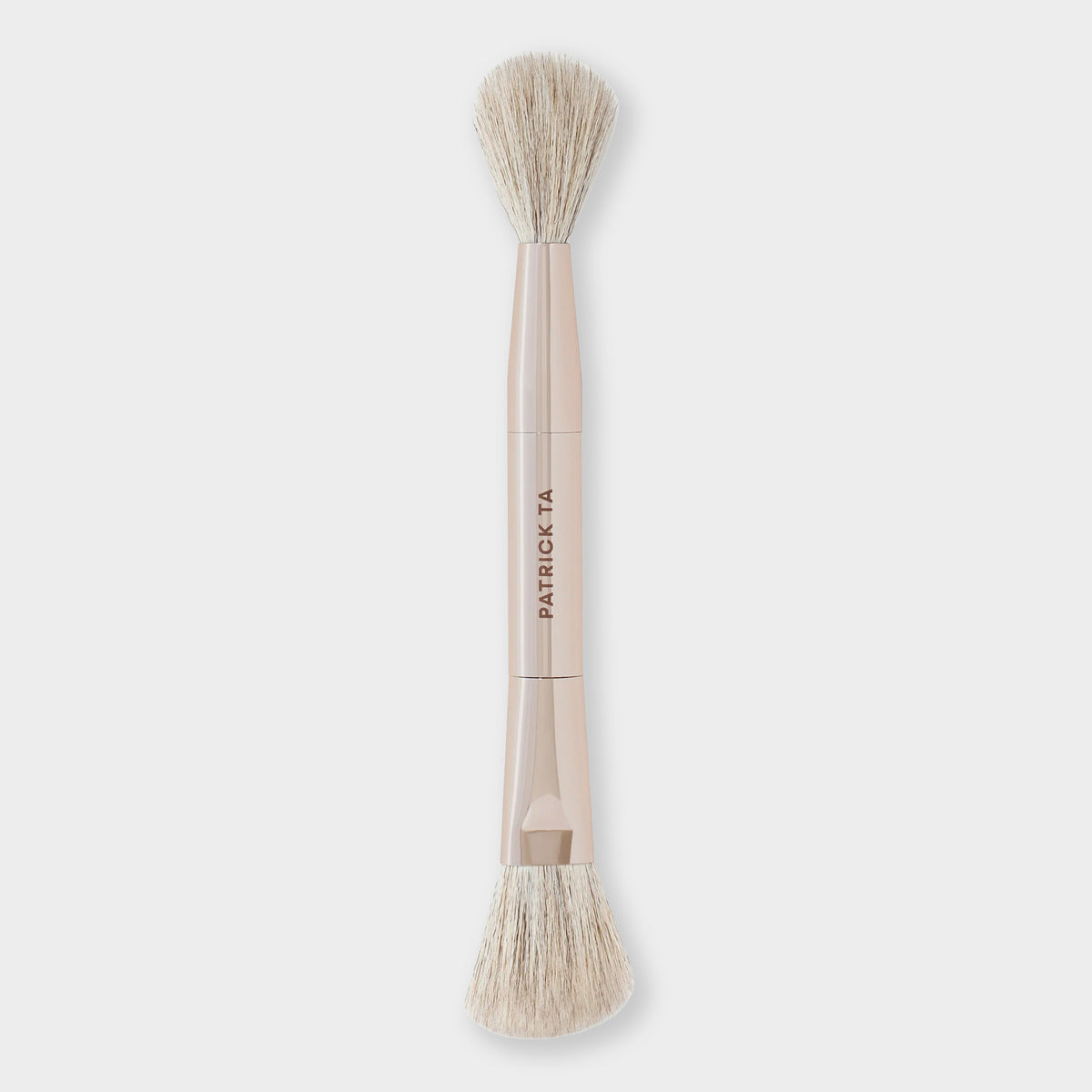
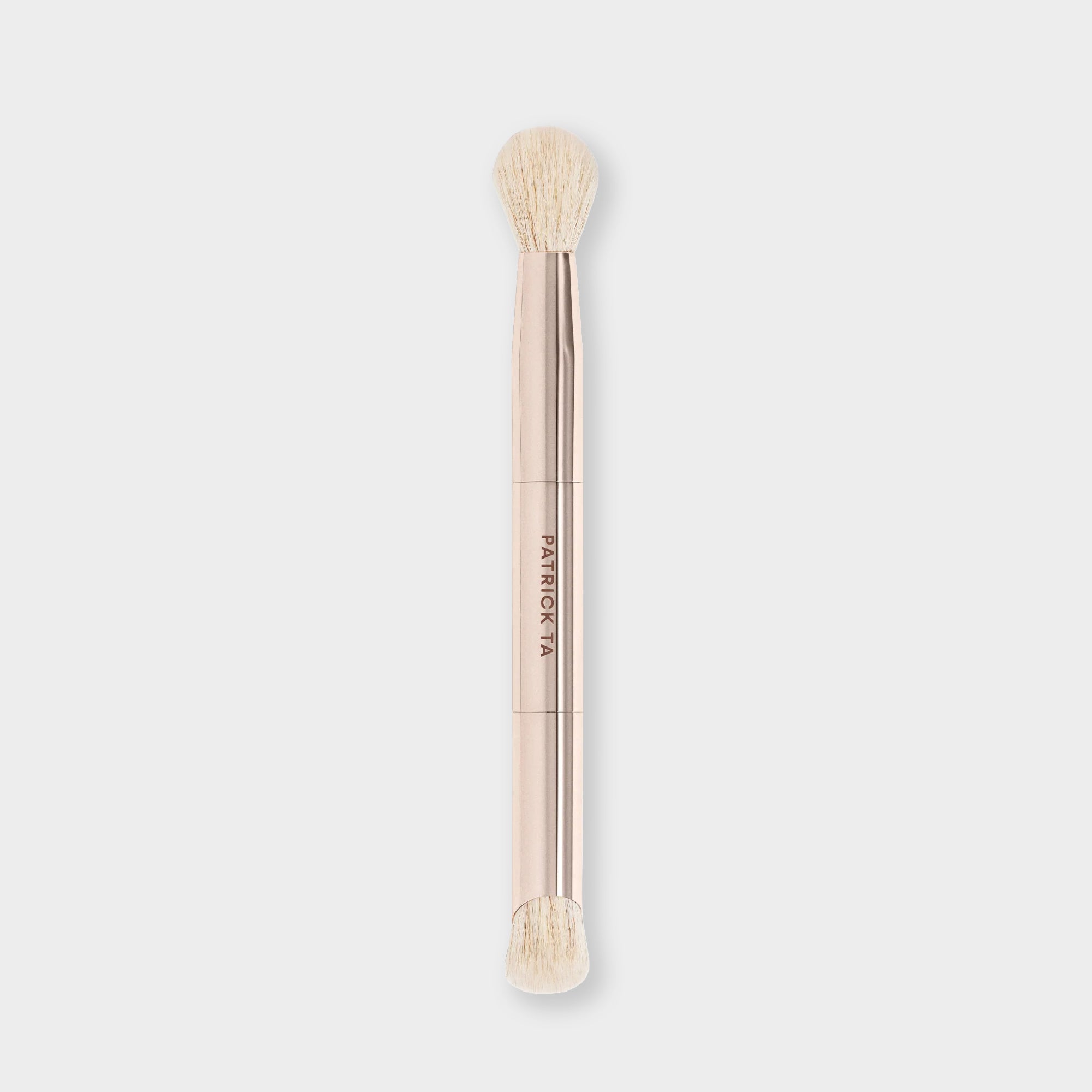
Place concealer only where you need it: the darkest areas, the inner corner, and a soft "V" or triangle that points down toward the cheek. Build coverage in thin layers rather than one thick pass, which is how you keep the finish from looking cakey. Use the Dual-Ended Concealer Brush to control placement, then follow Patrick's diffuse, set, and press sequence.
Step 1: Diffuse
Use the fluffy side of the concealer brush to softly blend the edges, melting the formula into the skin while keeping coverage centered.
Step 2: Set
Let the concealer sit for a few moments. As it settles, coverage naturally increases.
Step 3: Press
With the dense side of the brush, press additional pigment into any spots that still show darkness, building targeted coverage exactly where you need it.
Pro Tip
Finish by lightly bouncing a damp blending sponge over the area for a seamless, skin-like finish.
How Do You Apply Foundation Over Under-Eye Concealer?
Once your concealer is blended, build the rest of your base so the eye area matches the whole face. Foundation evens skin tone and softens the look of imperfections around it.
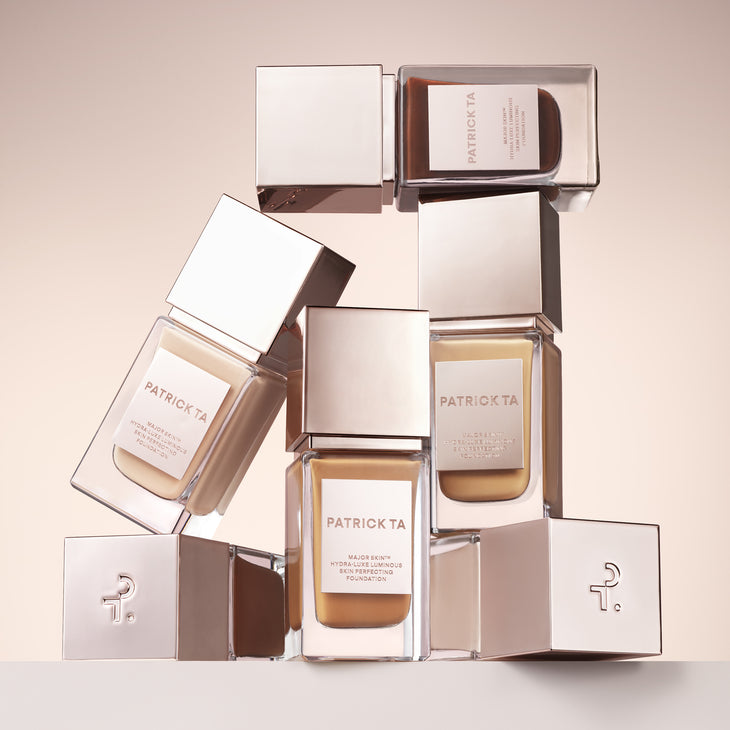
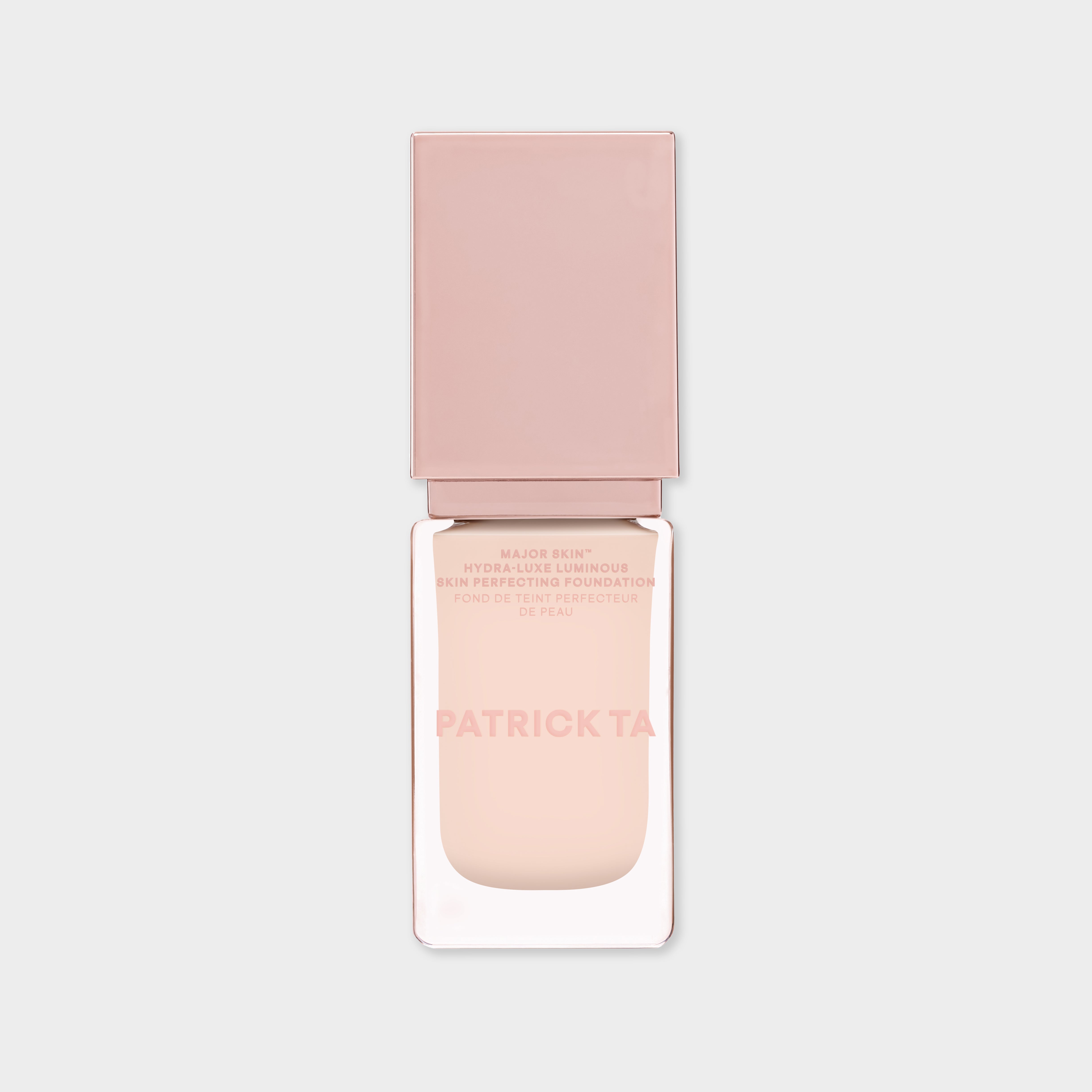
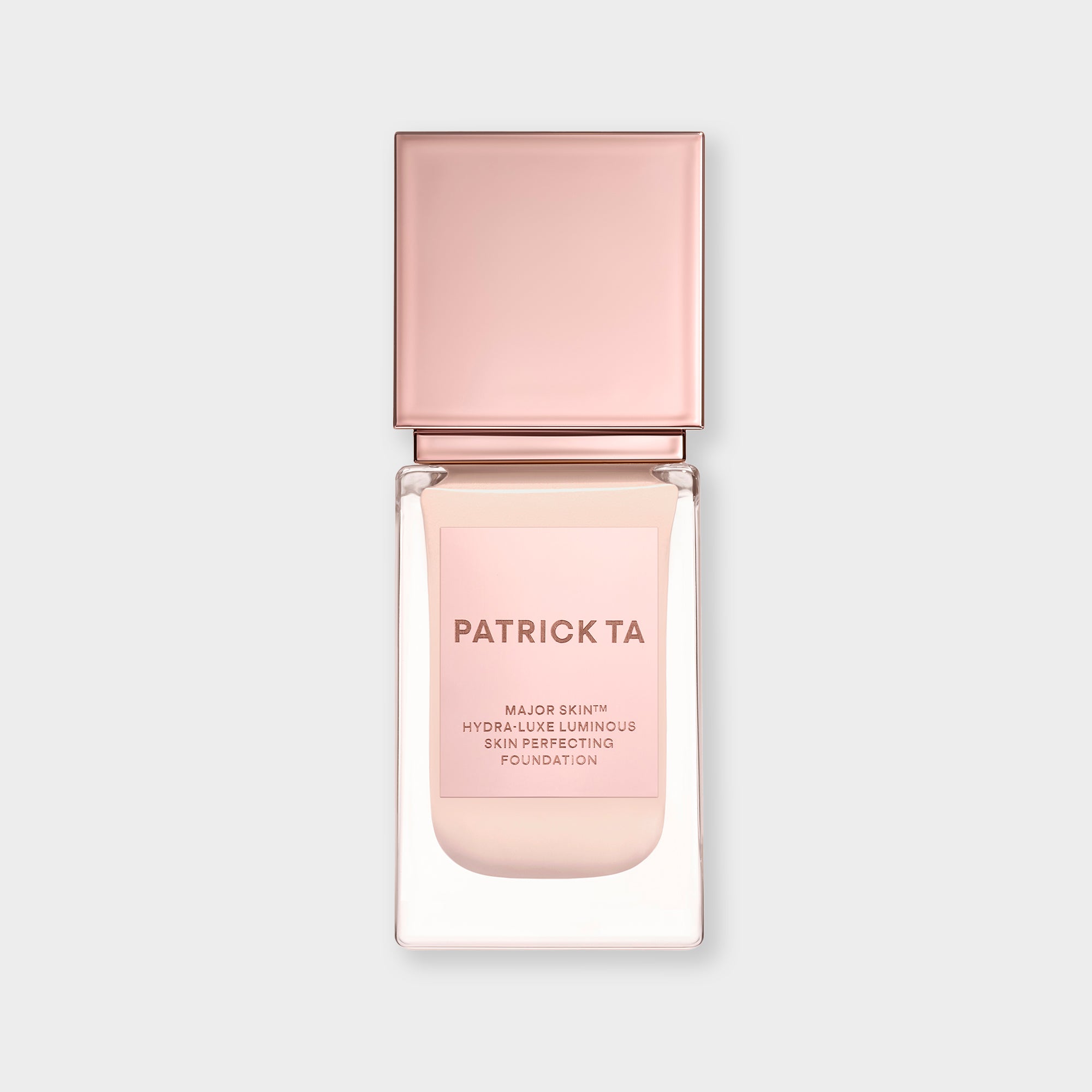
For buildable coverage and a your-skin-but-better finish, work with a cream-based foundation. Cream formulas melt into the skin and layer cleanly over liquid and cream concealer. The Major Skin Hydra-Luxe Luminous Skin Perfecting Foundation blends seamlessly and brightens without settling into fine lines.
That your-skin-but-better finish sits at the center of Patrick Ta's complexion point of view: skin should look luminous and real, never heavy or masked. Buff the foundation in with a damp sponge or complexion brush, building to the coverage you want. Blend carefully around the eyes so the transition between foundation and concealer disappears.

How Do You Set Under-Eye Makeup So It Doesn't Crease?
Setting locks everything in and keeps concealer from creasing. Apply blush, bronzer, and eye makeup first, then set the base last.
Start by baking the under-eye. Press a translucent powder underneath the eyes with a brush or sponge, creating a visible layer from the inner corners to the outer corners. Baking works because the powder absorbs the oil and warmth that would otherwise break concealer down and pull it into lines. Leave it for a few minutes, then sweep the excess away.
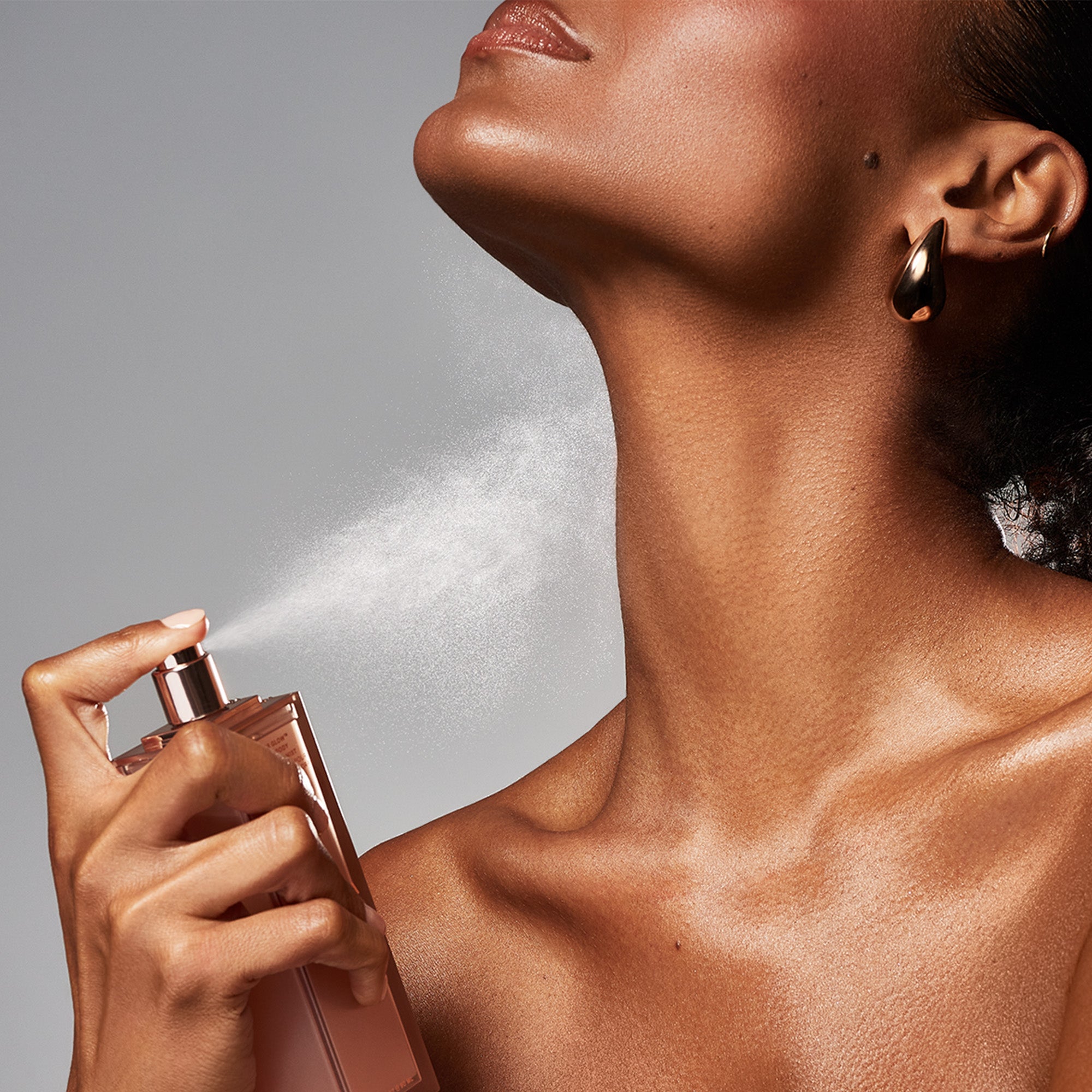
Finish with a setting mist to lock in your concealer and the rest of your makeup. Spray the Major Glow Dewy Milk Mist over the face in X and T formations so the whole surface is covered.
Cover dark circles well, and the payoff shows all day: prep so the skin holds product, correct the blue with a warm tone, brighten with a lighter concealer, even the base with foundation, and set so nothing creases. Even after a short night, the eye area can look brighter and more awake.
Frequently Asked Questions
Why are dark circles so hard to cover?
Dark circles are hard to cover because the skin under your eyes is thin, so the blood vessels and shadow beneath show through easily. The area also creases and moves all day, which breaks product down faster than anywhere else on the face. That is why both neutralizing the color and setting the area matter so much.
What do makeup artists use to cover dark circles?
Makeup artists rely on a warm-toned corrector, a brightening concealer a shade or two lighter than the foundation, a small precise brush, and a translucent powder to set. They lean on careful placement and thin, buildable layers rather than one heavy coat. Technique matters more than the amount of product you use.
How do you cover dark circles on mature skin?
Mature skin creases faster, so keep every layer light.
- Hydrate well and let the eye cream fully absorb before makeup.
- Use a sheer corrector and concealer, applied only where darkness sits.
- Set with a light dusting of powder instead of a heavy bake so the finish stays soft.
Can you cover dark circles without a color corrector?
Yes, you can skip the corrector when your darkness is mild.
- Prep and hydrate the under-eye area.
- Apply a brightening concealer one to two shades lighter than your foundation, focused on the darkest spots.
- Blend the edges and set lightly. For deep blue or purple circles, a corrector still gives the cleanest result.
How do you cover dark circles with minimal makeup?
For a minimal look, skip full coverage and spot-treat only the darkest areas. Tap a small amount of brightening concealer on the inner corner, blend it out with your finger, and leave the rest of the skin bare. A tinted moisturizer or a sheer wash of base keeps everything looking natural.

RELATED POSTS
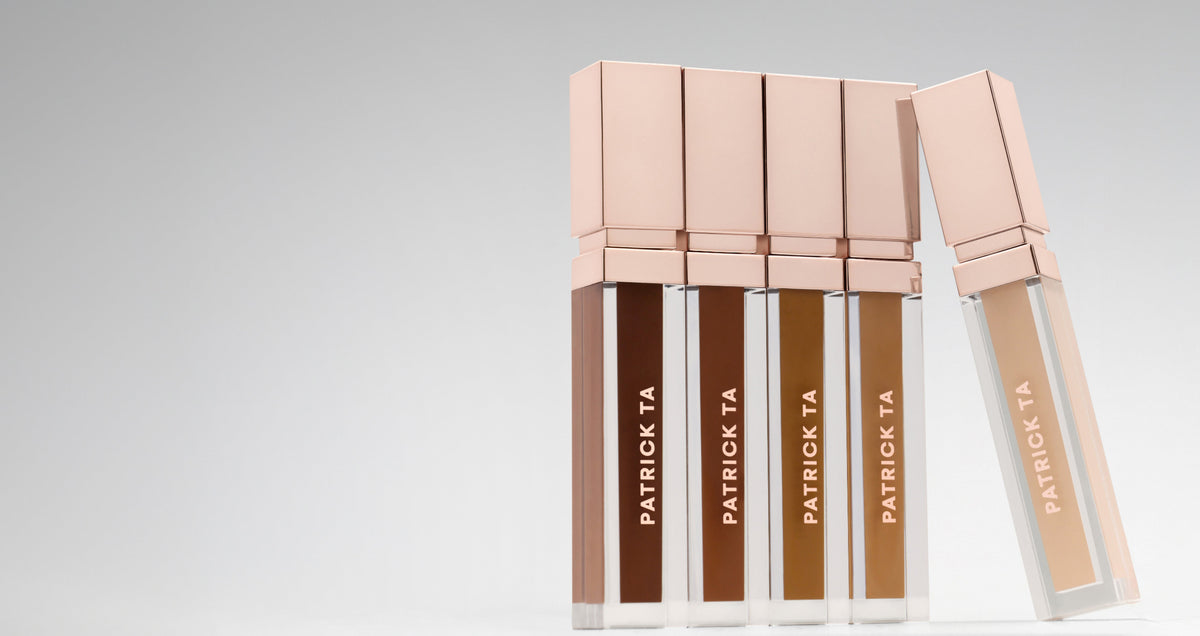
Here is Patrick's guide to concealer placement, plus how to apply it for a seamless, skin-like finish.
Here is how to find your concealer shade, how to test it, and how to use more than one shade for a flawless base
Here is why red blush has become a modern staple, how to choose the right shade for your skin tone, and how Patrick applies it for a flush that looks effortless.
Here are the shades that make brown eyes stand out and the Patrick Ta palettes that deliver them.
If you have been reaching for the same pink or peach for years, mauve blush is the easiest way to refresh your routine without going bold.
With professional tips from Patrick himself, consider this your step-by-step guide to creating the perfect smokey eye.
Follow these steps to learn how to apply eyeshadow for everything from an everyday wash of color to a defined evening look.
Here is how to choose shades, what to avoid, and how Patrick layers shadow for a look that makes hazel eyes glow.